
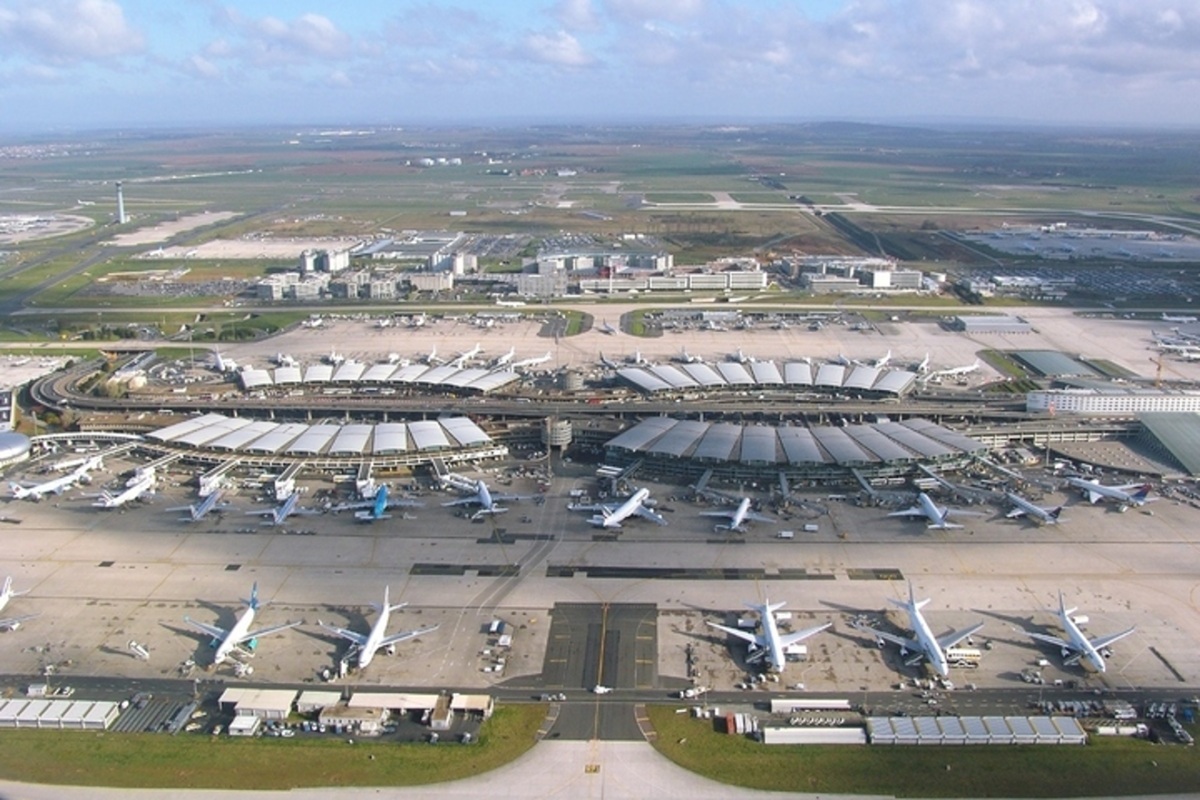
While the future Paris-Charles-de-Gaulle economic regulation contract provides for €8.2 billion in investments, environmental associations are asking the government to abandon the project.

THE Paris-Charles-de-Gaulle airport extension project returns to the sights of environmental associations: Transport & Environment France, Climate Action Network and the Rester sur terre association ask the government to renounce theincrease in capacity planned at Roissy by 2035.
The project appears in the airport’s future economic regulation contract (CRE) for the period 2027-2034. This document, which must be concluded between the State and the ADP group, provides for some 8.2 billion euros of investments intended in particular to modernize existing infrastructure and support traffic growth.
Unlike theold Terminal 4 project, abandoned in 2021the operation envisaged today does not provide for the construction of a new terminal. Groupe ADP plans in particular the creation of new boarding gates to gradually increase the airport’s capacity.
Increased capacity without a new terminal
L’objective stated by Groupe ADP is to accompany the increase in air traffic at Paris-Charles-de-Gaulle. The manager is currently counting on around 88 million passengers at Roissy in 2035, against attendance expected to increase by 1.9% per year on average according to its forecasts. For associations, this growth is precisely the problem. They consider that the planned investments in infrastructure will mechanically contribute to maintaining, or even increasing, air traffic while France is committed to reducing its greenhouse gas emissions. “Stopping this project is possible“, estimates Jérôme du Boucher, of Transport & Environment France, recalling that theThe State finally abandoned the Terminal 4 project in February 2021, citing environmental issues in particular..
However, the context has changed profoundly since this decision. L’abandonment of Terminal 4 had intervened when the health crisis had caused a historic collapse in air traffic. Groupe ADP has since revised its project and now favors an increase in capacity based more on existing infrastructure.
Climate objectives at the heart of the debate
The associations nevertheless consider that the change of project does not resolve the climate issue. According to them, theincrease in Roissy capacity would be “strictly incompatible” with the objectives set out in the National Low-Carbon Strategy. The debate thus goes beyond the sole question of the development of the airport since it also concerns the way in which the France intends to reconcile the development of air transport, tourist attractiveness and reduction of its emissions.
Climate Action Network recently criticized the French strategy to attract more tourists from distant destinations. The association estimates that these visitors generate a significant carbon footprint due to their air travel, while concentrating in the busiest tourist destinations.
The associations also contest the argument according to which thearrival of international tourists at Roissy would then benefit all French territories. For Jean Pinard, sustainable tourism consultant and speaker at the press conference organized by the associations, this diffusion would be largely overestimated.
Arbitration which now falls to the State
Beyond the air traffic controversythe file therefore poses a more comprehensive question: should we continue to invest in increasing airport capacity while France is simultaneously seeking to reduce its emissions?
The response must in particular be provided in the framework of the next Paris-Charles-de-Gaulle economic regulation contract. This must set the conditions for development and investments for the airport for the period 2027-2034.
© Wikimedia Commons / CC BY-SA 3.0 / Dmitry Avdeev