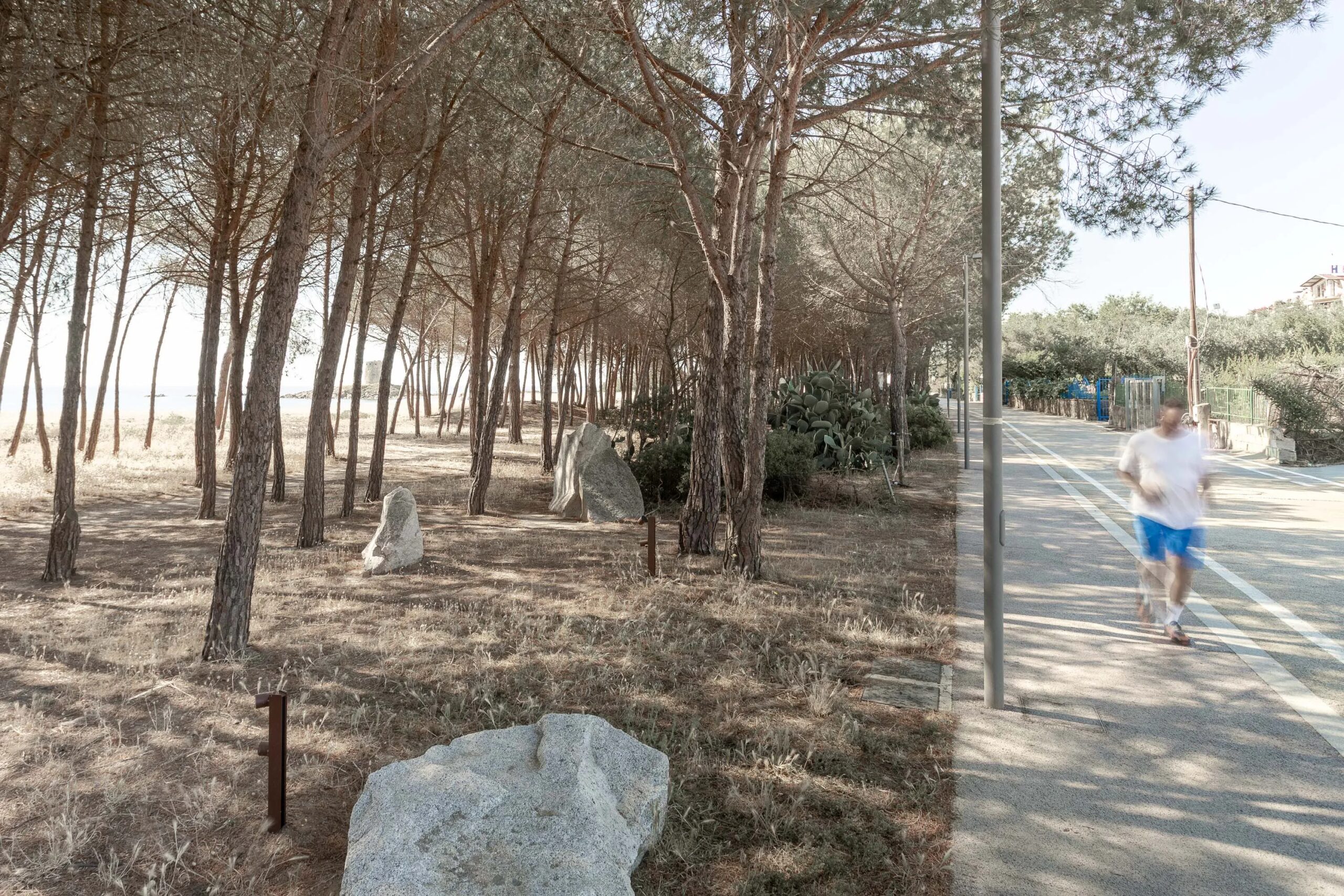
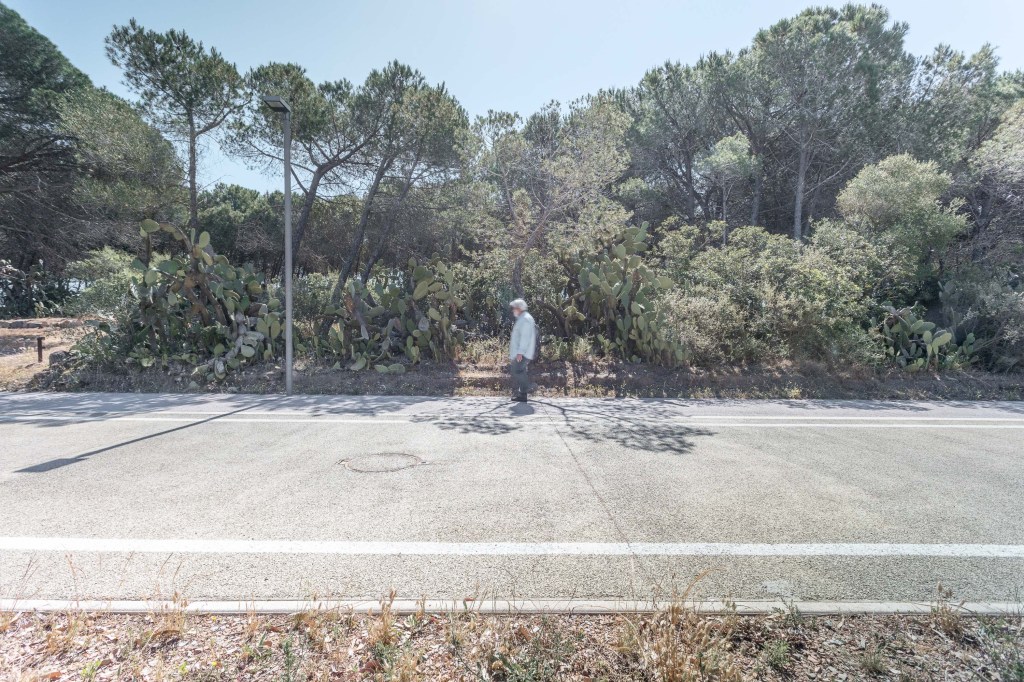
In Bari Sardo, along the eastern coast of Sardinia, the redevelopment of the coastal road between the Torre di Barì and Bucca ‘e Strumpu has transformed a coastal stretch characterized by the overlap between traffic, parking and access to the sea into a safer and more accessible public space.
Promoted by the Municipality of Bari Sardo and developed by the Inhori studio, the project involved approximately 13,920 m² of surfaces, including green areas, redeveloped spaces and 9,500 m² of draining pavements, with the aim of improving pedestrian and cycle mobility and enhancing the coastal landscape of Ogliastra.
Slow mobility and safety: the new structure of the coast road
The redevelopment – which was developed in compliance with the landscape constraints and the provisions of the Municipality’s Coastal Use Plan (PUL), through discussion with the competent protection bodies – involved a reorganization of the road network to reduce the space occupied by cars and improve connections between the road, the pine forest and the beach.
The introduction of one-way traffic and a speed limit of 30 km/h has made it possible to distinguish pedestrian paths from areas intended for vehicles, promoting safer mobility. The car parks, previously distributed along the front of the pine forest, have been reduced and set back upstream, freeing up spaces now intended for parking and use of the coast. The new arrangement also includes paths, fitness areas and outdoor play equipment.
Greenery and materials to enhance the coastal landscape
The project aimed to strengthen the continuity between the coastal road and the pine forest, also through the removal of the wooden barriers that separated the two environments.
The landscaping enhances the existing Mediterranean vegetation, with cistus, lentisk, prickly pears and Mediterranean scrub, integrated with new plantings with low water requirements and small dry gardens.
Furnishings and lighting also recall the natural elements of the place: the granite rocks act as seats and delimit the accesses to the pine forest, while the lighting fixtures, designed like branches, accompany the paths and enhance the green spaces.
i.idro DRAIN draining floors: characteristics and performances
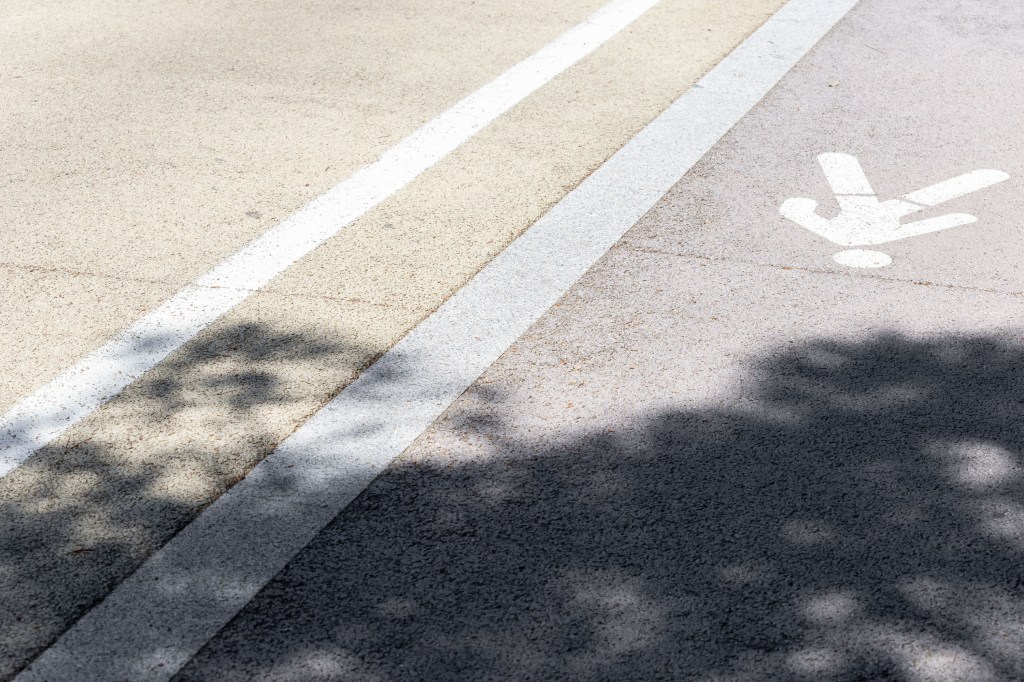
The permeability of surfaces is part of this transformation. For the redevelopment of the coastal road, i.idro DRAIN was chosen, the draining concrete from Heidelberg Materials designed to create continuous and permeable paving. Thanks to the selection of aggregates and a specific mix design, the material has a porous structure that allows the passage of rainwater, making it suitable for pedestrian and cycle paths, rest areas and low-speed secondary roads.
In fact, the product has a percentage of voids between 15% and 25% and a drainage capacity which, depending on the formulation and grain size, varies from 200 to over 1,000 litres/m² per minute, up to 100 times higher than that of natural soil. The porous structure favors the passage of rainwater through the paving and its infiltration into the ground, contributing to the maintenance of the natural water cycle and more favorable conditions for the root systems of trees. The reduction of surface runoff and stagnation also improves the practicability and safety of routes intended for soft mobility.
The draining performance is accompanied by the contribution to the mitigation of urban heat islands: the light colors reflect solar radiation more and can contain the overheating of the surfaces compared to traditional bituminous paving, with summer surface temperature differences that can reach 30 °C. The Solar Reflectance Index (SRI) values - equal to 33 in the gray version and 46 in the white version – exceed the minimum reference value established by the CAM, equal to 29, contributing to the comfort of open spaces. An increasingly relevant aspect in the context of a now consolidated warming, which makes heat waves more frequent and intense, with summer temperatures often exceeding 40 °C, even in Sardinia.
The environmental profile of the solution is also communicated transparently through the EPD, the environmental product declaration, which documents its impacts along the life cycle. The choice of i.idro DRAIN thus links the usability needs of the coastal road to attention for the soil, water and the comfort of open spaces.
The installation of pervious concrete: the role of Ibuild Italia
The installation of the flooring was entrusted to Ibuild Italia, a company of the Heidelberg Materials group specialized in the creation of concrete flooring. The works took place in two periods, between May and June 2024 and between April and June 2025, to reconcile the progress of the construction site with the tourist use of the coast.
After laying the material, the teams carried out compaction and protection of the surfaces during curing, fundamental phases to guarantee the mechanical and drainage performances envisaged by the project. In particular, the control of the degree of compaction made it possible to maintain the correct balance between mechanical resistance and percentage of voids. The continuity of drainage was also ensured through a properly designed subfloor.
An infrastructural intervention also underground
The redevelopment entailed a total investment of 1,956,000 euros, of which 1,359,156.80 euros allocated to the works, 18,036.24 euros to safety costs and 95,931.29 euros to the supply of lighting. A significant part of the resources was used for the reconstruction and adaptation of underground services, including sewerage and water networks, cable ducts, provisions for the burial of technological lines and public lighting systems.
Almost a third of the intervention involved works below the finished level of the road, fundamental for the functionality and durability of the new arrangements. The work schedule also included the suspension of activities in the central months of the summer season, to preserve access to the beach and limit interference with tourist activities.
The redevelopment awarded at the CITY’SCAPE Award 2026
The Bari Sardo coastal road project obtained third prize at the CITY’SCAPE Award 2026, awarded at the Milan Triennale in the “Street landscape & Slow landscape” category, dedicated to slow mobility, cycle paths and traffic calming. The recognition came as part of a selection of 416 projects from 32 countries, enhancing the intervention’s ability to integrate infrastructure, sustainable mobility and coastal landscape.
The redevelopment in fact represents an example of how the use of draining pavements, together with a design attentive to safety and environmental quality, can contribute to the transformation of public spaces, improving accessibility and usability without compromising the identity of the territory.
The value of the intervention is measured above all in the daily use of this stretch of coast. The reduction of the space occupied by cars, the continuity with the pine forest and the use of draining surfaces create a more balanced relationship between infrastructure and landscape. In this together, i.idro DRAIN and the installation of Ibuild Italia, guaranteeing the quality of the new paving, accompanied the first piece of a broader coastal strategy: making the coast safe and accessible, giving the community new opportunities to experience it.
Project credits
- Client: Municipality of Bari Sardo (Mayor Dr. Ivan Mameli)
- RUP: Surveyor. Francesco Pala
- Technical office: Arch. Loredana Demurtas
- Company: Perino Appalti srl, Alessio Perino – Construction site assistant: Eng. Marco Nieddu
- Project and works management: Studio Inhori – Arch. Davide Fancello, Eng. Francesco Columbu, Arch. Agnese Mavuli, Arch. Marco Fois
- Archaeologist: Anna Falconi
- Geologist: Pierluigi Fadda
- Assistant to the Works Management: Surveyor. Andrea Pilloni
- Photographs: Mauro Prevete – Davide Fancello
For further information
heidelbergmaterials.it