
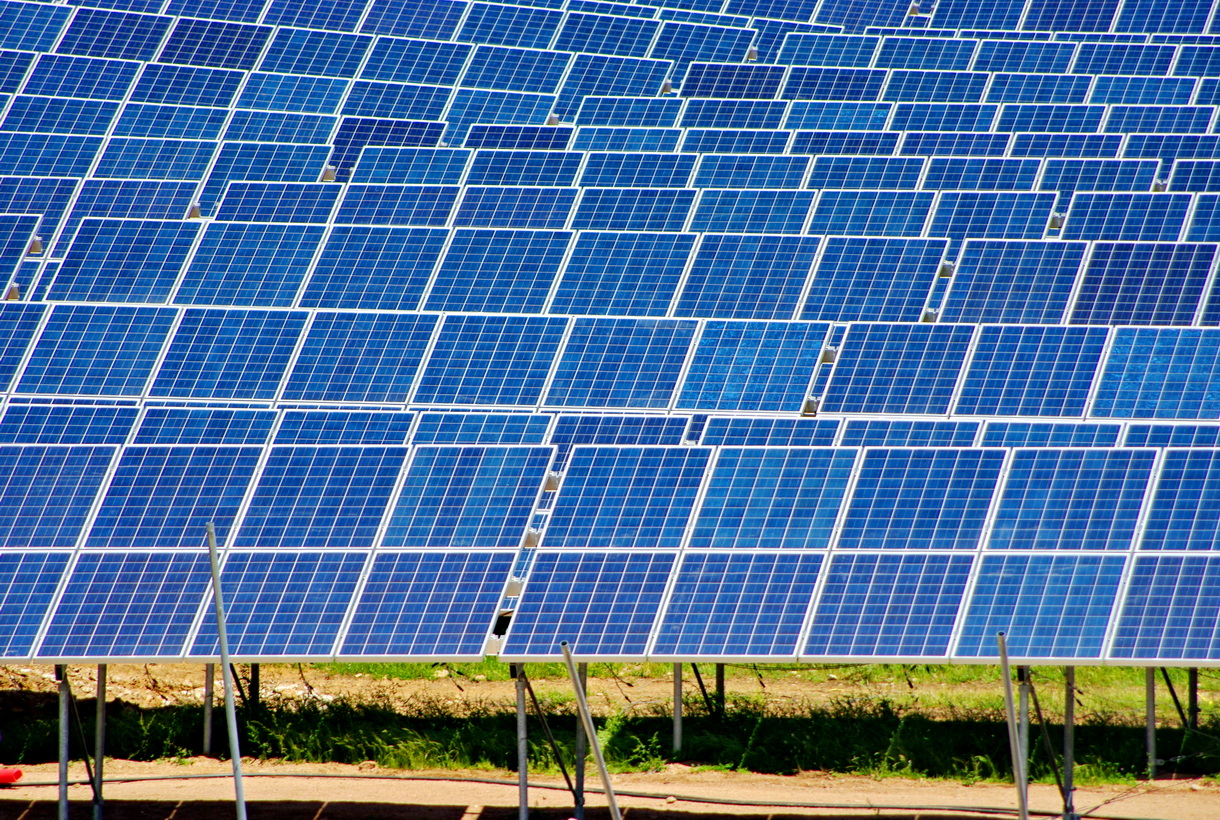
According to the Court of Auditors, without change, “achieving the objectives of the energy transition should lead to a significant increase in State expenditure in the medium and long term which makes it difficult to sustain”
Publi-Information 

On November 17, 2026, the Court of Auditors has published a summary note on state support for energy production. This note summarizes around twentystudies published by the Court of Auditors for two years on various aspects of state support for energy productionincluding one on support for renewable energies published on March 18. This synthesis is brutal.
The Court recalls that nearly 60% of final energy consumption in France today still comes from imported fossil sources, for an annual cost of more than €50 billion in 2025, highly exposed to the volatility of world oil and gas prices. © PP
There ecological transition and the objective of carbon neutrality pursued by France, within the framework of its international commitments, imply replace these fossil sources with energies of renewable origin (hydraulic, wind, etc.) or decarbonized (nuclear) and produced as much as possible on the national territory, in order to strengthen the country’s energy sovereignty.
The State, explains the Court, currently devotes more than €13 billion per year to financial support for energy production in Francein the form of budgetary and tax expenditure, including more than €10 billion for electricity production, €1 billion for biogas production, €1.4 billion for heat production and €550 million for the production of biofuels. The vast majority of this support indeed concerns renewable or carbon-free energieswhich contribute to achieving the objectives for changing the energy production mix1 set in the multi-year energy programs (PPE), the last of which was published in February 2026 and covers the period 2026-2035.
The terms of this support are varied, underlines the Court: regulations, tax incentives, guarantees, repayable advances, equity intervention or subsidies.
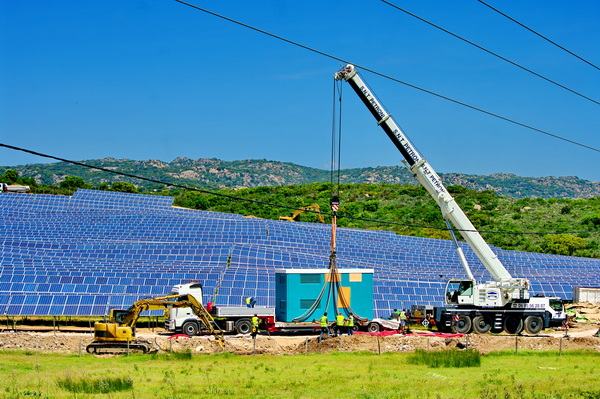
The Court of Auditors emphasizes that the absence of monitoring often leads to rent-seeking situations with sales prices guaranteed over 15 or 20 years that are too high in relation to the production costs of RES. © PP
It’s chaos and we’re moving forward in the dark
Depending on the production sectors supported, almost all forms of public intervention co-exist and sometimes combine, without the reasons for these choices clearly appearing and ensuring the greatest possible effectiveness of public action. In addition, some of this support transfers from the consumer to the taxpayer the coverage of the production costs of the energy mix, and particularly electricity, calling into question the existence of a clear line from public authorities regarding the interest of maintaining a link between the prices paid by consumers and national production costs.
Furthermore, as numerous examples show, where State expenditure is mobilized, alone or in addition to other measures, the efficiency of the support, which presupposes in particular the limitation of windfall effects and the absence of excessive private remuneration, is not always guaranteed.
Finally, theachievement of the quantified objectives of the energy transition is likely, with current support modalities unchanged, to generate a significant increase in State expenditure in the medium and long term, as evidenced in particular by the State’s off-balance sheet commitments associated with public energy service charges. However, no financial trajectory of this support is currently produced over a sufficiently long period to assess the consequences on public finances. However, this would make it possible to assess the sustainability of these expenditures for public finances and to specify the conditions for their control.
Five levers of action
As a result, the Court proposes five levers of action allowing better control and anticipate the trajectory of state support for energy production :
– 1: have precise criteria to assess the need for public intervention in energy production and the desirability of it taking the form of financial support;
– 2: establish a doctrine specifying the criteria for choice between the different modes of financial support from the State, the possibilities of cumulation with other modes of public intervention and the share of the cost of this support to be passed on to energy consumers;
– 3: ensure the efficiency of State support and the absence of excessive profitability for beneficiaries, thanks to better knowledge of the economics of the sectors, genuine competition and a posteriori control;
– 4: consolidate a medium-long term trajectory relating to projections of public support expenditure for energy production;
– 5: closely manage the development trajectory of the supported means of production to avoid pronounced situations of overcapacity which would increase the cost of the transition and public support.
The problem data
Here are some figures to keep in mind to understand the data in the debate. There final energy consumption in France in 2025 reaches 1,600 TWh, including 682 TWh of petroleum products, 264 TWh of natural gas, 404 TWh of electricity and 207 TWh of renewable heat. The share of this consumption coming from fossil fuels is 59%, compared to 23% coming fromrenewable energies and 18% from nuclear fission.
The production of electricity from carbon-free sources in 2025 reaches 522 TWh, including 373 TWh from nuclear origin and 149 TWh from renewable sources. The production of energy from renewable sources, excluding electricity, in France in 2025 was 233 TWh, including 190 TWh of renewable heat, 24 TWh of biogas and 19 TWh of biofuel.
The cost of net imports of fossil fuels amounts to €51 billion in 2025, including €35 billion of petroleum products and €15 billion of natural gas.
THE annual amount of state support for energy production in 2025 – production of electricity, biogas, carbon-free heat, biofuel – amounts to €13.2 billion. The average wholesale electricity price over the last ten years (excluding 2022) amounts to €59.2/MWh, compared to €26/MWh for the average wholesale gas price over the last ten years (excluding 2022).
The increases are rapid, the benchmark gas sales price set by the Energy Regulatory Commission (CRE) stands at €194.90 including tax/MWh (i.e. around €0.1949/kWh on average) in November 2026 and will increase by 5.8% on December 1, 2026 to reach €206.26 including tax/MWh. This sharp increase reflects the international situation, notably the war in Iran which is reducing supplies and pushing wholesale prices up.
With regard to electricity, the regulated electricity sales tariff (TRVE) is established around €0.2001 including tax/kWh in the Base option (6 kVA) after the average increase of +2.5% applied on August 1, 2026. In the long term, the price of the kWh of electricity has increased by approximately +30% over 5 years and +40% over ten years, despite a lull in 2025.
These changes in the price of gas and electricity have two consequences. Electrification is becoming more attractive. For domestic customers, in particular, gas heating could become more expensive than electric heating in 2027, reversing 60 years of progress. For all buildings, photovoltaic solar and, for those with high hot water needs, thermal solar help to stabilize long-term costs and lead to real operating savings.