
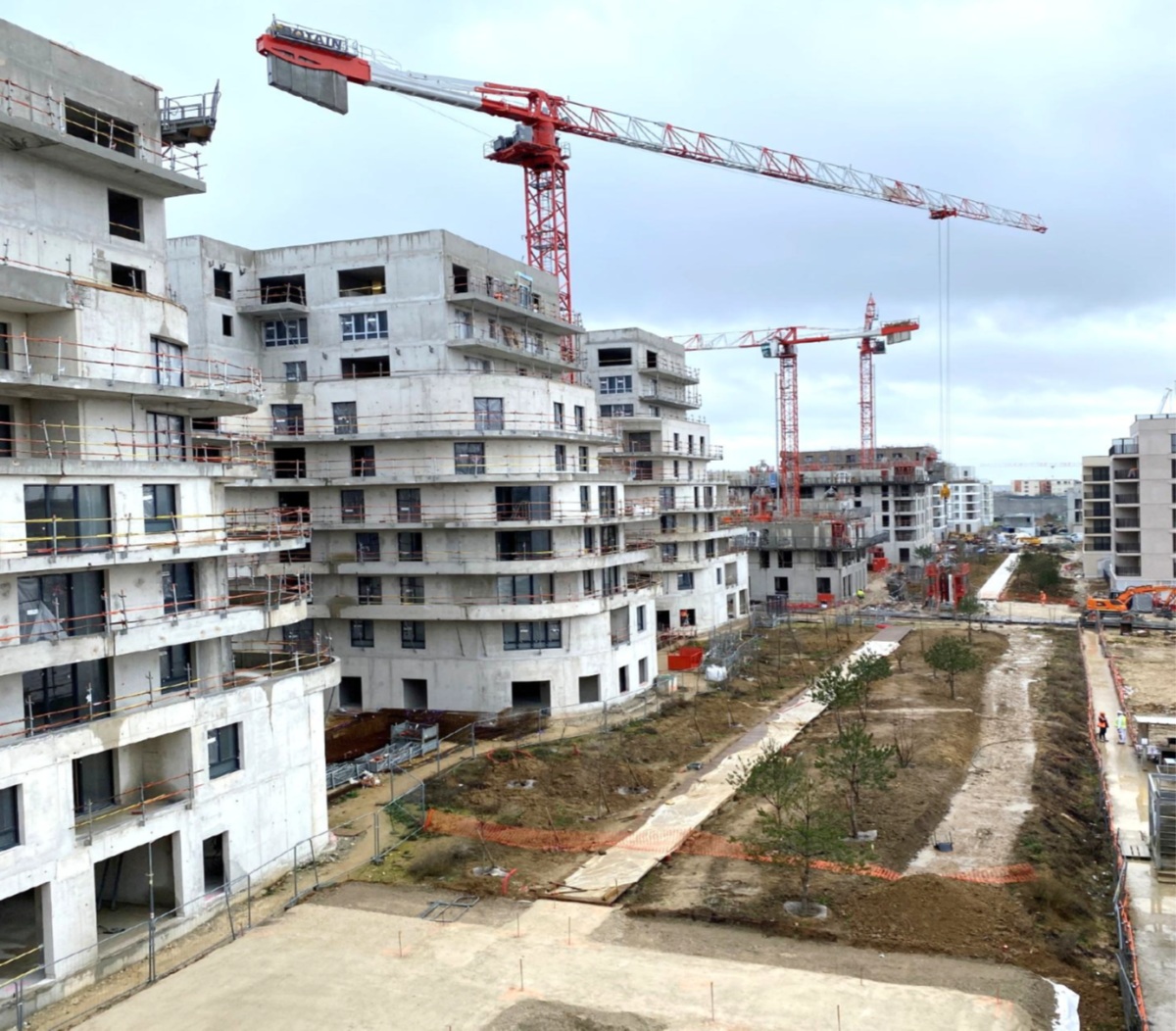
The social landlord CDC Habitat, a subsidiary of the Caisse des Dépôts (CDC), the financial arm of the State, has invested 4.7 billion euros in 2025 to create new housing and renovate its existing stock.
Publi-Information 


In a context of lasting crisis in new real estate, CDC Habitat confirms its role shock absorber of the sector. In 2025, the Caisse des Dépôts subsidiary mobilized 4.7 billion euros in order to maintain a significant level of production as intensify the renovation of its park. An offensive strategy, both economic and environmental.
Production sustained at a historically high level
With 20,091 housing units delivered and 20,000 new projects launched, CDC Habitat displays significant production volumes. “We are at a very high level, comparable to the best recent years“, underlines Clément Lecuivre, chairman of the management board since March.
THE group now manages 573,465 housing units at the end of 2025despite an active arbitration policy including the sale of more than 6,400 properties and the demolition of 3,650 units. Financially, 3.95 billion euros were injected into the development of new housing, supplemented by 750 million euros dedicated to renovation. Amounts “historically high“translating the willingness of CDC Habitat to support the sector in a phase of generalized slowdown.
Energy transition and climate adaptation
Beyond the volumes, CDC Habitat is accelerating the transformation of its park to meet climate challenges. The operator is focusing on reducing carbon emissions and adapting buildings to the effects of global warming. A trajectory aligned with the orientations of the State, particularly in terms of electrification, supported by Sébastien Lecornu.
Concretely, the group is committed to a gradual exit from gas: “we seek to reduce its use as much as possible” specifies Clément Lecuivre. When it remains necessary, particularly for heating or hot water, CDC Habitat plans to integrate a 25% share of biogas into its consumption from 2026.
For 2026, the ambition is to maintain this level of activity, despite uncertainties linked to changes in interest rates and international energy tensions. If a rise in rates, particularly on financing indexed to Livret A, is envisaged, levels close to 2% would remain, according to the manager, compatible with the economic model of social housing.