

Despite a declining tools market, Leborgne is showing growth of 4% in 2025. The Savoyard brand is now banking on consumer DIY and innovation to continue its development.

While several segments of the tooling market show declining results, Leborgne continues to progress. The Savoyard brand, specializing in hand tools, recorded growth of 4% in 2025 to reach a turnover of 20 million euros.
For 2026, the company intends to continue this dynamic by significantly enriching its catalog, particularly for the DIY market general public, while strengthening its presence on professional markets.
Growth against the tide
Leborgne attributes his performance to several factorsincluding the development of its online sales, but also to fundamentals that have structured its strategy for several years: product durability and innovation.
The brand has notably developed several solutions intended to respond to the problems encountered in the field. This is particularly the case of the Nanovib® range, designed to limit musculoskeletal disorders linked to repeated use of tools. And more recently, the zero decibel prop wrench, marketed in 2025came to respond to the challenges of reducing noise pollution on construction sites.
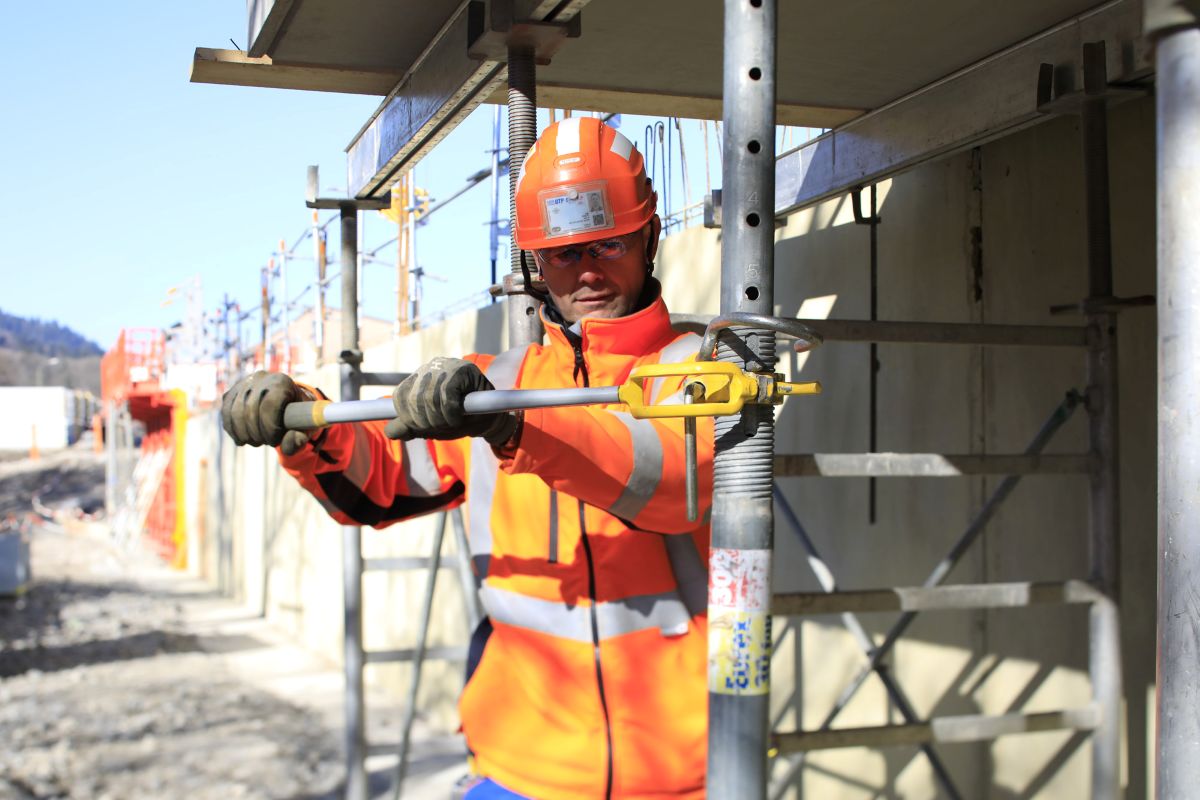
The tightening and loosening of props is still frequently carried out with a hammer, a practice which generates noise pollution of up to 140 dB. Beyond the risks to hearing, these repeated shocks promote operator fatigue, MSDs and premature wear of equipment. In order to respond to these issues, Leborgne has developed the Nanovib 0 dB universal prop wrench: compatible with the majority of props on the market, it allows you to tighten or loosen nuts without hitting with a hammer. Equipped with an elongated handle and an ergonomic handle, it reduces user effort while limiting noise, vibrations and damage to the equipment. © Leborgne
At the same time, Leborgne continues its development in related markets. The company has thus strengthened its ranges intended for water networks and public works, notably with new tools dedicated to hydrocleaning operations. It has also reworked its offer intended for wooden construction and developed several references dedicated to composting in the garden world.
For Florence Hocq, the company’s general director, this strategy allows the brand to continue its growth despite an unfavorable context: “in a contracting market, the relevance of our economic model constitutes a real lever for growth. It allows us to expand our offering to conquer new segments and meet emerging needs.“.
DIY for the general public
The year 2026 marks a new stage in the evolution of the brand with a more assertive opening towards DIY market. In fact, Leborgne plans the introduction of nearly 100 new referencesbringing its catalog to more than 220 products.
.jpg)
Among the new products is a new range of trowels which completes an offer now presented as one of the most extensive in the sector. © Leborgne
This diversification should allow the company to strengthen its presence in large DIY stores as well as in materials trading networks. The objective is to reach a wider audience, made up of individuals engaged in renovation or self-construction projects, without renouncing the quality standards that have built the brand’s reputation.

“Faced with changing uses, Leborgne is reaffirming its agility. We are present on self-renovation and self-construction sites, the importance of which is growing, while remaining as close as possible to the craftsmen who are changing their equipment habits,” underlines Florence Hocq. © Beauvoir Photography
Industrial innovation and French manufacturing on the 2026 agenda
The company is also planning several launches in the coming months in order to continue the renewal of its ranges. There Nanovib® family should notably be enriched with a new multifunction tool versatile. Now forged in-house rather than manufactured in boilermaking, this product benefits from a more sustainable and less energy-intensive manufacturing process, in perfect coherence with the company’s CSR commitments.
Further developments are also expected in the field of public works, a market in which Leborgne seeks to consolidate its positions.
Beyond new product developments, the company highlights its industrial model based on integrated manufacturing and the maintenance of local know-how: a significant part of production is carried out directly within its sites or in the factories of the group to which it belongs, in a spirit Made in France. A strategy aimed at guaranteeing control of product quality while preserving historic industrial skills, in a sector facing ever-increasing international competition.