
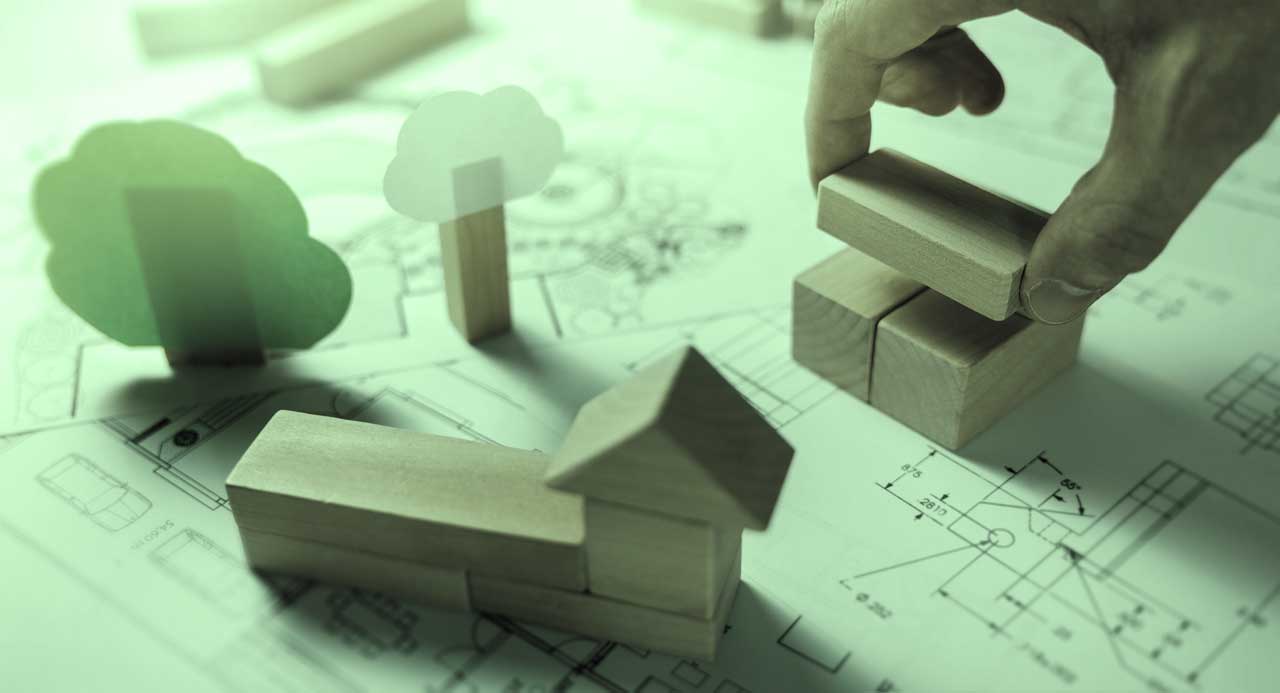
Designing also means evaluating what is destroyed
Given that to “create” something necessarily needs to be “destroyed” or modified, it is good practice to limit the damage and carefully choose the resources that Mother Earth provides us for free, to avoid indelibly impacting the available resources and contributing to environmental disruption, generating unmanageable waste. In the analysis of a project, regardless of the scale at which it is placed, or even in the simple formulation of an idea before its implementation, it is essential to think not only in terms of advantages, but also of negative impacts and consequences that may arise.
It is therefore necessary to evaluate, as a preliminary matter, the levels of transformation and destruction that the project entails, taking them as real and complex elements, strictly interconnected with each other. We must also be aware that the future quality of life on the planet directly depends on design decisions.
Two examples can clarify the ethical value of design choices: the use of extracted materials or the adoption of renewable materials.
The environmental impact of extraction materials
In the first case, choosing extraction materials means using non-renewable resources taken from the soil and subsoil, accepting the consequent irreversible alteration of the territory and its orography.
This condition occurs every time a building is made of reinforced concrete, metal or brick, but also when common materials are used for plaster or internal and external cladding, such as cement, lime, gypsum, sand, gravel, crushed stone, clay, marble, granite, as well as iron, copper, tin, lead, but also rock wool and fibreglass: these are all examples of materials that come from quarries, which lead to a permanent impoverishment of natural resources and a definitive modification of the soil.
In Italy alone, until 2017, there were 4,752 active quarries of different materials, such as sand, gravel, ornamental stones, while around 14,000 were abandoned and required environmental recovery interventions, with filling of the excavations, reforestation works or creation of water basins intended to “hide” the damage caused (Legambiente source).
Although quarried materials are still fundamental for traditional construction and widely used, few are truly aware of the environmental and biological risks associated with extractive activities. These include: the permanent transformation of the orography, the serious impact on aquatic ecosystems and groundwater, the health risks for workers due to inhalation of dust, the dispersion of fine particulate matter, which also compromises chlorophyll photosynthesis, the pollution caused by oils and hydrocarbons from machinery, the contamination of the soil and subsoil by explosives, the alteration of local climatic conditions, the modification of the habitats of native flora and fauna, the abandonment of waste, the proliferation of abandoned quarries and the risk of illegal disposal, to name a few.
Renewable materials: building while reducing environmental impact
On the contrary, the use of renewable materials in construction significantly reduces the environmental impact. An emblematic example is wood, which globally as a plant resource has been estimated at around three trillion trees. Wood is a renewable natural resource, capable of satisfying structural needs, suitable for the definition of the building envelope, for its insulation, cladding and roofing, without involving an irreversible transformation of the environment in which it grows.
In Lombardy, for example, the annual harvesting of trees for various uses is less than 20% of the natural increase in woody mass. This demonstrates how wood can be used on a large scale, remaining constantly available as a resource. If the forests were all managed according to sustainability criteria, a renewable resource would be guaranteed in a continuous cycle over time.
Designing a building, a neighborhood, a city, therefore represents an act of great responsibility which requires the designer to have the ability to foresee the material and environmental effects of his choices on the ecosystem and the reference context. The project takes shape starting from the selection of the materials that compose it, and which can directly impact the well-being of individuals, the community and the balance of the entire ecosystem.