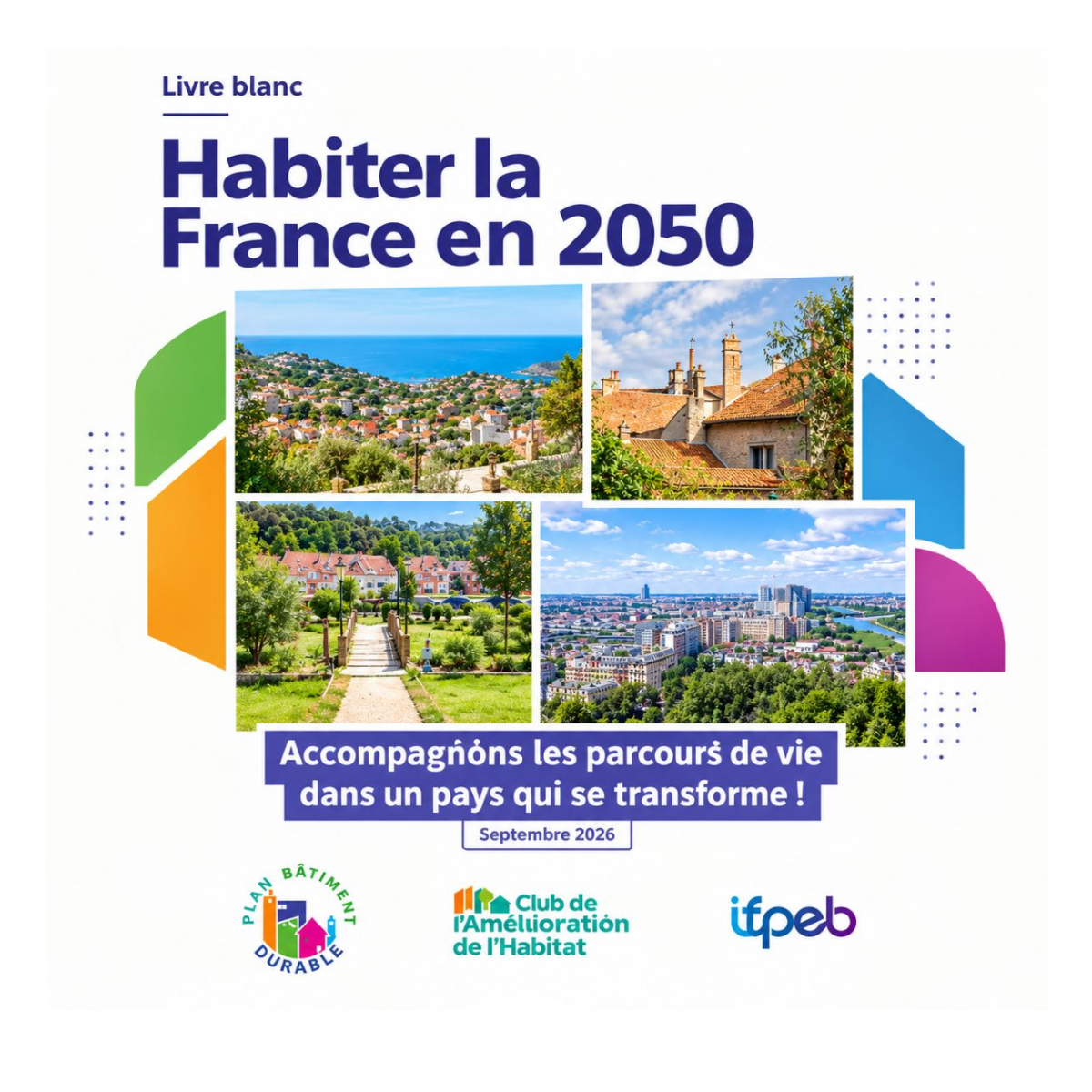
And if the housing policy should finally look more at what already exists than at what remains to be built? This is one of the strong ideas of White Paper “Living in France in 2050 – Let’s support life journeys in a country that is transforming“presented by the Sustainable Building Plan and the Home Improvement Club.
Resulting from a year of consultation, the document intends to lay the foundations for a new policy for transforming the French real estate portfolio. The ambition is to provide public authorities with a roadmap for the next 25 years, integrating demographic, climatic, economic and territorial developments.
Presented on September 28 at the Paris Builders Show, the White Paper was also given to the candidates for the 2027 presidential election gathered during the Grand Oral organized on Batimat.
No longer think only in terms of new housing
The first proposed change is quite radical. For the Sustainable Building Plan and the Home Improvement Clubthere housing policy can no longer be based primarily on production of new housing. It is now necessary consider the existing stock as a resource to be transformed, adapted and better usedan issue concerning renovation as well as changes in use, adaptation to the aging of the population and even new residential mobility.
“The challenge is not to manage existing heritage, it is to transform it into a lever for performance, social cohesion and quality of life. France has the means. It needs to set a course and mobilize its energies and talents. The very broad consultation carried out shows that it is ready.” (excerpt from the White Paper). © Sustainable Building Plan / Home Improvement Club
This transformation should also take place on a larger scale than just the building.
From housing to living area
The first of the three pillars of the White Paper thus consists of “put heritage back into motion“. Behind this formula are three commitments:
– the first aims to adapt housing to different stages of life;
– The second proposes to make the living area, on an intercommunal scale, the new unit of action; the idea being to no longer consider housing in isolation, but to include it in a package including services, care, employment and travel (local policies should thus allow residents to change their residential path without having to give up their territory or their surroundings);
– Finally, the third commitment pushes this logic even further by proposing to pass “from the plot to the territorial ecosystem“.
There transformation of the building should then integrate climate and environmental issues, but also new uses, accessibility, health, comfort and quality of life. The inhabitants themselves are called to take part in this transformation.
Restore confidence to accelerate transformations
The second pillar addresses another obstacle, that of the difficulty for the French in initiating and carrying out projects to transform their homes. The White Paper first proposes making “habitability” a collective issue, in order to allow everyone to be able to live, work, age and plan for themselves sustainably in their home and its territory. This involves articulating responses to climate, environmental and societal changes, while limiting as much as possible their restrictive effects on living conditions.
But we still need to support households in this process. The fourth and fifth commitments therefore concern the journeys of individuals. Faced with the multiplication of systems, uncertainties over financing and the dispersion of actors, the PBD and the CAH defend the idea of new relays capable of supporting project owners over the long term because “LLife journeys should not be obstacle courses“.
Create a real transformation sector
The sixth commitment directly concerns building professionals. In order toaccelerate the transformation of the existing fleetthe two organizations propose to structure a specialized sector, capable of handling the different stages of a project: diagnosis, engineering, financing, works, operation and evaluation of results would thus be integrated into the same support chain. The goal is to create a network of global operators trained and capable of reproducing effective solutions on a large scale: “ttransforming what exists must become simpler, faster and more accessible“.
The cost of housing becomes a political indicator
The third pillar relates directly tohousing accessibilitythe White Paper proposing to make controlling the cost of housing a national objective in its own right. The weight of housing expenditure in household resources would thus become an official indicator for steering housing policies; ua way of no longer measuring only the number of homes produced or renovated, but also their real impact on household budgets.
The eighth and final commitment focuses on financing the transformation of the real estate portfolio. With public finances lastingly constrained, the PBD and the CAH consider it necessary to find new sources of financing to support the renovation. Their proposal consists in particular of relying more on the value already accumulated in real estate assets, in addition to the savings and liquid assets of individuals.
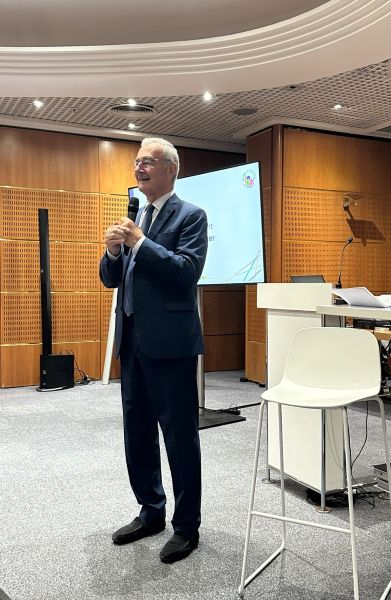
“This necessary transformation represents a historic opportunity: better respond to the needs of the French, create a new supply shock based on what already exists, strengthen the attractiveness of territories, preserve the value of heritage and sustainably reduce the weight of housing in the household budget” declared Philippe Pelletier, president of the Sustainable Building Plan during the presentation of the White Paper at the at the Paris Builders Show. © Sustainable Building Plan / Home Improvement Club
The White Paper constitutes a first step. The two organizations now wish to disseminate it to national and local political decision-makers, but also to all stakeholders in the sector, because thedisplayed ambition goes beyond a simple contribution to the electoral debate: the Sustainable Building Plan and the Home Improvement Club hope that these proposals will serve as a basis for a future programming law dedicated to the transformation of existing buildings and real estate stock.