
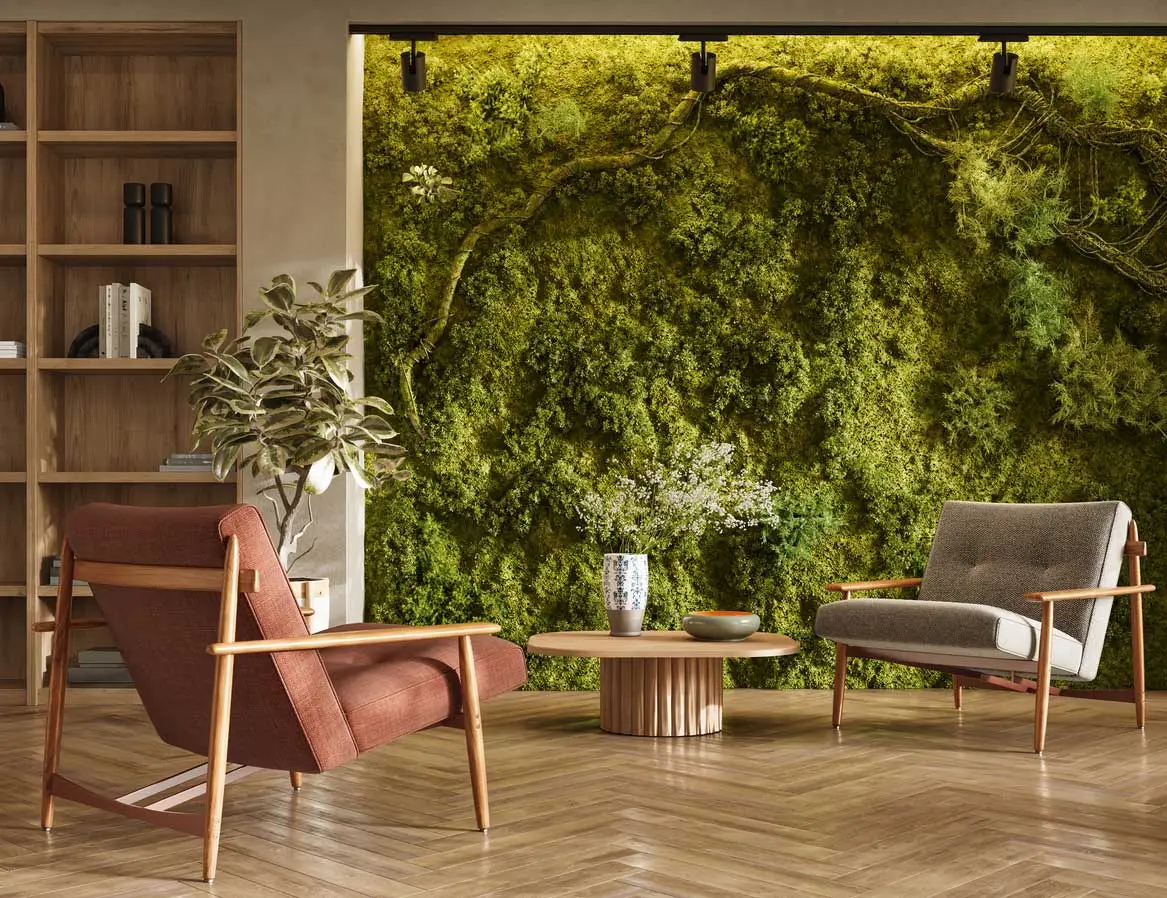
We spend over 90% of our time indoors. Homes, offices, work spaces and places of everyday life have become increasingly high-performance containers on a technological level, but often lacking in authentic connections with nature. From here arises an increasingly central question for designers and users: Do the spaces we live in really promote our well-being?
The book is part of the growing international debate on biophilic designa discipline that studies the positive effects of connection with nature on built spaces and on people’s psychophysical health. The peculiarity of the volume, however, is the exclusive focus on the domestic environment: not offices, retail or hospitality, but the home as a regenerative, multisensory and salutogenic place. Let’s take a closer look at the contents of the book.
The nature deficit and housing well-being
The starting point of the book is the so-called “nature deficit”, an increasingly widespread condition in contemporary societies and associated with stress, cognitive fatigue, difficulty concentrating and alteration of emotional well-being. Fusco tackles the topic with an interdisciplinary approach, intertwining architecture, neuroscience, environmental psychology, biophilia and interior design.
The author proposes a concrete reflection on the way in which domestic environments can return to supporting human well-being through natural light, authentic materials, vegetation, air quality, multi-sensory comfort and deeper relationships with natural elements.
One of the most original aspects of the volume is the translation of the concept of “compensatory tools” from special pedagogy to biophilic planning. Apparently simple elements – a plant in the field of vision, better modulation of light, material surfaces or the presence of water – become design tools capable of compensating for the disconnection from nature and improving the quality of living.
A journey between theory, neuroscience and practical applications
The volume accompanies the reader from the theoretical bases of biophilia to the operational applications in home environments, addressing topics ranging from multisensory design to biophilic patterns, from salutogenesis to fractals, up to the emerging role of biophilic designer as a new professional figure. Among the main chapters of the book:
- A systemic and transdisciplinary paradigm for designing with nature
- Biophilia. The scientific roots and constructs of connection with nature
- Fundamentals of biophilic design
- Compensatory tools for living in harmony with nature
- The multifaceted and multisensorial experience of nature in biophilic design
- Fractals: revealing the hidden geometry of nature to design well-being
- Salutogenesis and biophilia for regenerative spaces
- The biophilic designer: a new green job of the contemporary world
- The biophilic house: colour, lighting, water, vegetation and natural materials
- Biophilic compensatory tools applied to home environments
- The need for regulatory cogency
Particularly interesting is the part dedicated to specific domestic environments – living room, kitchen, bedroom, bathroom, balconies and passage spaces – with application examples and design strategies that make the text useful to both professionals and readers interested in living wellness.
An increasingly central theme for architecture and design
In recent years the concept of indoor wellbeing has become central to the architectural debate, also in light of the changes introduced by smart working and prolonged stay in domestic spaces. In this scenario, Alfredo Fusco’s book proposes a reading that goes beyond energy sustainability alone and opens up to a broader vision of living: not just efficient homes, but environments capable of regenerating attention, emotional balance and quality of life.
With an afterword by Arch. Lucia Krasovec-Lucas, the volume is aimed at planners, architects, interior designers and construction professionals, but also at those who wish to understand how the quality of domestic space can concretely impact daily well-being.
An invitation to rethink the contemporary home
Living in nature. Biophilic design for well-being at home it does not limit itself to introducing a design methodology, but proposes a change of cultural paradigm: recovering the relationship with nature through living spaces. A theme destined to become increasingly relevant for contemporary design, between sustainability, health and quality of life.
Thank you for subscribing to the newsletter.