
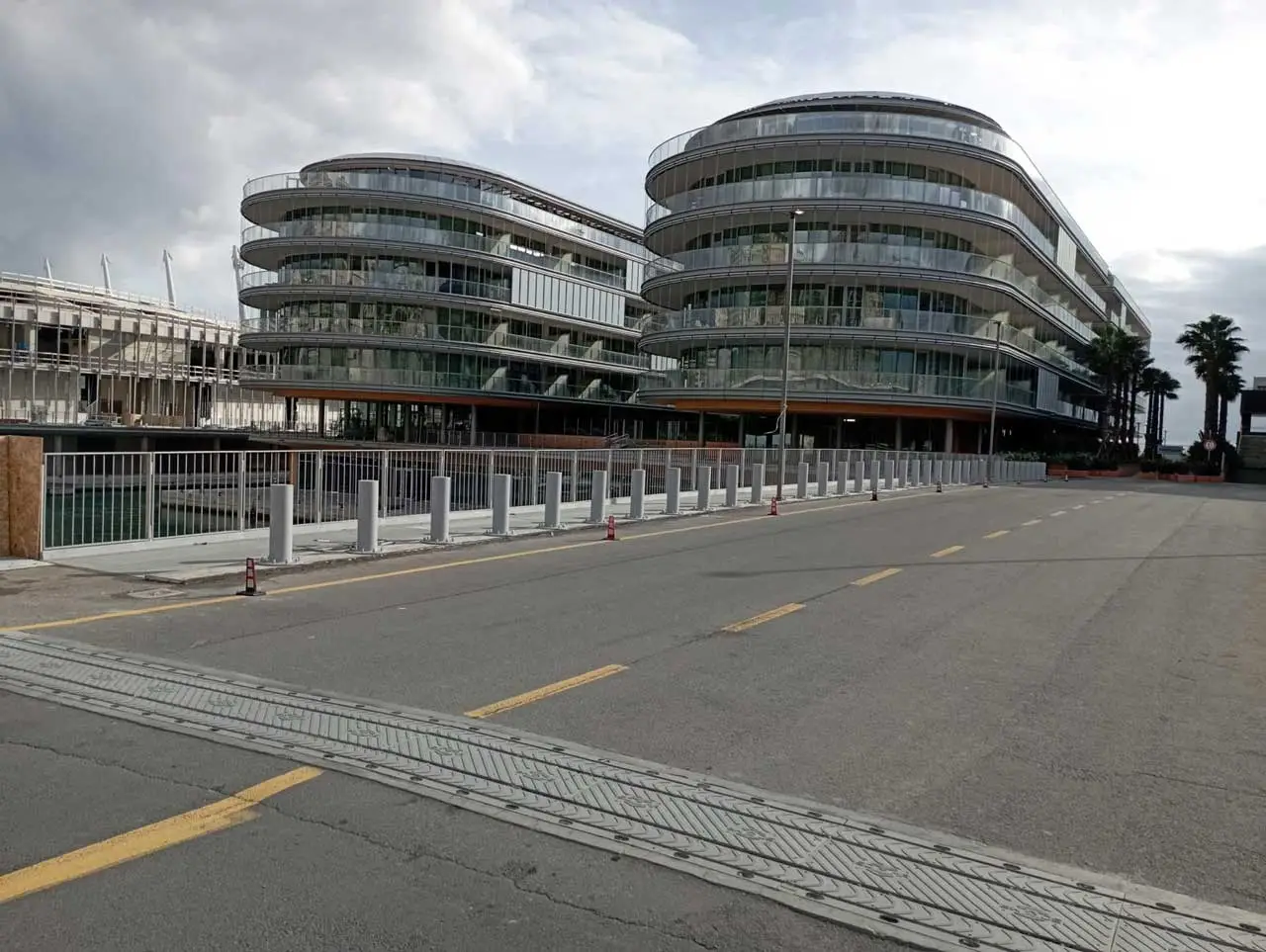
Mobile bridges and the choice of Pilomat solutions
The complex project of the Levante Waterfront develops along the sea promenade that runs along the new navigable canal, and includes: a linear park, the redevelopment of the exhibition area, the renovation of the sports hall and the exhibition pavilion, the reorganization of naval areas and basins and the construction of new buildings for residences, offices, hotels and other services.
The works for the navigable canal (54,000 m3 of water) are impressive. Among these, the mobile bridges stand out for their technical complexity, which connect the islands created by the canal with the rest of the seafront, ensuring continuity of the routes to important buildings, including the exhibition pavilion. In this context, Pilomat – a leading company in vehicular access control worldwide – has designed and produced the new fixed bollards located along the bridges. The Grassobbio (Bergamo) company took care of all the aesthetic, technical and safety aspects, contributing with its customized solutions to the improvement and success of the project.
Says Emanuele Imberti, Pilomat’s Italian Sales and Assistance Manager: “We were called to propose an alternative solution to the installation of guardrails along bridges, considered unsightly by the construction management. Starting from the fixed bollard that best meets the needs from an architectural point of view, we have therefore developed a completely new product from a technical point of view.”
Problems addressed and main characteristics of Pilomat bollards
Both bridges are made with reinforced concrete beams, placed on the sides of the central roadway, which also support the metal grating pedestrian shelters. The objective was to separate pedestrian paths from vehicular flow, creating a barrier capable not only of blocking a moving vehicle, but also of avoiding the possibility of falling into the canal.
The bollards had to be fixed to the side beams, which however were initially designed for the installation of the guardrail. Pilomat engineers therefore developed a solution based on the use of anchors, for anchoring deep into the concrete, arranged in a crown around the base. The bollards therefore form discontinuous but extremely resistant linear barriers.
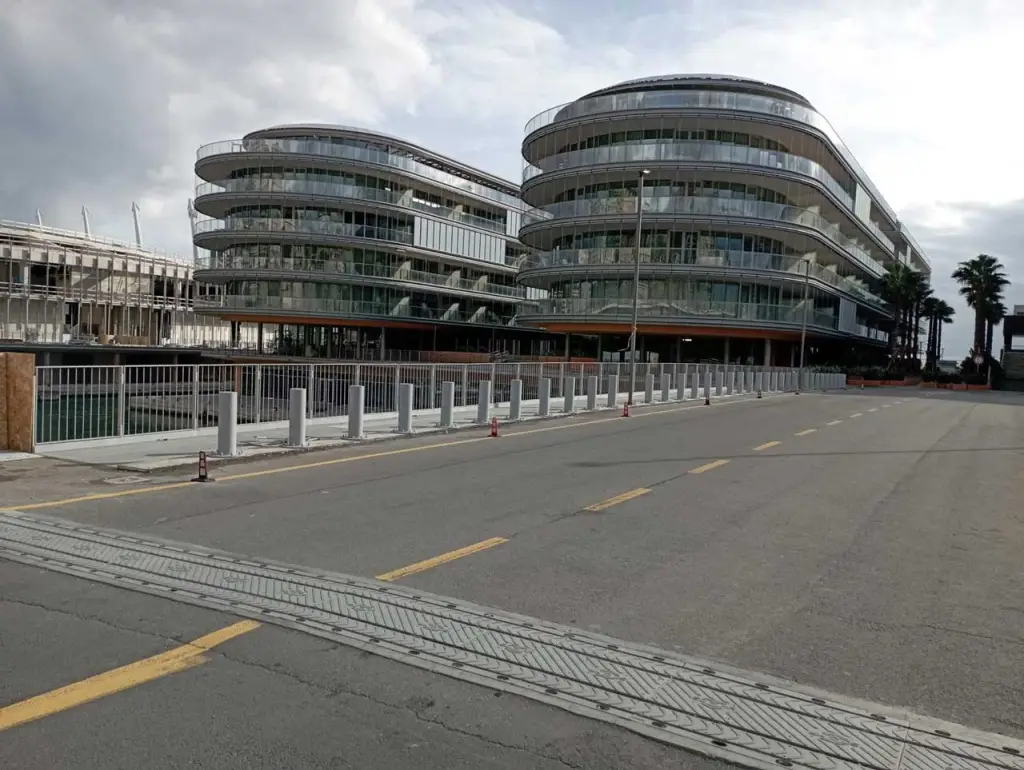
“In terms of performance, it was expected that both a car weighing 3.5 tonnes, moving at a speed of 30 km/h, and a truck weighing 21 tonnes at 5 km/h would be resistant to collapse. The bollards and the anchoring system were sized accordingly, so we installed two bollards per bridge, lending our assistance during the thrust tests carried out by the company”Imberti explains further.
The conformity tests had a positive outcome for both bridges and the company was therefore able to complete the installation of the other bollards, for a total of 122 elements, all customized also from an aesthetic point of view according to the designers’ indications.“We are very satisfied to have contributed to the success of the project by deploying the best skills developed by Pilomat in over fifty years of activity”concludes Imberti.
For more information
pilamat.com