
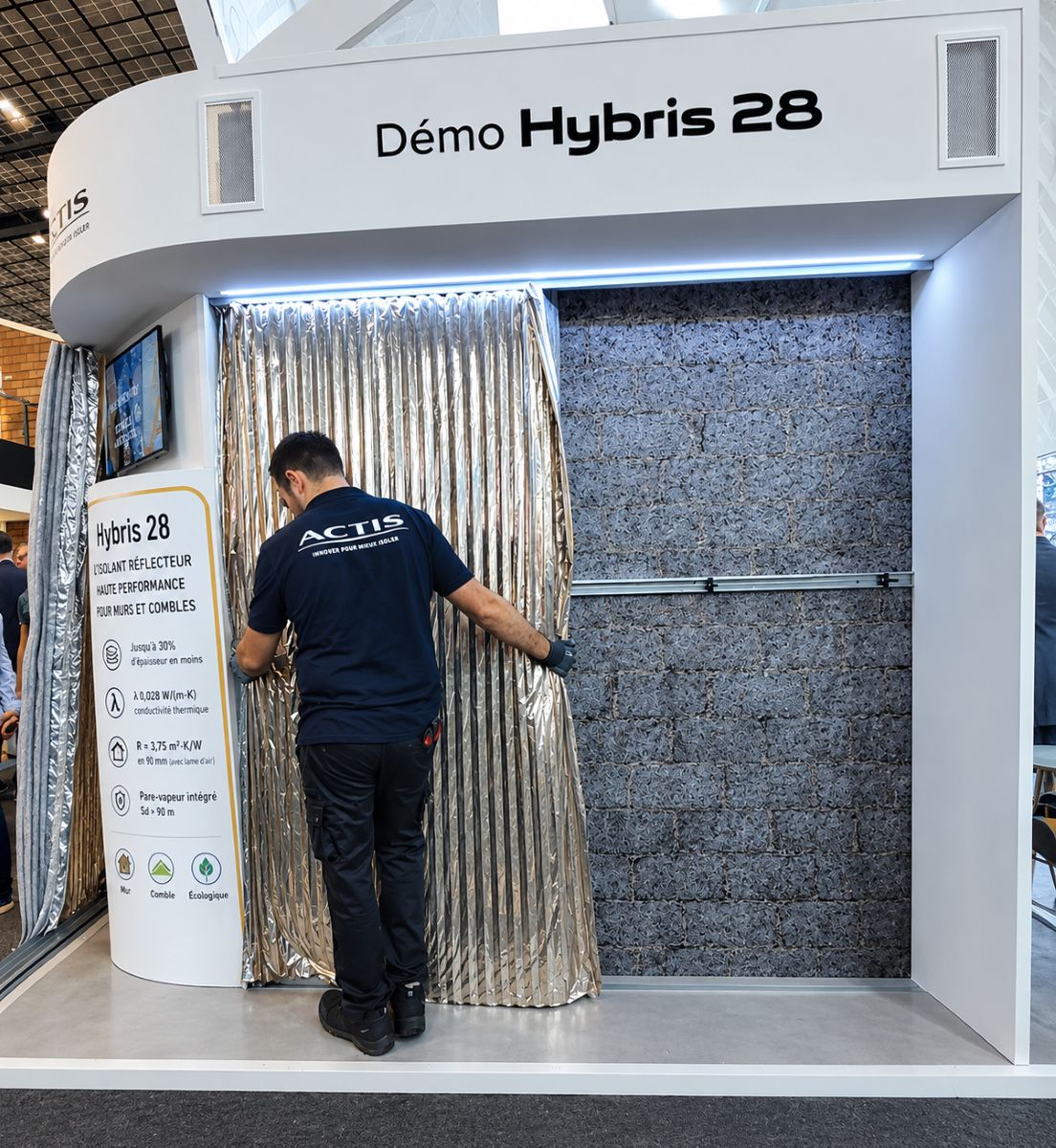
Actis, French manufacturer of cellular reflective insulation since 1980, based in Limouxin Aude, presented its latest innovations at the Paris Builders Show 2026, and of course Batirama was there. The family business, which employs around 360 people and has five production sites in France, is banking on its X-AIR technology® in order toimprove the thermal performance of its products while limiting their thickness.
Among the new products unveiled at the Show, Hybris 28 aims to insulate walls and atticswhile the ranges of flexible insulation intended for roofs evolve in order to meet regulatory requirements and facilitate implementation on site.
Presented at the Paris Builders Show 2026, Hybris 28 constitutes the new generation of cellular reflective insulation from Actis. The French manufacturer announces a thermal conductivity of 0.028 W/(m·K) and a thermal resistance of 3.75 m2.K/W for a thickness of 90 mm associated with an air gap in the wall. A performance 19% higher than insulation with thermal conductivity λ32 in 100 mm thickness. To achieve an equivalent R, 120 mm of thickness is required for an insulator with this thermal conductivity. © Laure Pophillat
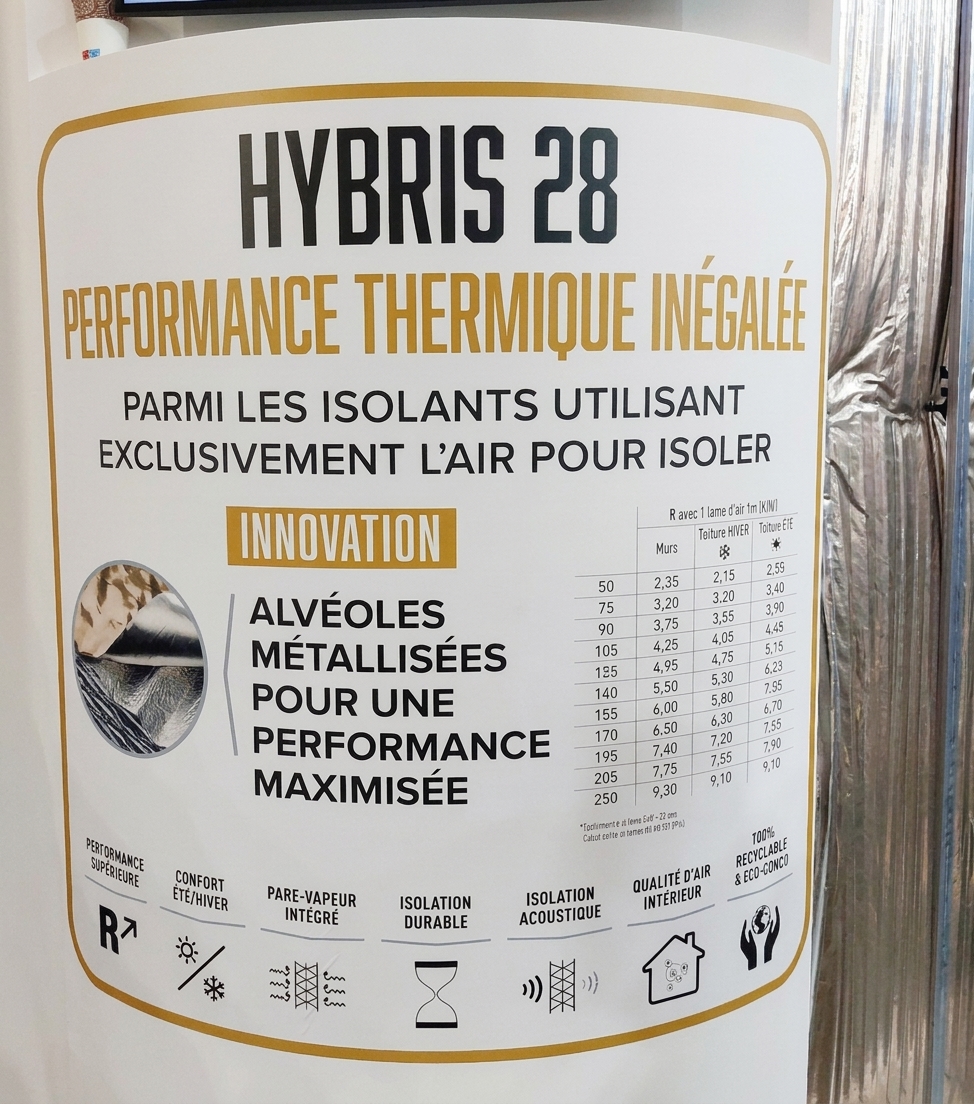
In summer, when the heat flow is downward (the hot air descends towards the home), the Hybris 28 insulation installed in slopes with an air gap, displays even higher thermal performance. For example, with a thickness of 155 mm, it will offer, in summer, an R = 6.20 m2.KW (downward heat flow), compared to an R =5.80 m2.K/W in winter (upward heat flow). © Laure Pophillat
Hybris 28: insulate more without thickening the walls
How improve the thermal performance of a wall without proportionally increasing theinsulation thickness ? This is the challenge that Actis intends to respond to with Hybris 28its new solution intended for interior insulation of walls and attics. Unveiled at Paris Builders Show 2026this product, like all Actis cellular reflective insulationis based on the X-AIR® alveolar reflective technology, developed by the French manufacturerwith however an important evolution: the metallization of all the cells.
The principle exploits the natural insulating qualities of air by trapping it between low-emissive reflective films, in a honeycomb structure. This, inspired by nature and bees’ nests, allows you toinsulate better with less material ; the aim being to limit heat transfer by acting on conduction, convection and radiationwhile reducing the quantity of material needed to manufacture the insulation.
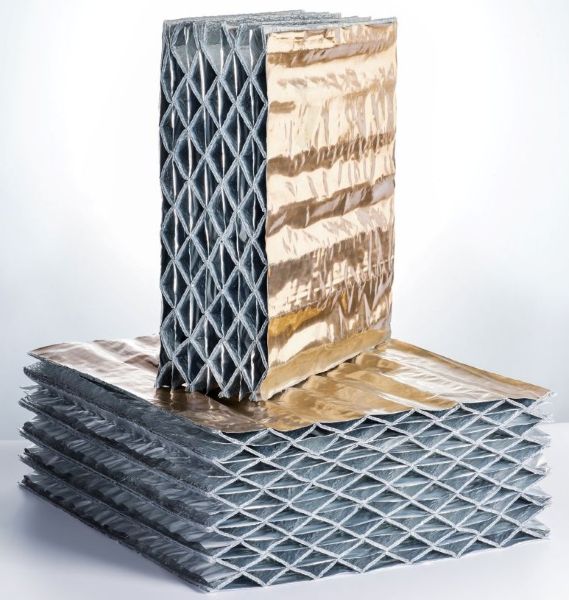
With Hybris 28, Actis announces a thermal conductivity of 0.028 W/(m·K), close to the reference value for still air, i.e. 0.026 W/(m·K) under the conditions considered by the manufacturer. This characteristic constitutes the main technical argument of this new generation, which aims to obtain high thermal resistance in a limited thickness. Hybris 28 also integrates the vapor barrier function avoiding the installation of an additional offset membrane, imposed by traditional insulating DTUs. It ensures thermal insulation (summer/winter), sound insulation and airtightness of walls and roof slopes. © Actis
An air blade that counts in performance
There X-AIR® technology is based on the association of several physical mechanisms; the alveolar structure limits transfers by conduction, while the trapped air reduces convective movements. Reflective films, for their part, help to limit exchanges by radiation. Actis indicates that its films reflect at least 94% of thermal radiation under the conditions announced.
The behavior of the insulation also depends on the direction of heat flow. For a sloping roof, the manufacturer puts forward a thermal resistance of 6.20 m2.K/W in summer, when the heat flow is downward, compared to 5.80 m2.K/W in winter, when the flow is upward, for a thickness of 155 mm with the configuration considered. This difference illustrates the importance of operating conditions in evaluating performance; it does not mean that insulation alone guarantees the summer comfort of a building since this also depends on the thermal resistance of the entire wall, the inertia of the building, night ventilation, solar protection and heat gain.
Actis also relies on a CSTB report referenced 21-053 to argue that the gain in thermal resistance in summer can reach 50% compared to traditional insulators in certain configurations.
Integrated vapor barrier and simplified installation
Beyond thermal performance, Hybris 28 intends to respond to very concrete construction site constraints. The product incorporates a vapor barrier function, with an announced resistance to water vapor diffusion greater than Sd = 90 m. This characteristic aims to avoid the installation of an additional vapor barrier membrane when the configuration of the structure and the applicable regulations allow this solution.
An integrated adhesive tab should also facilitate the treatment of joints such as the continuity of the airtightness.
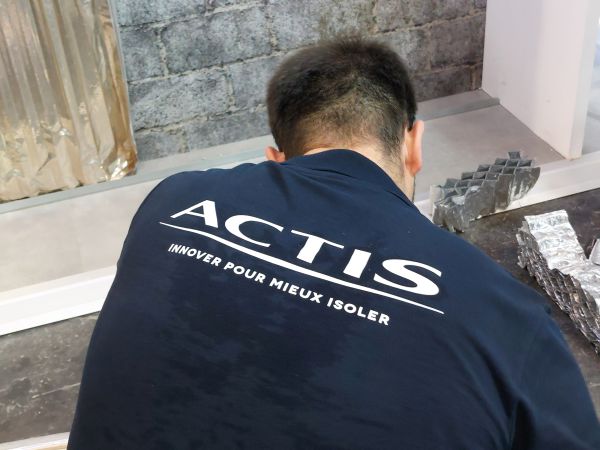
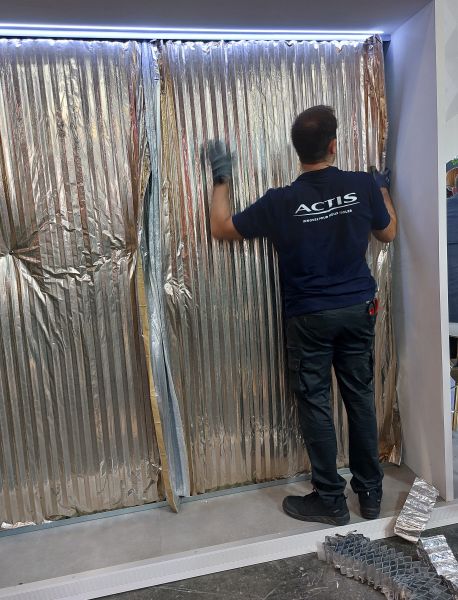
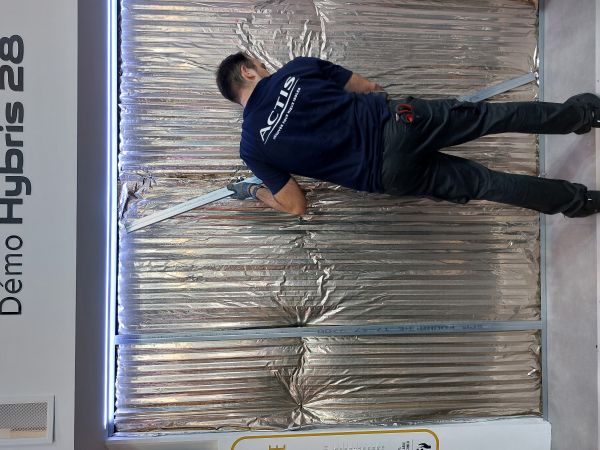
During its demonstration on its stand at PBS, Actis also highlighted the lightness of the product, its easy cutting and the absence of dust during handling, elements likely to facilitate the work of companies. © Laure Pophillat
The compact packaging constitutes another argument of the manufacturer, with up to 13.44 m2 of insulation per package according to the formats concerned, the objective being to reduce storage space, simplify handling and limit return trips to the site.
There Hybris 28 range is announced in thicknesses between 50 and 250 mm. The manufacturer also gives it sound insulation properties, resistance to humidity and settling as well as an A+ rating for volatile organic compound (VOC) emissions.
For individual house builders, architects and thermal design firms, reducing wall thickness can be of interest when every centimeter counts. It can in particular help to preserve the living space or to limit the constraints around the joinery.
Roofing: flexible X-AIR® insulation is evolving
Actis also presented developments in its flexible X-AIR® technology for external roof insulation.r. The affected ranges include Triso-Toiture, Boost’R Hybrid’, Triso Hybrid’, Triso Super 12+ and Triso Laine+.
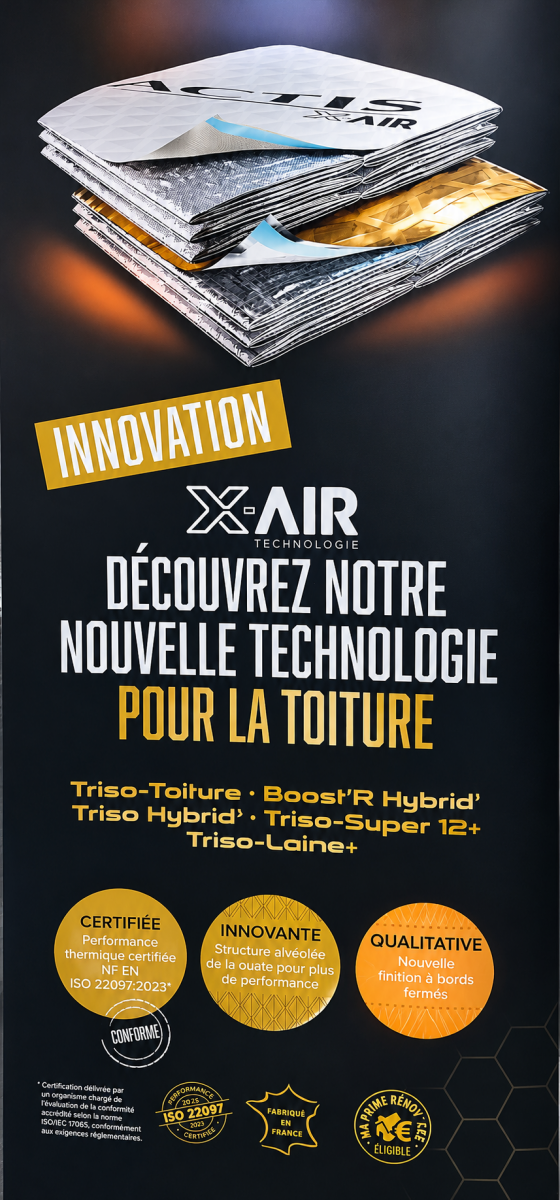
The manufacturer indicates that these solutions are certified according to the NF EN ISO 22097:2023 standard, which governs the determination of the thermal performance of reflective insulators. This standard takes into account the specific characteristics of these products, in particular their reflective surfaces and the associated air spaces. © Laure Pophillat
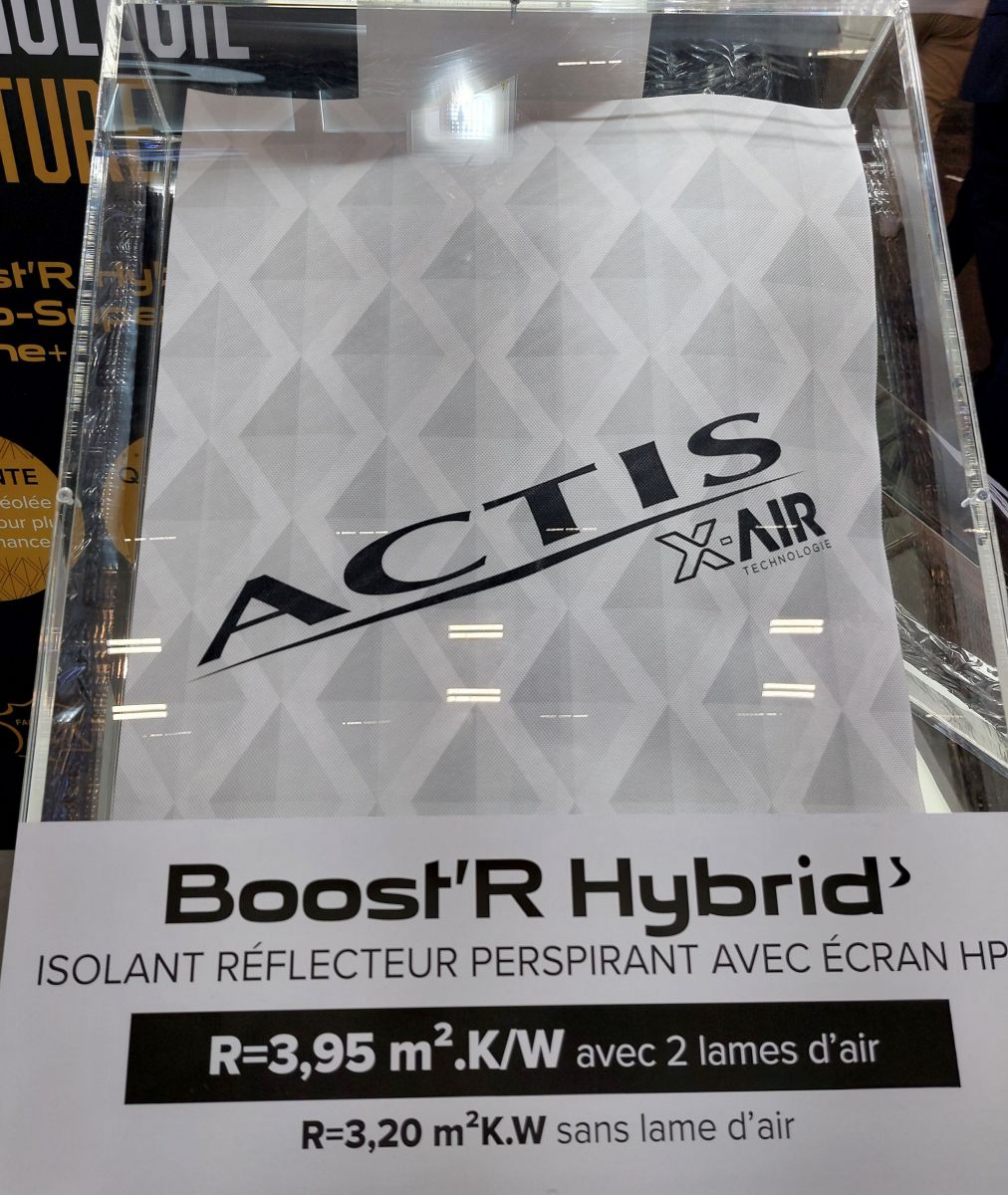
The honeycomb design remains at the heart of these solutions. Structured wadding captures air between the reflective films, using a process patented by the manufacturer. The company thus intends to obtain high thermal performance without resorting to a systematic increase in the density or quantity of material. © Laure Pophillat
Actis emphasizes that its flexible insulators also meet the requirements relating to certification by a conformity assessment body accredited according to the ISO/IEC 17065 standard. This point is important for professionals who must justify the thermal performances retained in their studies and verify the suitability of the products to the regulatory requirements and the applicable assistance systems.
Another development announced: the edges of the insulators are now closed by weldinga finish which should improve the grip as well as the handling of the rollers. The products also retain their integrated adhesive tab, intended to facilitate the creation of joints and to ensure the continuity of insulation and waterproofing. Packaged in rolls of 16 m2they allow roof surfaces to be quickly covered by reducing the number of joints and handling. These characteristics are particularly highlighted for renovation work, where the organization of the site, accessibility and installation times weigh on the overall cost of the intervention.
A new visual identity planned for 2027
From the first half of 2027, the roof insulation incorporating X-AIR® technology will adopt a new visual identity since the currently black membranes will change to white, with a honeycomb pattern intended to make the technology immediately identifiable. Actis presents this change as the culmination of fifteen years of research and development devoted toimprovement of its reflective insulators.
Concerning the environmental assessment, the manufacturing of the insulators Actis se distinguished by a consumption limited energy And water, notably grace has the absence of ovens has very high temperature. THE appeal has of the insulators less thick, capable to ensure a performance thermal high, allow also of reduce THE impacts environmental related has their manufacturing as has their transportation. HAS there key, A balance sheet carbon favorable, documented In THE sheets of statement environmental And sanitary (FDES) of the products, Who contributes has restrict the imprint carbon of the buildings.
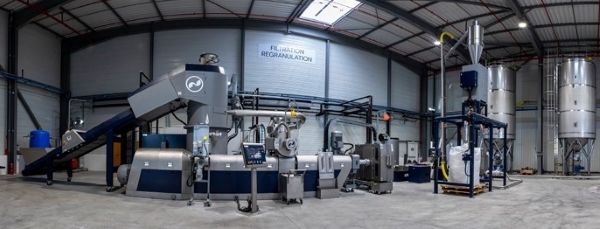
As the whole of the insulators X-AIR® of manufacturer, Hybris 28 And there new generation of insulators flexible integrate 30 % of materials recycled. They are also designed For be completely recyclable At breast of there new unit of recycling of Actis, implanted in Occitania.© Actis
This approach economy circular registers In there policy quality, security And environment (QSE) of the company, rewarded by a medal money EcoVadis in 2025. This distinction greet THE commitments of manufacturer in favor of practices more sustainable And responsible. Actis puts also in Before there certification Cradle to Cradle® of her insulating Hybris 31, other illustration of this orientation environmental.