
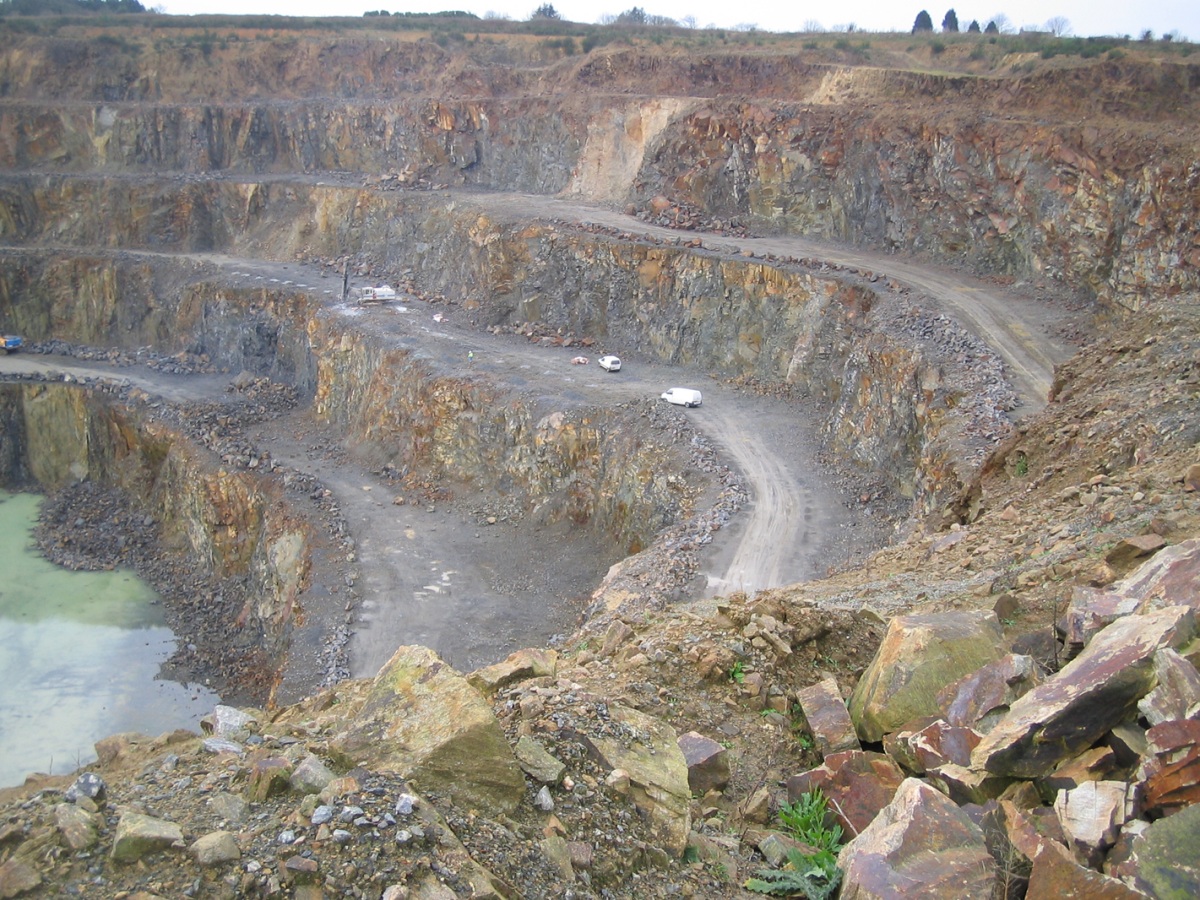
UNICEM publishes its Manifesto to recall the strategic role of quarries and construction materials, pillars of sustainable and resilient territories, combining local production, employment and environmental transition.

L’UNICEM (National Union of Quarrying and Construction Materials Industries) publishes its Manifestoa declaration of intent which underlines the strategic role of the mineral sector in the daily functioning of the territories.
Beyond the professional organization, this document highlights the women, men and companies that produce essential materials locallywithin a strict regulatory framework and under the constant control of State services.
Guarantee local and sustainable supply
L’UNICEM affirms its priority : ensure the continuous availability of construction materials as close as possible to construction sitesin order to meet the structuring needs of communities, whether in terms of housing, public facilities or infrastructure. The Manifesto recalls some benchmarks: each year, 400 million tonnes of aggregates are consumed in France, including 100 million from recycling, and 32 million m3 of ready-mixed concrete are produced for local use, less than 50 km from quarries and 30 km from BPE power plants.
In this context, UNICEM calls for strengthening cooperation with communities and establishing a transparent and structured dialogue, integrating:
– taking into account the mineral sector in town planning documents;
– There protection such as securing deposits and land ;
– The concerted organization of flows and traffic conditions for construction sites, particularly for the transport of ready-mixed concrete;
– And, finally, the implementation of awareness and transparency actions, such as site visits and open days.
These measures aim to consolidate territorial resilience and guarantee a stable supply, difficult to replace by imports, the environmental, social and economic impact of which would be heavy.
A locally anchored and committed sector
L’UNICEM recalls that mineral activity is often the last industry in rural areas and constitutes a real economic engine: it maintains sustainable jobs, structures the local fabric and, at the end of its career, the sites can generate new opportunities for the territories, whether these are natural spaces, leisure activities or photovoltaic projects.
The sector is also committed to the environmental transition. There recovery of inert materials reaches 92%, and the concrete is fully recyclable. These commitments are framed by the Mineral Industries CSR Label, a progress and monitoring tool for all companies in the sector.
The Manifesto highlights three major areas of collective action in the sector: guaranteeing sustainable and secure local supplies, supporting employment and the local economy, and making a concrete contribution to the environmental transition.
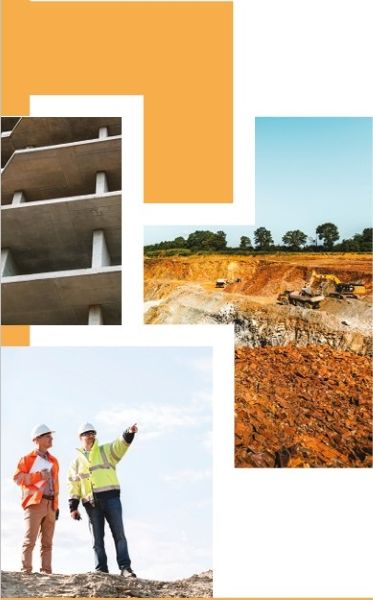
“Without aggregates, without concrete, without ornamental rocks, there are no roads, no schools, no hospitals, no networks, no structural works,” recalls UNICEM, which calls for these materials to be considered essential to collective life. © UNICEM
Strengthened dialogue and partnerships
The document emphasizes the need to strengthen cooperation between UNICEM, its regional delegations and local authorities.
On the ground, dialogue is already effective: in New Aquitaine, 85% of mayors welcoming a career consider this activity as an opportunity for their municipality (COHDA 2024 survey), and this is especially true since theUNICEM offers a win-win partnership modelin which the territories benefit from a reliable and sustainable supply while the sector sees its role recognized and supported, in the service of the general interest.
