
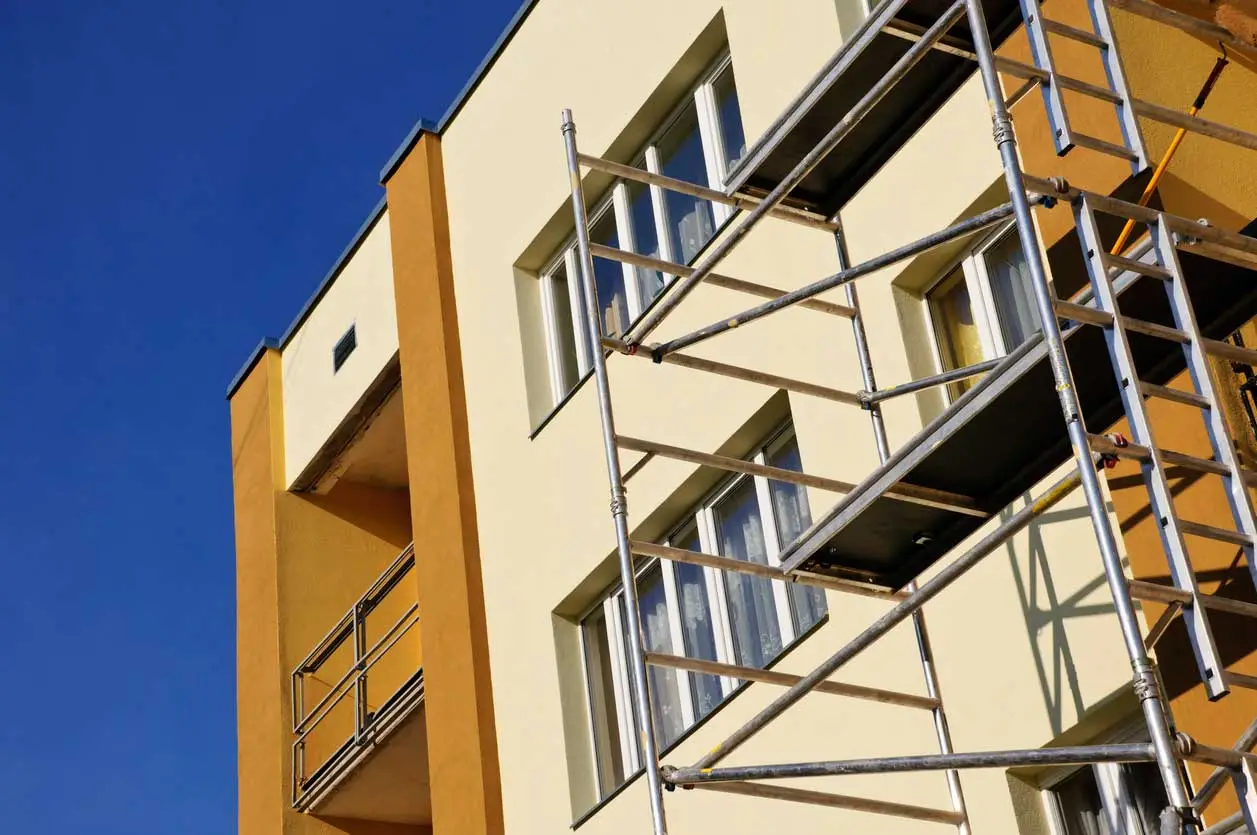
Installation of scaffolding for works by individual condominium owners: legitimate behaviour
In light of the above, it is possible to state that the scaffolding represents a temporary use, instrumental and necessary for the maintenance of the real estate unit, fully compatible with the destination of the common parts and with the rights of the other participants. To confirm the above, a case examined by the Court of Appeal of Milan (sentence of 17 November 2025, no. 3105) deserves to be highlighted. The Milanese judges dealt with a long affair regarding the scaffolding installed by a condominium owner to renovate her apartment. The scaffolding, erected in 2017 with the consent of the owners of the support areas and after notifying the administrator, was necessary for work that was regularly absent.
During the works, however, a damaged beam had emerged in the attic, a circumstance which had forced the suspension of the private works and the start of technical checks by the condominium. The condominium itself, after having approved the work on the beam, had used the condominium’s scaffolding, subject to an economic agreement, and had subsequently also approved work on the roof covering, for which the scaffolding was once again indispensable.
Despite this, the condominium had ordered the owner to remove the scaffolding, claiming that its maintenance was illegitimate. The Court ruled in favor of the condominium. The Court of Appeal confirmed this approach. The condominium was fully entitled to install the scaffolding pursuant to art. 1102 cc, since the scaffolding did not alter the use of the common areas nor prevented the other condominiums from using it. Furthermore, the behavior of the condominium (which had used the scaffolding for its work, had stipulated economic agreements and had accepted the conciliation proposal of the precautionary judge) was considered as a real ratification of the maintenance. For this reason the appeal was rejected and the condominium condemned to pay the costs.
The temporary removal of artefacts that hinder the condominium’s scaffolding
As mentioned, the installation of the scaffolding necessary for the execution of authorized works in the real estate unit is legitimate, when the work does not alter the use of the common areas or prevent the other condominium owners from equally using the courtyard. A case recently decided by the Court of Messina falls exactly in this line of interpretation: here too the appellant, owner of the apartment on the first floor, had obtained all the necessary authorizations (condominium, planning and Civil Engineering) to transform a window into a balcony overlooking the internal courtyard. To create the reinforced concrete shelter it was essential to install scaffolding in the condominium courtyard, adhering to the façade.
However, the setting up of the temporary work was materially prevented by the presence of a corrugated plastic roof, fixed by the ground floor condominium owner to the internal perimeter wall, and by the de facto occupation of the common area with vases and household goods. Despite repeated requests, including through the administrator, the defendant never proceeded with the removal. The appellant, exposed to the risk of SCIA’s forfeiture, had therefore lodged an urgent appeal pursuant to art. 700 cpc The official technical consultancy had confirmed that the scaffolding was necessary and that the canopy had to be removed temporarily, but could be restored once the work was completed.
The Court of Messina accepted the appeal, applying the same principles already affirmed by the Court of Appeal of Milan regarding more intense use of common property for the execution of private works. The Sicilian judge reiterated that the art. 1102 cc allows the condominium owner to use the common part in a functional way for the authorized works, as long as it does not alter its destination and does not prevent others from using it in the same way. It follows that the defendant cannot oppose the placement of the scaffolding or maintain artefacts or encumbrances that prevent its installation. The expert witness ascertained that the construction of the balcony necessarily required scaffolding in the courtyard and that the roof constituted a material obstacle to its installation.
Make sure the prima facie casebased on the applicant’s right to use the common part for legitimate work, and the periculum in default resulting from the imminent expiry of the SCIA, the Court ordered the defendant to immediately remove the roof and the clutter, with the obligation to restore it once the works were completed, and sentenced him to pay the costs (Trib. Messina 20 April 2026).
>> If you want to receive news like this directly on your smartphone, subscribe to our new Telegram channel!
Thank you for subscribing to the newsletter.