
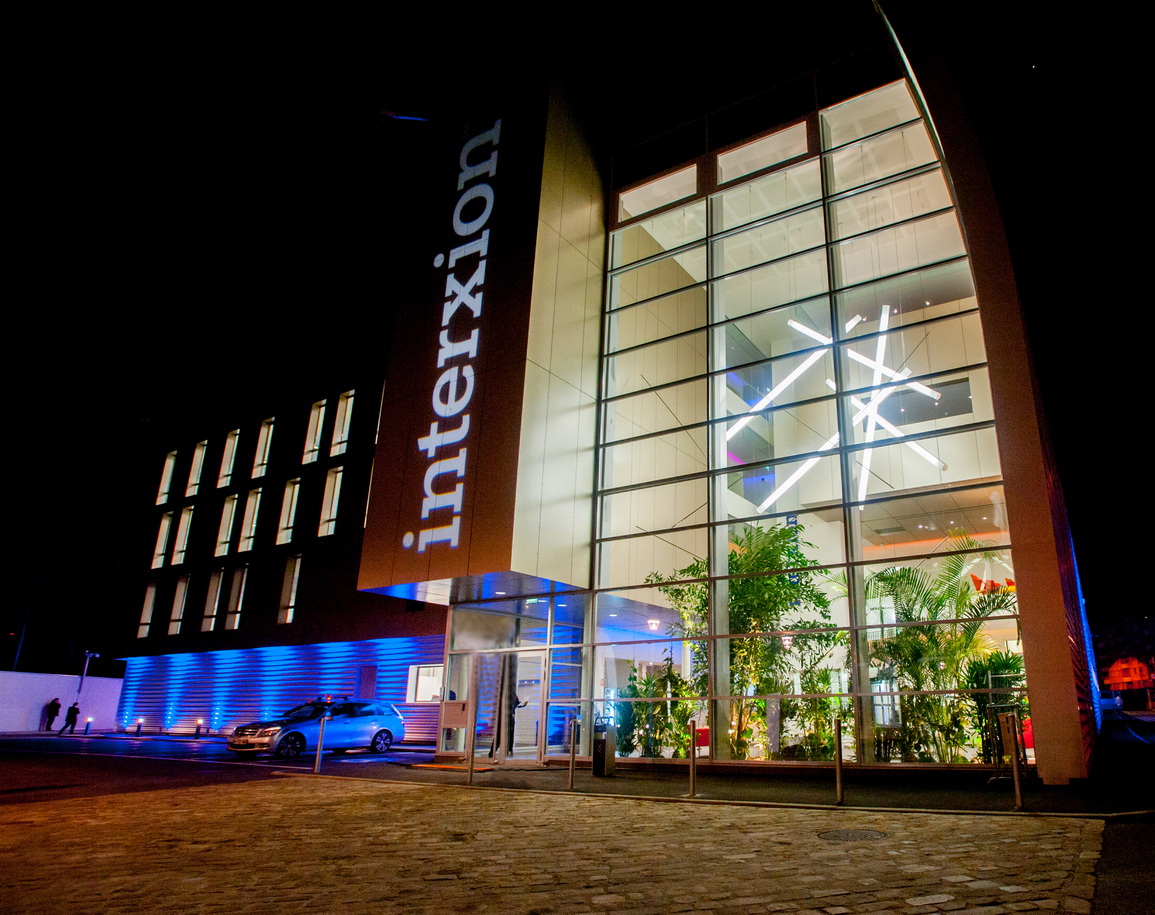
Thanks to the abundance of its carbon-free nuclear electricity and the good quality of its optical fiber network, France is becoming an interesting country for the establishment of data centers.

At the beginning of January 2026, according to RTE and ADEME, the France had around 352 data centers. In the world, our country ranks fifth behind the United States (4,165 data centers), the United Kingdom (499), Germany (487) and China (381). With an average power of a few MW, the data centers in France are mainly connected to the distribution network administered by Enedis and other local public distributors. But the largest projects currently under study can exceed one gigawatt (GW), with on average needs around 50-250 MW for projects of a certain size. This connection constraint implies the existence near the land of an electrical substation and high voltage lines: HTB for powers greater than 40 MW, HTA otherwise. There total consumption of data centers in France reached around 10 TWh in 2022, or around 2.2% of national electricity consumption at that date. In its trend scenario, theADEME estimates that the electricity consumption of data centers would be multiplied by 3.7 in France by 2035, then reach 55 TWh in 2050.
Île-de-France is home to almost half of the data centers in France
THE data centers in France are largely concentrated in Île-de-Francewhich had 160 in June 2025, spread over 109 sites, then around Lille and Marseille. Marseille and its surroundings constitute an important hub for data centers in France thanks to the presence of cables that transport data across the Mediterranean. Near Marseille, Bouc-Bel-Air will welcome a new site in 2027, the largest in the Bouches-du-Rhône department and the sixth around Marseille.
But three new regions are now attracting investors: Hauts-de-France, Nouvelle-Aquitaine and the Auvergne-Rhône-Alpes region. During the last “Choose France” summit, on June 1, 2026, the Japanese company SoftBank announced an investment of €45 billion by 2031 for the construction of three data centerseach with a power of 1 GW, in Hauts-de-France: in Dunkirk, Bouchain and Bosquel. Ultimately, this investment could be increased to €75 billion. At the same time, SoftBank announced its association with Schneider Electric to build on the port of Dunkirk a data center power module manufacturing plant. It will be a prefabricated data center module factory (data center power modules) which integrate low voltage, medium voltage, secure energy and cooling technologies, coming from several Schneider Electric production sites located in France and Europe.
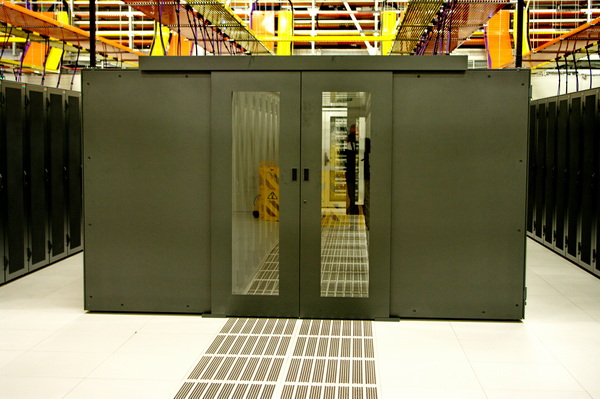
The power of data centers is increasing. The new ones reach or even exceed 1 GW. © PP
Facilitate the establishment of data centers in France
Google will open its first French data center in Indre on more than 195 hectares. There development trajectory in France leads to 500 data centers by 2030i.e. a power demand of 2.3 GW. The government and RTE have identified four sites, called “fast track“, located near the very high voltage electricity transmission network, they allow rapid connections and offer an electrical capacity of between 400 and 1,000 MW per site. This is a procedure for pre-reserving electrical capacities at the request of the State, approved in May 2025 by the Energy Regulatory Commission (CRE), allowing accelerated connection in three to four years for high power sites (>400MW).
For comparison, France has 58 nuclear reactors with an electrical power of 900 MW, 20 reactors of 1,300 MW, the 4 most recent reactors reach 1,450 MW, while the Flamanville EPR rises to 1,630 MW of net electrical power.
In November 2025, the government published a 20-page guide for setting up these data centers. The law on the simplification of economic life, promulgated on May 26, 2026, provides that data centers can be classified as a “project of major national interest”. This facilitates connection to the electricity network and simplifies public consultation procedures.
63 favorable sites identified
THE data centers are subject to the ZAN law (Zero Net Artificialization) which imposes quotas on land artificialization, as well as town planning and environmental authorizations. Data centers cannot be counted on national quotas and must therefore be included in local or regional quotas depending on the size of the project.
At the start of 2025, as part of the Paris Summit for Action on AI, a working group dedicated to the implementation of data centers has been set upmanaged by the General Directorate of Enterprises (DGE) and including Business France, RTE, the General Directorate of Energy and Climate (DGEC) as well as the General Directorate of Planning and Housing (DGALN). This working group wants to identify sites available for data center hostingin collaboration with decentralized State services in the regions, regional development agencies (ARD) and local authorities. 63 sites meeting the criteria for establishing a data center were identified with a view to being offered to project leaders. Four of them benefit from the accelerated connection procedure, known as “fast track“.
In a logic of preserving non-artificialized spaces and supporting territories in the requalification of former industrial sites, the group works with the various stakeholders to focus efforts on the identification of wastelands that can be converted and whose existing buildings can be reused.
Taking the environment into account
Joint work with ADEME was simultaneously carried out on environmental issues. ADEME and the Public Authorities are also pushing for the recovery of the waste heat produced. The proximity of thermal needs and the possible connection to a heating network, while being far enough from homes to avoid or reduce nuisances, helps. Operating indicators measuring energy efficiency must be based on realistic and verifiable load assumptions which include:
– the PUE (Power Usage Effectiveness) forecast, energy efficiency indicator ;
– The WUE (Water Usage Effectiveness), site water consumption efficiency indicator ;
– THE waste heat recovery rate (Energy reuse factor, ERF), measuring integration into the territory.
Cooling systems are assessed based on:
– the use of free cooling Or chilling natural when climatic conditions permit;
– The use of innovative cooling technologies, with low energy and water consumption;
– Control of the GWP (global warming potential) of the refrigerants used, in accordance with European regulation 2024/1364.
The reduction of the building’s environmental footprint is evaluated based on:
– certifications attesting to its environmental performance;
– The conception and design of the building, in particular its adaptability to the territory, climate change and load hazards;
– The use of low-carbon, biosourced or recycled materials;
– Reducing the equipment footprint.
This takes into account, for IT equipment, re-employability, recyclability and energy efficiency (SERT or Cserv score); for emergency generators and UPS (uninterruptible power supply), the choice of low-carbon technologies, participation in the flexibility of the electricity network and the use of alternative fuels (HVO, bioliquid).
Finally, the data centers of a certain size and power have equipment subject to the regime of installations classified for environmental protection (ICPE), due to the potential risks they represent for the environment.
In a future article, we will detail the electrical, safety, emergency and cooling equipment for data centersthe manufacturers who manufacture them and the companies who implement them.