
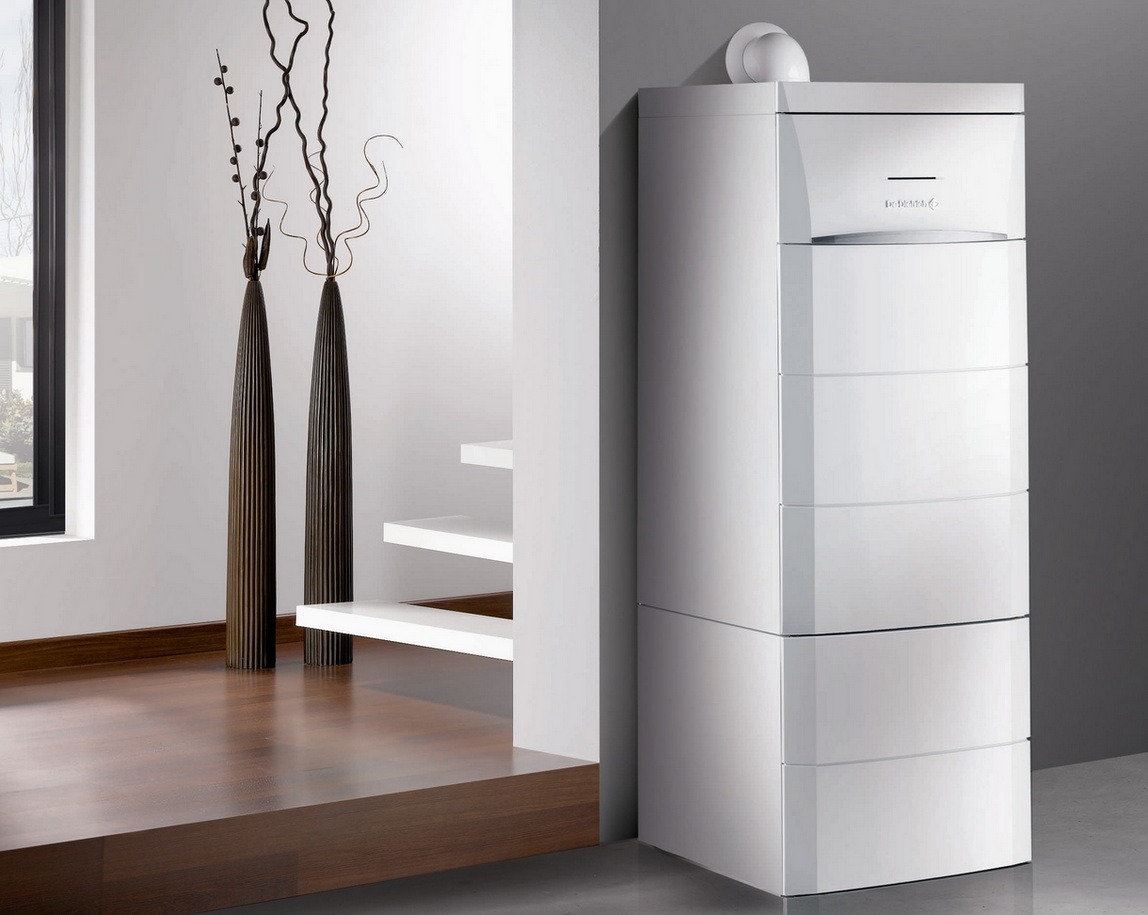
The Prime Minister announces the end of gas in new construction from January 1, 2027, with the ban on gas boilers. Two million social housing units will come off gas before 2050.
Publi-Information 


On April 10, 2025, Sébastien Lecornu gave a speech which contains three important announcements for the building. Firstly, the gas boilers will be prohibited in new construction from January 1, 2027or in eight months.
Second, two million social housing units must abandon their gas solution by 2050.
Third, the France must still manufacture and install a million heat pumps by 2030.
The Prime Minister did not specify it, but his decision probably applies to all new construction: individual houses, collective housing, tertiary and even industry.
No consultation
Naturally, the manufacturers who manufacture gas boilers in France – Auer-Gianola, Atlantic, Saunier-Duval, Elm Leblanc, Vergne, De Dietrich, Chappée, Frisquet, … – were not notified. There was no prior consultation.
According to statistics published by Uniclima in February 2026, the French market for gas and oil boilers reached 422,000 pieces in 2025, of which undoubtedly more than 80% were renovated. According to the SDES (Public statistics for energy, transport, housing and the environment), in 2020, the last year known, only 22% of new homes were heated with gas. In short, manufacturers will lose sales of approximately 60,000 to 65,000 boilers in France in 2027. This is not negligible. And only the district heating and electrical solutions in new construction.
Solar thermal is already under threat and losing sales year after year, it is unlikely that this decision will make it take off again. The electrical solutions are:
– heat pumps;
– Electric water heaters, including thermodynamic ones;
– And all types of electric heaters.
Heat pumps have already become the rule in new individual homes, but not at all in collectives. Individual heat pumps in collectives are difficult to accommodate, even if heat pumps with indoor installation specifically designed for the collective appear. Collective heat pumps in new construction have no chance, because project owners no longer install collective heating in new construction, except for connection to a heating network, because they are obliged to do so to obtain their building permit.
Two million HLM housing units
As for the two million HLM housing units, if they are close to a district heating network, they can be connected to it. If they are heated by a boiler room, they can replace boilers with collective heat pumps. Intuis has made a specialty of this type of device: air/water, but ductable and high temperature. Otherwise, for collective housing heated by individual wall-mounted gas boilersall that will remain is the adoption of individual indoor heat pumps.
We recently came across two at the Nordbat show in Lille: the Zé7 from Intuis and the NanoClima HDX from Domusa Teknik. Already available, the Zé7 is a monobloc air/water heat pump with R290 which provides DHW, and an air/air system which provides heating and cooling. The Zé7 is installed directly inside each home and contains a 200 l tank for DHW. The Zé7 takes outside air through two ducts, then blows hot or cold air into the main room. The NanoClima HDX will be available in a heating only version at the end of April and with DHW production during 2026.
And the million annual heat pumps
According to Uniclima, 179,377 air/water heat pumps were installed in France in 2025, as well as 2,513 geothermal heat pumps and 803,661 air/air heat pumps. It is not certain that the government understood that air/water and geothermal heat pumps – around 180,000 per year – are manufactured in France. Whereas air/air heat pumps are manufactured in Asia and Eastern Europe and imported into France and there is little chance that a French manufacturer will start manufacturing them in France at a price acceptable to the market.
In short, designers will have to think about find electrical solutions adapted to new constructionstill under RE2020.
De Dietrich