
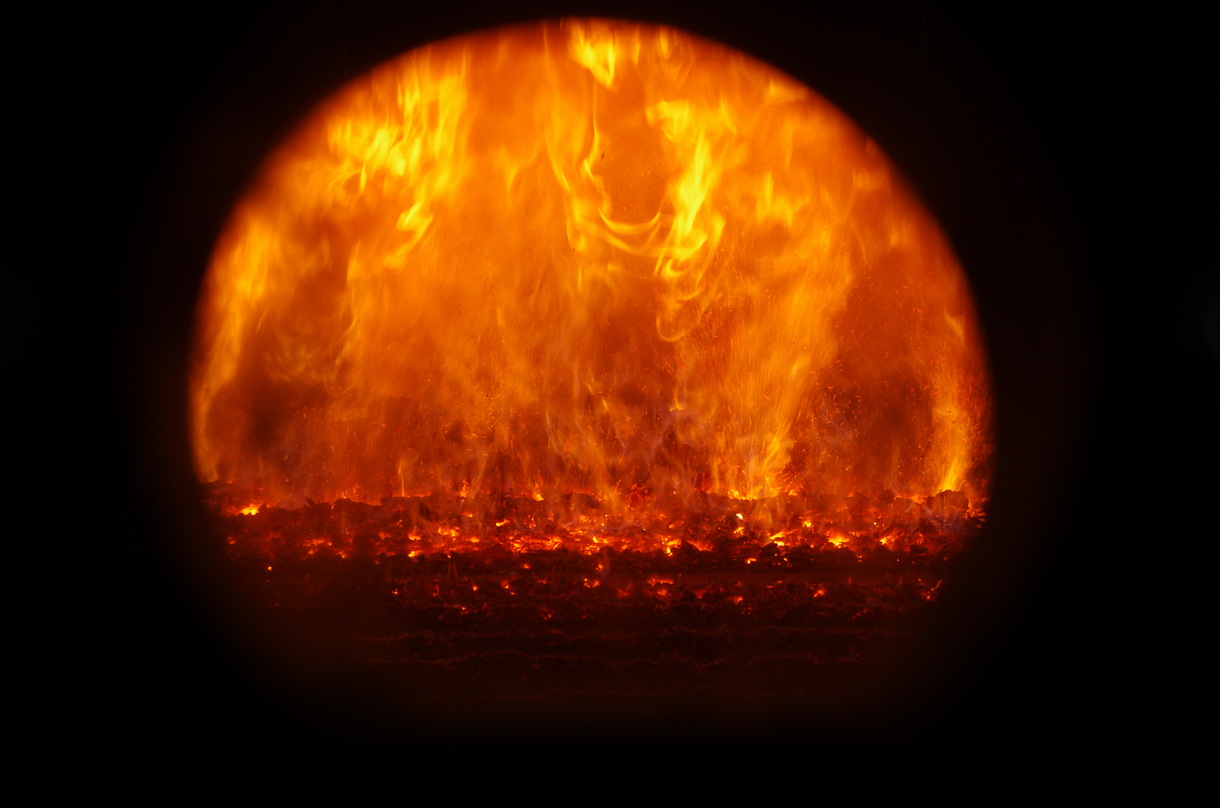
The wood heating market is doing poorly, but wood is the primary renewable energy used in housing. Devices are becoming more and more efficient, increasingly cleaner and their power is decreasing.
Publi-Information 


The SER’s bet (Renewable Energy Union) is simple. Like the performance of new wood heating appliances is significantly better and that their pollutant emissions are significantly reduced compared to devices marketed before 2012, even by significantly increasing the installed base – 8 million devices today, 10 million planned by the SER in 2035 –, in removing open fireplaces and by replacing old devices with new, more efficient and economical devices, PM2.5 particle emissions are expected to decline by 42% in 2030 and 67% in 2035, compared to 2023.
At the same time, thanks to improved yields and reduction in heating needsthere wood consumption will drop sharply and go from 73 TWh for 8 million homes in 2024 to 60 TWh for 10 million homes in 2035. Market developments may slow down these projections.
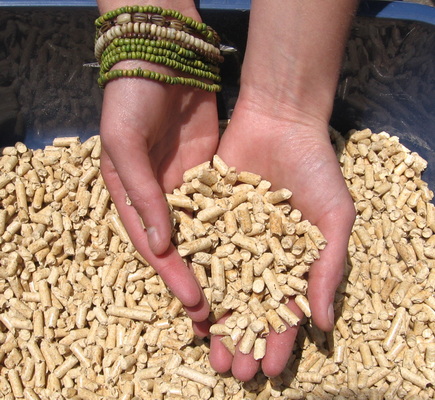
Wood pellets are the fastest growing biomass fuel. © PP / Poujoulat
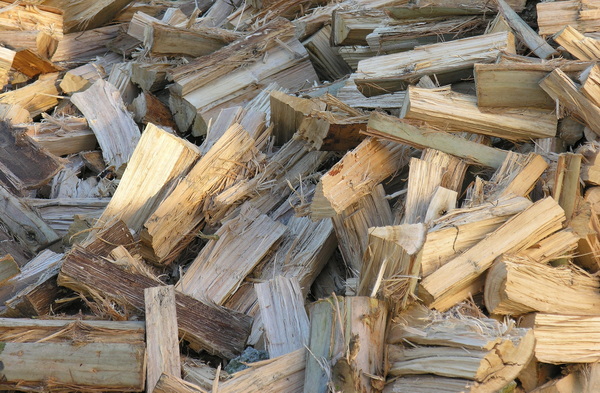
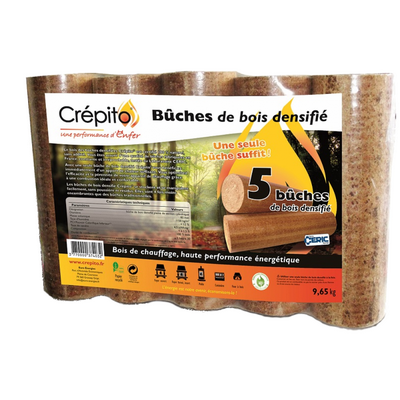
Logs are in decline, but the sub-segment of logs made from sawdust – densified logs – is growing. The quality of the fuel, particularly its water content, plays a big role in the result: yield and quality of combustion products. © PP / Poujoulat
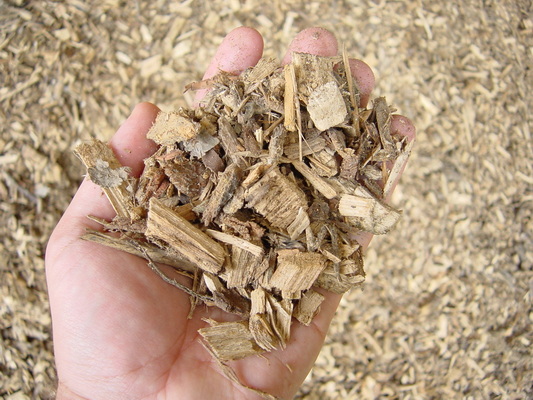
Forest chips are rarely used in domestic wood heating. © PP
The wood-burning appliance market is not in good shape
The wood heating appliances market consists of stoves, inserts and closed fireplaces, cookers and boilers. Only the boilers can both cover heating needs and produce domestic hot water.
According to Observ’ER, the renewable energy observatory, the market for domestic wood heating appliances is doing poorly. It reached 290,510 devices in 2025, a decrease of 2.3% compared to 2024 and of 43%, or 222,000 fewer devices, compared to 2022. In 2025, it was sold in France:
– 229,990 stoves (+ 0.3% compared to 2024);
– 46,750 closed fireplaces and inserts (- 11.3%);
– 2,750 wood stoves (-42.1%);
– and 11,020 boilers (+ 2%).
This market shows its lowest activity in 14 years. THE log appliances represented 57% of sales, or 164,990 devices, compared to 65% in 2024. Pellet devices reached 43% of sales at 125,520 devices, compared to 35% of sales in 2024. In detail, the log appliances are in sharp decline, while pellet appliances are progressing. In 2025, it sold 164,990 log appliancesall types combined, compared to 196,030 in 2024 and 330,400 in 2023. Côté pellet appliancessales were 125,520 pieces in 2025, compared to 101,400 in 2024 and 91,665 in 2023.
THE log boilers suffered the biggest drop in sales last year (-27.5%), ahead of manual stoves (-22.8%) and closed fireplaces and inserts (-16.5%). Conversely, for granules, stove sales rebounded by 35% and those of boilers by 17.7%. Which erases part of the very strong losses recorded in 2023, during thesoaring price of pellets.
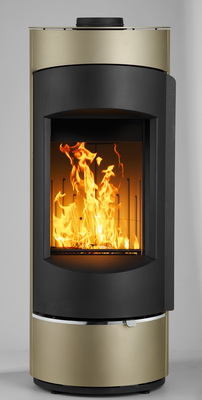
229,990 wood stoves were sold in France in 2025, the vast majority of the 290,510 wood heating appliances, all types combined, sold last year. © PP
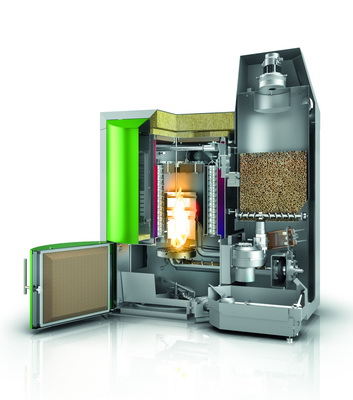
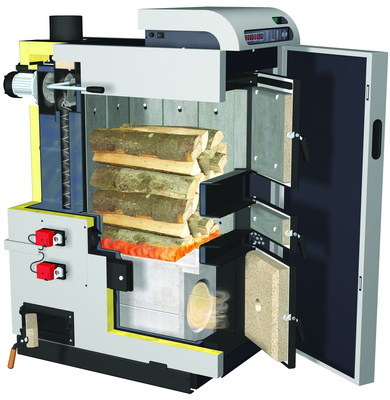
Biomass boilers are no longer financed by MaPrimeRénov’ since January 1, 2026 as part of single-use work, even pellet condensing boilers, whose efficiency exceeds 100% on PCI. © Ökofen / Fröling
The Flamme Verte Label guarantee
On the technical side, everything indicated by the SER offers combustion efficiency and quality is perfectly correct. Just look at the devices labeled “Flamme Verte”a label launched by ADEME and wood heating professionals in 2020 and managed by the SER, which brings together 127 brands, more than 7,000 models and represents around 80% of sales of wood heating appliances in France.
Regarding the automatic pellet boilersthe Flamme Verte site lists 324 products. The worst efficiency is 86.5%, with PM emissions of 21.4 mg/Nm3 at 10% O2. THE average efficiency of conventional pellet boilers is between 91 and 96%. While the condensing boilers exceed 100% efficiency on PCI. The best is the Condens 18 kW from Ökofen which achieves an efficiency of 107.3%, with PM emissions of only 5.25 mg/Nm3 at 10% O2.
THE Green Flame website there are only nine left log boilersall with efficiencies above 90%, with the best, Hargassner’s Smart-DUO 20, achieving an efficiency of 95.2%. The performance of the 149 Flamme Verte certified wood cookers varies from 75 to 88.6%, with a concentration around 86% yield. Their emissions vary from 50 to 66 mg/Nm3 at 13% O2.
The efficiency of the 1,240 log stoves listed varies from 76 to 87%, with average dust emissions of 20 mg/Nm3 at 13% O2. The efficiency of the 2,438 pellet stoves listed by Flamme Verte varies from 87%, with average dust emissions of 15 mg/Nm3 at 13% O2, up to an efficiency of 95%, a seasonal efficiency (Etas) of 84%, with dust emissions of only 10 mg/Nm3 at 13% O2.
Flamme Verte has labeled 1,332 closed fireplaces and insertsincluding 1,240 logs and 92 pellets. Efficiency of 87 to 95.2% for pellet inserts, with dust emissions from 24 mg/Nm3 at 13% O2 to 17 mg/Nm3 at 13% O2. Log inserts display efficiencies of 75.6% (dust emissions of 35 mg/Nm3 at 13% O2) to 86% (19 mg/Nm3 at 13% O2 dust). In short, pellet appliances systematically achieve higher efficiencies, while producing significantly less dust. As the share of pellet appliances increases in all wood heating appliances sold in Francethe SER’s reasoning on the reduction in consumption and pollution is reinforced.
A non-relocatable activity
France, according to a study commissioned by ADEME, has more than 100 wood fuel preparation plants, whether pellets, logs or reconstituted logsand more than 2,000 distributors. The study indicates that 100% of logs and 90% of pellets consumed in France are also produced in France.
6,700 companies are RGE qualified for wood heating. There wood heating industry generates 75,691 direct and indirect jobs, as well as €128 million in direct annual tax benefits for the territories. The wood resource is abundant and projections show that the consumption of wood for domestic heating will continue to decline, even though the number of devices will increase. From 2015 to 2023, 51.7 Mm3 was harvested, while natural forest growth reached 71 Mm3 over the same period.
THE wood is the first source of renewable energy in Francecovers 25% of residential heat needs. 43% of main residences are equipped with wood heating. Wood is the cheapest energy at 7 to 10 c€/kWh on average. Depending on its type, a wood heating appliance costs between €1,000 and €4,000 depending on the SER and a complete installation – supply and installation – costs between €5,000 and €6,000.
Despite everything, the Public Authorities seem to have little appreciation for wood heating. Since January 1, 2026, in the MaPrimeRénov’ per gesture scale, biomass boilers are no longer financed, pellet stoves and cookers are financed up to €1,250 for very low-income households, €1,000 for low-income households and €750 for households with intermediate resources, within the limit of an eligible expenditure ceiling of €5,000. For log stoves and cookers, the amounts are €1,250, €1,000 and €500 with a ceiling of €4,000. For closed fireplaces and inserts, the aid amounts reach €1,250, €750 and €500 with a ceiling of €4,000. The SER is not asking for the moon, just that this aid structure is stable over time – there have been 5 modifications over the last three years – and that biomass boilers are reinstated in these scales, because their exclusion means in the eyes of the public that they do not constitute a good solution.