
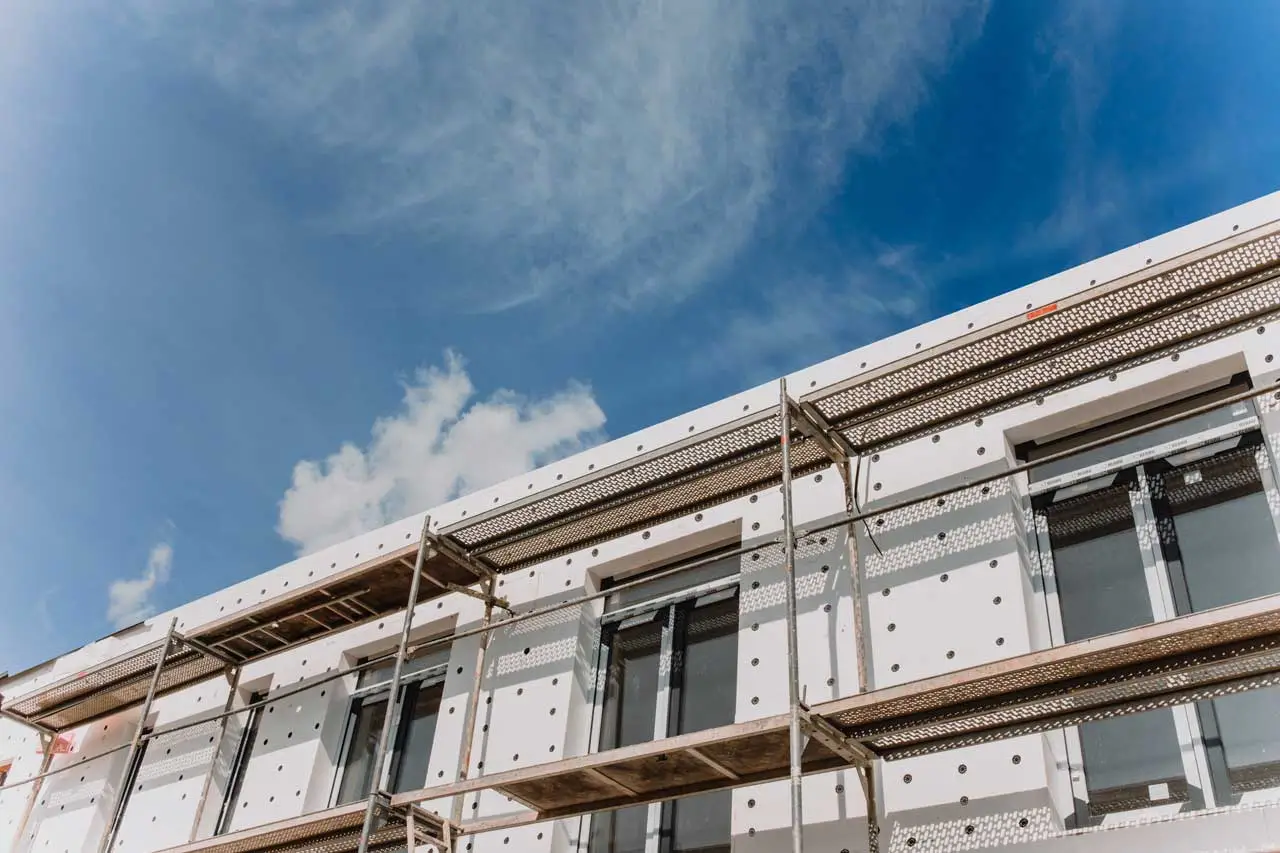
Thermal insulation is one of the most widespread solutions for improving the energy efficiency of buildings, but its durability depends not only on the quality of the initial installation, but also on correct maintenance over time. Intense atmospheric events, hail, accidental impacts, cracks or surface degradation phenomena can in fact compromise the integrity of the external covering, making targeted restoration interventions necessary.
Why intervene on the existing thermal coat?
Even a correctly designed and installed external insulation system can be exposed, over the years, to stresses that reduce its surface continuity and external protection. Hail and extreme weather events represent an increasingly significant critical issue today, especially for facades already subject to mechanical stress, solar radiation, humidity and seasonal cycles.
The repair of the thermal insulation therefore does not only concern the aesthetic aspect of the facade, but also the preservation of the performance of the entire system. Intervening promptly allows you to limit the evolution of cracks, protect the underlying layers and prolong the useful life of the insulation intervention.
Rebuild System: ETICS restoration without cement products
Rebuild System is a restoration building system designed for ETICS coatings and composed of two main products: Rebuild Fondo L, a lightweight elastomeric skim coat in paste, and Rebuild Intonaclima L, a lightweight anti-algae acrysiloxane elastomeric coating with a 1.5 mm grain.
The distinctive feature of the system is the absence of cementitious products. This choice makes it possible to reduce intervention times compared to traditional cycles, avoiding the long waits for maturation typical of cement-based primers and making the subsequent finishing or overpainting phase quicker. This is an important aspect especially in maintenance interventions on inhabited facades or on operational buildings, where the management of construction time directly affects the organization of the work.
VRG technology and lightweight materials
The basis of the system is VRG technology, Virtuous Recycled Glass, which involves the use of microspheres obtained from fractions of totally recycled glass, which can no longer be used for the production of new containers. This technology allows you to obtain lightened paint products, with a weight reduced by up to 25% on the wall compared to traditional products of the same grain.
The lower mass applied to the facade represents an advantage both during the installation phase, because it makes the material easier to handle, and in terms of stress on the existing system. For the same yield, the system also allows you to use less product than a traditional coating with similar characteristics.
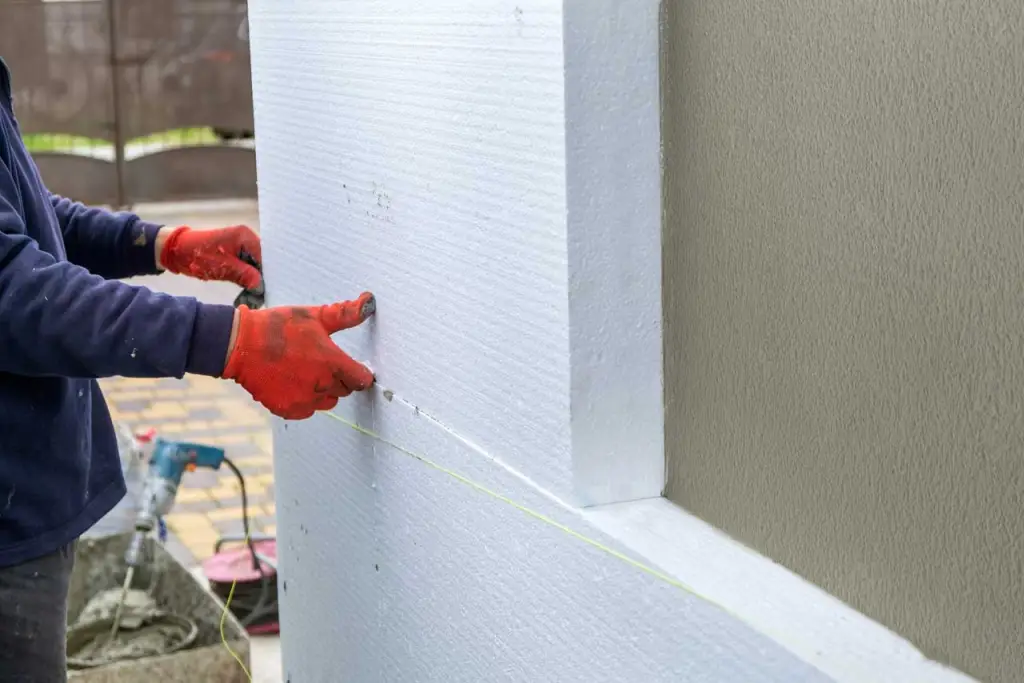
Resistance to impacts, hail and cracks
One of the central aspects in the repair of thermal insulation is the ability of the new protection layer to resist mechanical stress. Rebuild System is designed to guarantee impact resistance up to 30J, offering additional protection against hail and extraordinary weather events.
The elastomeric characteristics of the products also help to compensate and resolve any surface cracks. Rebuild Fondo L has high elastomeric characteristics, while Rebuild Intonaclima L combines elastic properties and a protective function with the external finish. The system is therefore suitable when the restoration must improve not only the appearance of the facade, but also its ability to absorb micro-movements and stresses over time.
Protection from mold, algae and solar degradation
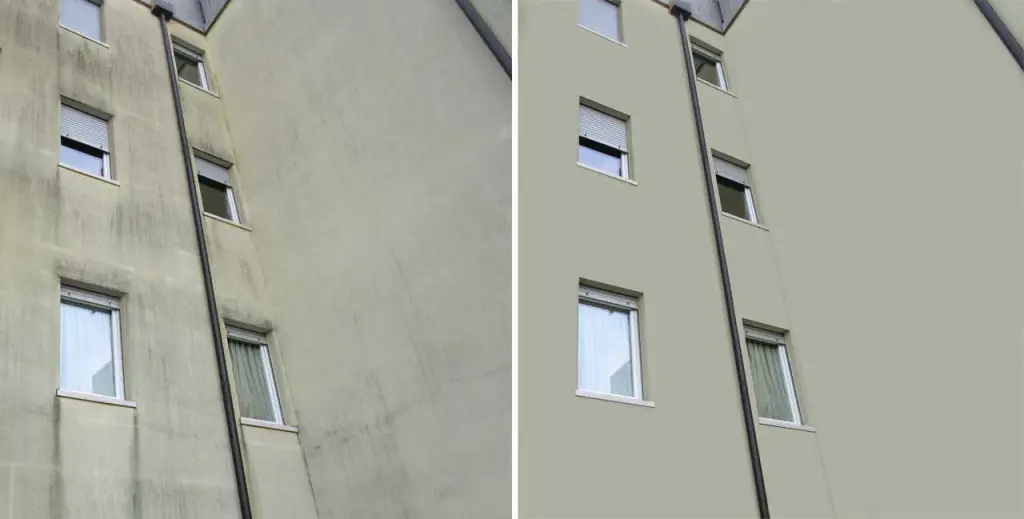
The durability of the thermal coat also depends on the coating’s ability to resist biological agents and solar exposure. Both Rebuild Fondo L and Rebuild Intonaclima L are formulated to resist mold and algae, an important characteristic for facades exposed to humidity, pouring rain or poor direct sunlight.
The coating also integrates HALS technology, Hindered Amine Light Stabilizer, designed to counteract degradation due to sunlight and bad weather and contribute to color retention over time. This aspect is particularly useful in restoration interventions in which the aesthetic continuity of the facade must be accompanied by greater protection in the long term.
A system to extend the useful life of the coat
The repair of the thermal insulation requires products compatible with the needs of the existing casing: lightness, elasticity, mechanical resistance, durability and speed of application. Rebuild System responds to these needs with a non-cement, lightened cycle designed for the maintenance of ETICS coatings.
In a context in which the energy efficiency of buildings also depends on maintaining performance over time, solutions dedicated to the restoration of the external insulation make it possible to protect the initial investment and reduce the risk that small superficial damages evolve into more extensive problems. However, the quality of the intervention is also linked to correct installation: for this reason, alongside the development of restoration systems, the qualification of professionals becomes central, called upon to operate according to specific skills and technical references such as UNI 11715:2018 for the installation of ETICS systems. The training courses promoted by ARD Raccanello for preparation for the ETICS exam and for the issue of the thermal insulation insulation installer certification are also included in this direction.
For further information
ard-raccanello.it
Thank you for subscribing to the newsletter.