
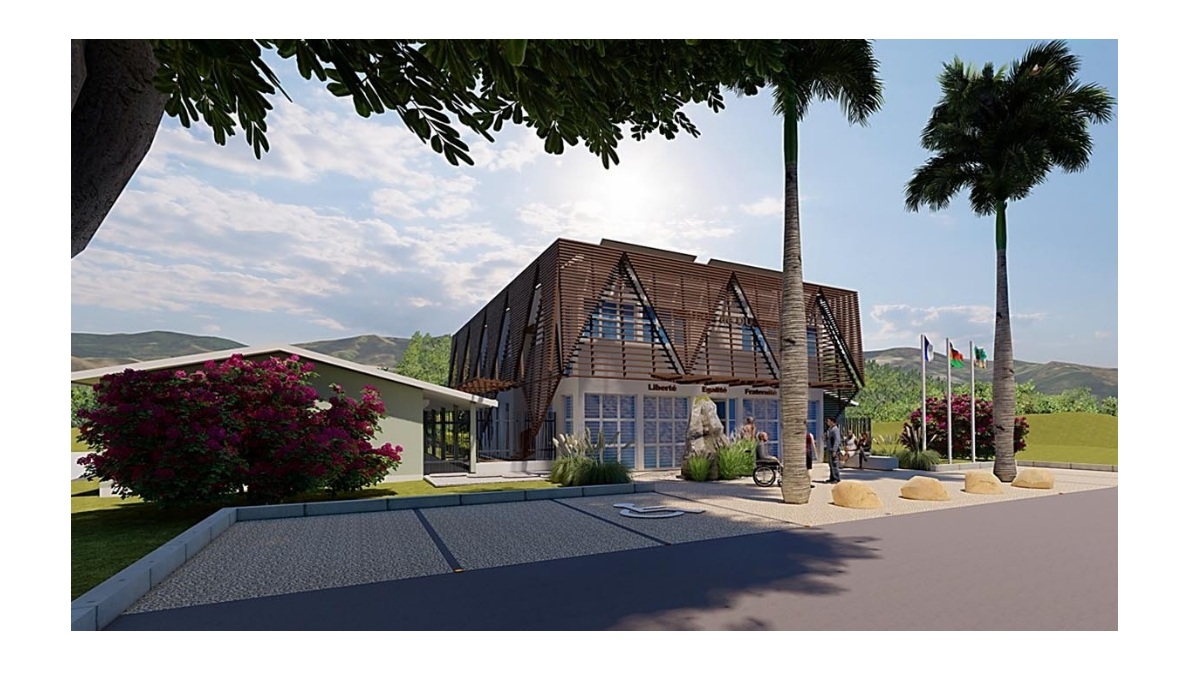
Designed for the climatic and economic realities of the region, the BDCAL approach supports professionals towards more sustainable and comfortable buildings.

The consequences of climate change are palpable. In all areas, taking into account ecology, reasoned consumption of energy, adaptation to a given territory is no longer the little extra, but an absolute duty. On July 2, around forty New Caledonian construction professionals arranged to meet at the premises of the social landlord Caledonian Real Estate Company (SIC)has Noumea. Architects, design offices, project owners, construction companies, institutions, etc. participated in the BDCAL commission dedicated to the rehabilitation and reconstruction of the Ouégoa town hallvillage in the far north of the Pacific archipelago, recently delivered.
At the end of the discussions, if the project retained its Silver recognition level in the implementation phase, the audience of professionals welcomed the progress made and the consideration of the recommendations made during the last visit to this same commission, during the design phase of the project. Much more than a simple evaluation, this commission illustrates the philosophy of the approach: to collectively advance projects thanks to the shared views of professionals.
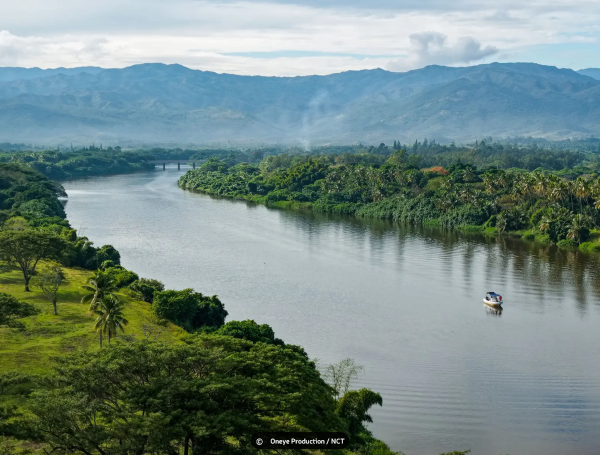
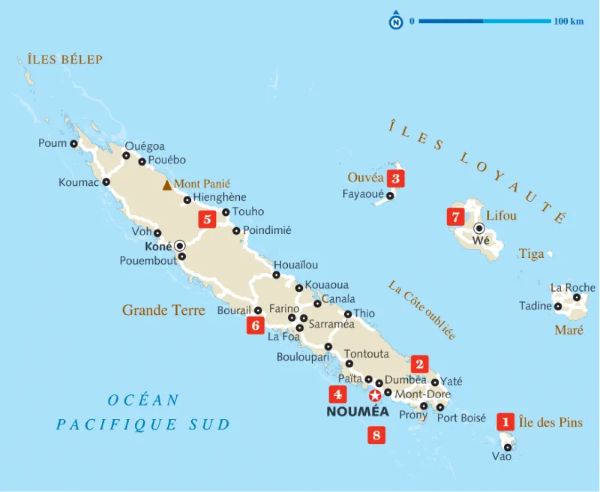
Located more than 400 km from Nouméa, Ouégoa is a commune in the north of New Caledonia, straddling the east and west coasts. Its name associates Ouen – “water” in the Kanak language – and Goathat of a Kanak clan. This rural commune, where the bush identity remains very present, is made up of several hamlets scattered in the heart of an area combining forests, rivers, beaches and preserved islets, including Balabio. It is also crossed by the Diahot, the only river in New Caledonia. © Oneye Production / NCT / © Lonely Planet
Rely on experience, adapt to specificities
Carried by the cluster Eco Construction NC, BDCAL, for Caledonian Sustainable Buildingsis a voluntary approach intended to supporting project owners towards more sober buildings. “Today, we must manage to have buildings that are as comfortable as possible for tomorrow, while major climate issues with environmental transitions are taking shape.t” specifies Noëmie Gervais, head of cluster Eco Construction NC and BDCAL referent.
BDCAL was officially launched in 2023with a pilot building, the head office of Cegelec NC, based in Numbo, an industrial district of Nouméa. The development of the Approach required nearly four years of work, and was based on the know-how of the Démarche Quartiers et Bâtiments Durables collective developed in France since 2009 and of which BDCAL is a member. “If the methodology, the fundamental values of the approach are the same, each Approach must adapt to the specificities and climatic constraints of its territory” underlines Noëmie Gervais.
Building sustainably in Nouméa, Ouégoa or Bourail does not respond to the same challenges as in Europe. Here, natural cooling takes precedence over heating, the materials must resist sea spray, high heat or cyclonic episodes, while the available resources remain limited.
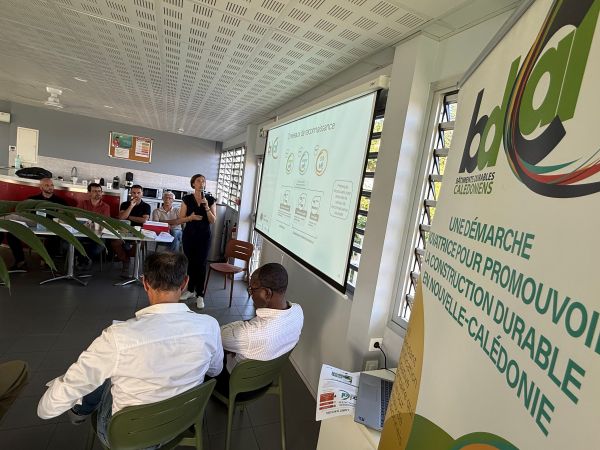
Noémie Gervais, from the Ecoconstruction cluster, opened the BDCAL commission, for Caledonian Sustainable Buildings, on July 2, in Nouméa, New Caledonia. © Aurélia Dumté
Three pillars for seven themes
Thus, the BDCAL reference system is specific to Caledonian specificities. But “the objective is not to obtain a medal at all costs. We are not here to judge projects, but to help them progress.“, insists Noëmie Gervais. Each operation is analyzed with regard to seven major themes: project management; territory, Site & Biodiversity; social responsibility; comfort & health; water; energy; and resources & materials.
The challenge is to find the most relevant solutions based on the technical, budgetary and environmental constraints specific to each operation. The Approach is based on three pillars:
– an evaluation framework, regularly enriched to integrate new issues, such as currently, reuse or the circular economy;
– Personalized support: each project owner is supported by a BDCAL guide, independent, specially trained and authorized by the cluster Eco Constructionwhose role is to guide the project team, encourage dialogue between the different stakeholders and identify the most suitable solutions, without ever imposing standardized responses;
– The evaluation commissions, which bring together experts and professionals in a spirit of exchange: open to the public, they constitute a real participatory guarantee system where everyone can share their experience in order to collectively advance practices.
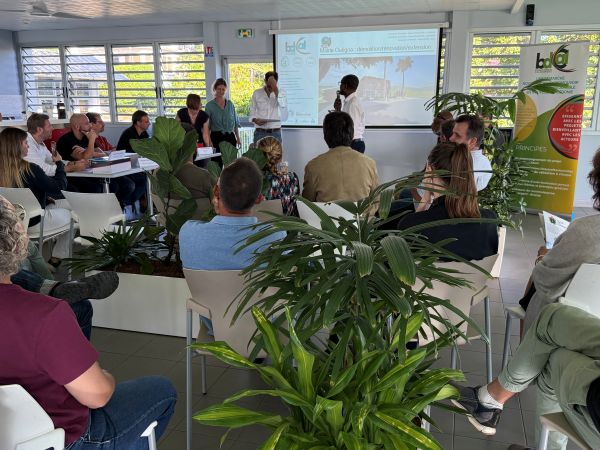
During BDCAL commissions, building professionals come together to discuss a building, in the design phase or in the delivery phase. No judgment, but a desire to collectively advance projects thanks to the shared perspective of professionals. © Aurélia Dumté
Beyond environmental performance, BDCAL defends a global approach to building. From the design stage, the teams think about upkeep costs, maintenance, user comfort, lifespan of materials or even future consumption. “Investing a little more today can significantly reduce operating expenses tomorrow” recalls Noëmie Gervais.eco-construction is therefore not only ecological: it is also economical.
An approach well received by professionals
To date, four operations have officially integrated the Approach. The pilot project at the head office of the construction company Cégélec NC made it possible to test the framework before its launch. The renovation of the South Province hotel is currently underway, while the Ouégoa town hall constitutes the first public achievement delivered to have passed the second stage of recognition. Other projects will soon join the system, notably the future Boulouparis college.
The momentum observed at the launch of BDCAL was, however, slowed down by the economic and political context of 2024. The country has in fact suffered several weeks of riots, with numerous fires and damage to buildings. Added to this episode of riots is a tense local political context. Thus, around ten projects, both public and private, were then ready to integrate the Approach. Many have been postponed given the New Caledonian socio-economic context. Despite this setback, the interest of project owners remains intact. Communities, in particular, continue to engage in this dynamic, convinced that a sustainable building constitutes an investment over several decades much more than just a construction site. There Ouégoa town hall is the illustration of this today. Behind its Silver level of recognition, it is above all a new way of designing buildings that is emerging: more collaborative, more adapted to New Caledonian realities and focused on the uses of tomorrow.
THE cluster Éco Construction NC, unifier of the sector
Created in 2017 at the initiative of the South province, the cluster Éco Construction NC is an association that brings together players involved in more sustainable construction. It now brings together 35 members, divided into four groups: project owners, project managers, companies and institutional partners. Its mission is to develop practices in the sector by promoting cooperation, innovation and the development of professional skills. THE cluster has several roles: it leads working groups, organizes training, conferences and meetings between stakeholders, while supporting the development of local sectors and new know-how.
THE cluster carries, among other things, two major actions. There BDCAL approach (Sustainable Building of New Caledonia)and more recently, the launch of theInterBois NC, a first step towards structuring the wood industryincluding the promotion of local species, the distribution of technical guides and the development of the uses of wood in construction. To these actions is added work on the circular economy, eco-design and the environmental performance of buildings, in order to support the transition of the construction sector in New Caledonia.
Ouégoa, proof that sustainable building is also a matter for rural territories
Building sustainable is not reserved for large urban projects. This is the message carried by the new town hall of Ouégoa, first public building delivered to have followed the entire BDCAL approach. In Ouégoa, the ambition was not to create a “showcase” building, but to respond to the needs of a small town in the north of New Caledonia with simple, robust solutions adapted to the local climate.
The project, led by Philippe Gandolfo, from the Aire Libre firm, project management agent, and the architect Sébastien Nahm (Sébastien Nahm Architecte), meets the needs of a town of some 2,400 inhabitants. “The project to renovate and extend the Ouégoa town hall was a priority of the former mandate. In 2020, we realized that the old town hall, more than 60 years old, had become dilapidated, even dangerous for agents and citizens.“, recalls Calixte Youale, secretary general of the town hall. If the extension was entirely designed according to the principles of the BDCAL approachthe reflection also focused on the preserved parts of the building. “The two existing wings, which were in good condition, have been preserved. They contribute in particular to the solar protection of the building“, explains Sébastien Nahm. The central part, for its part, was rebuilt using a wooden frame. The designers integrated solar protection, natural ventilation, high-performance insulation, rainwater recovery, reuse of materials and control of energy consumption.
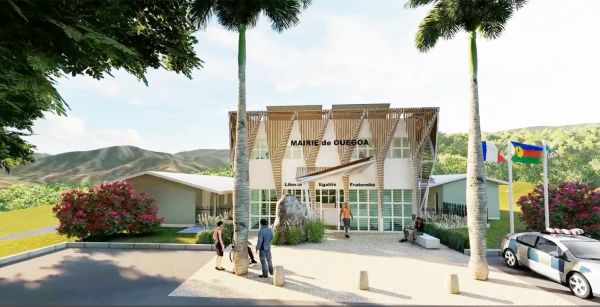
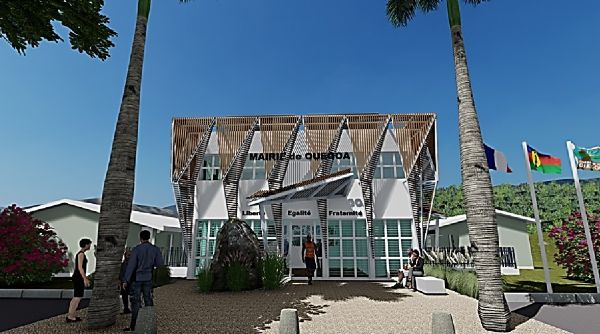
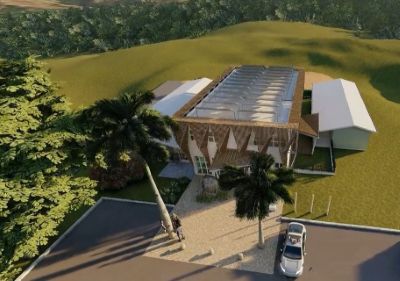
Ouégoa is a small rural commune in the north of New Caledonia, with just over 2,400 inhabitants. Its dilapidated town hall was renovated and enlarged in accordance with the criteria of the BDCAL Approach. © ASNA / Aire Libre
The committee’s discussions, however, recalled that the BDCAL approach does not consist of assigning a definitive grade. Several areas for improvement were also mentioned, illustrating a culture of dialogue and feedback which is an integral part of the approach. For the members of the commission, the Ouégoa town hall above all demonstrates that it is possible, despite the budgetary and logistical constraints specific to rural municipalities, to design more economical, more comfortable and more durable public facilities. An achievement intended to serve as a reference for future New Caledonian projects involved in the BDCAL approach.
ASNA / Aire Libre