The function of inspection in the conservation of trusses
1. Prevention of disruptions and collapses
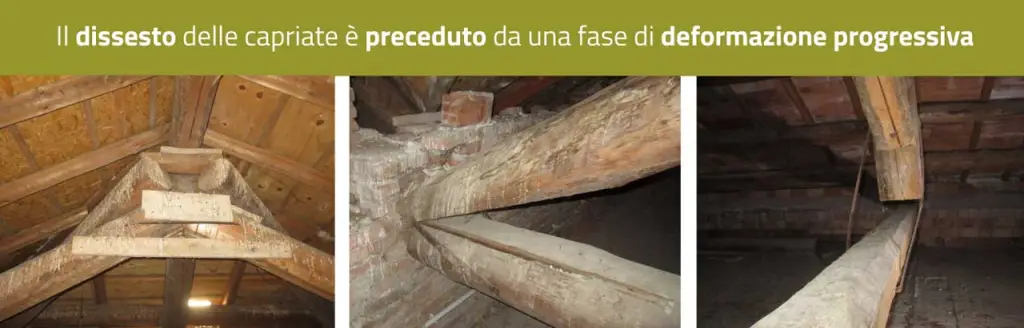
The collapses of wooden trusses are not sudden phenomena. In fact, failures are preceded by a progressive phase of deformation, often not visible from the outside. Movements of even a few millimeters of one of the truss elements or the lack of contact with a support can significantly change the distribution of internal tensions in the truss itself, leading to the development of atypical forces on the struts or walls on which the truss rests.
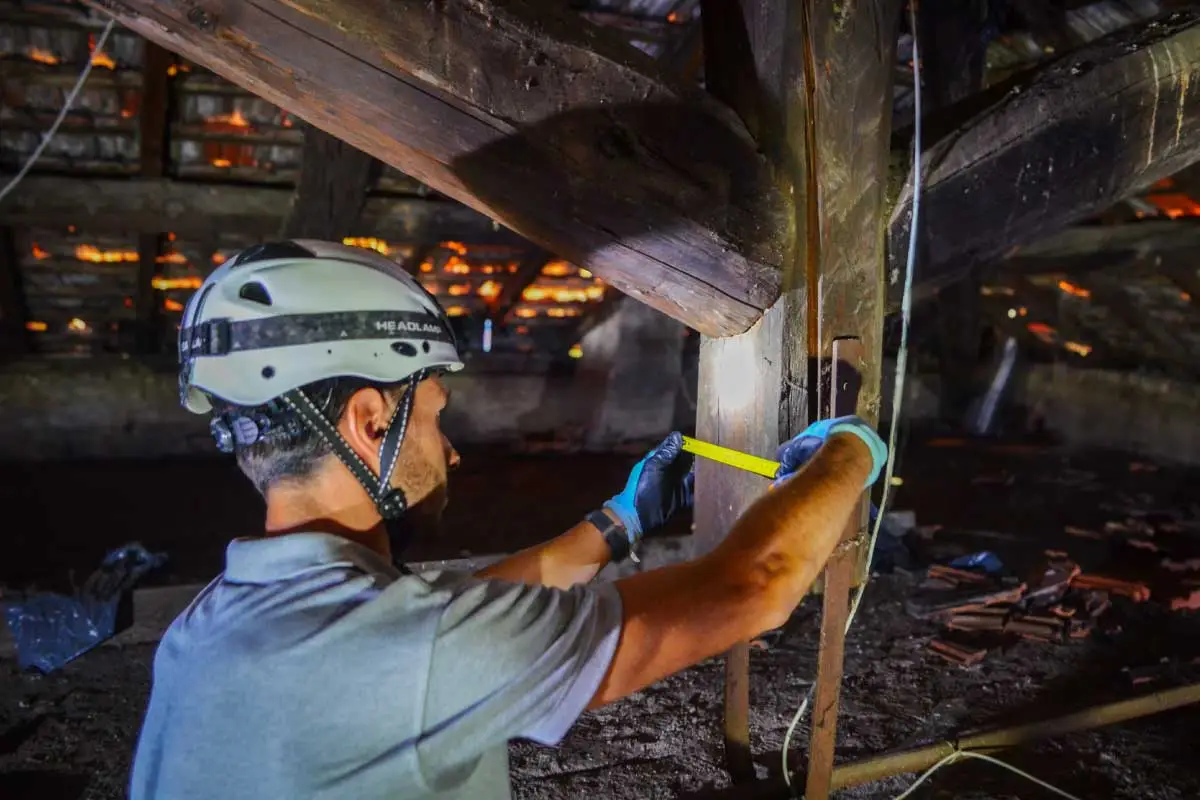
Periodic inspection of the roof allows you to identify any critical issues, such as cracks, misalignments, deformations or signs of compression. Changes which, if considered as a whole, can be signals indicating possible disruption. Carrying out regular inspections over time allows us to intervene preventively on the instabilities detected and plan interventions before collapse episodes occur.
2. Recognition of biotic and abiotic degradation phenomena
Wood, given its organic nature, is an extremely vulnerable and sensitive material to environmental factors. Infiltration, humidity and thermal variations due to the succession of seasons can trigger biotic processes, such as fungi, mold and xylophagous insects, which can compromise the structure of the material itself, reducing its resistance.
Non-living agents, such as water, heat, fire or chemicals can trigger abiotic processes, such as shrinkage cracking or permanent deformation.
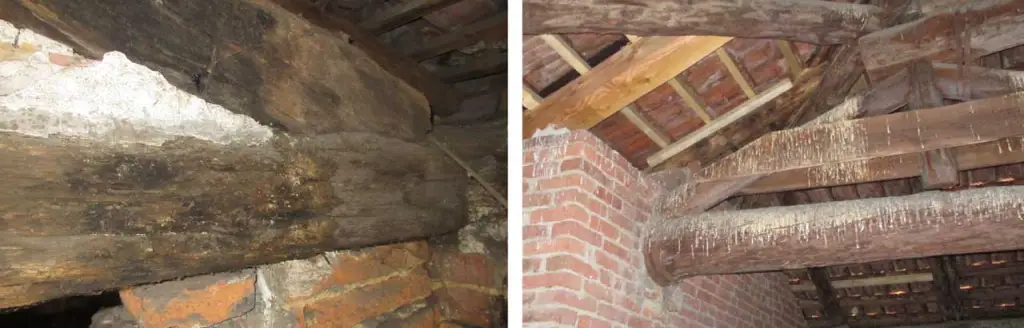
The premature identification of these phenomena allows us to monitor the degradation or intervene promptly in a localized way, so as to prevent the degradation from spreading and compromising the stability of the entire roof and, consequently, of the entire building.
3. Verification of the behavior of the structure over time
Buildings are not immobile structures, but change over time. Architectural interventions, such as the replacement of the roof, the addition of a floor or the consolidation of a wall, seismic events and the loading conditions of the building itself, alter the original behavior of the structure and, consequently, modify the stability of the trusses.
Carrying out periodic inspections allows us to examine the adequacy of the interventions carried out and to verify whether, following extraordinary events, the trusses still comply with the project. The planning of maintenance actions compatible with the current state of affairs and the guarantee of the balance of forces over time is only possible by knowing the state of health of the trusses.
4. Planning of targeted, reversible and coherent interventions
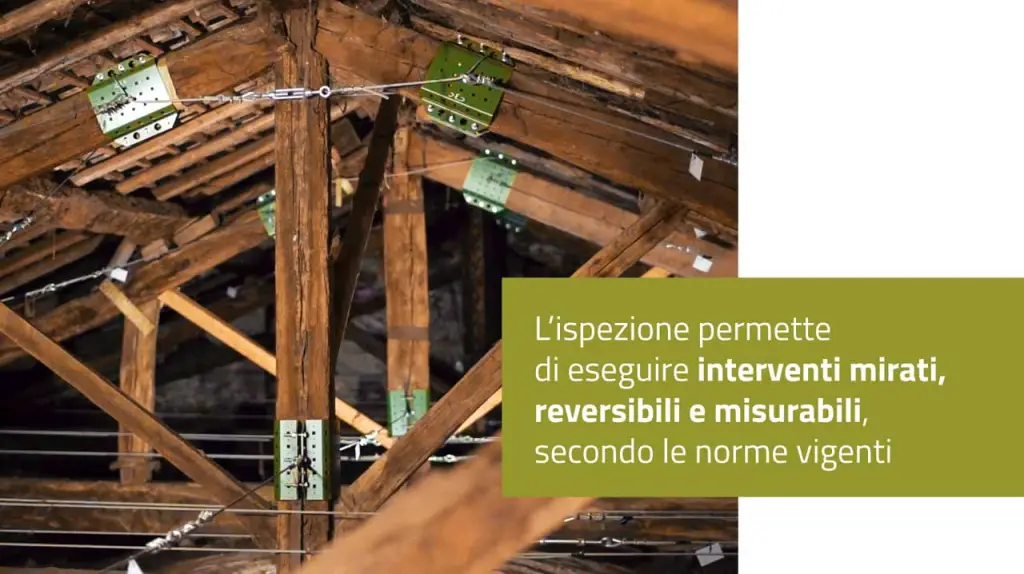
The real level of risk and the correct setting of intervention strategies are possible following an accurate inspection of the trusses, which provides all the necessary information. Thanks to this information, the professional is able to plan timely, reversible and measurable interventions, consistently with the indications contained in the 2018 NTC and the principles of structural restoration for historic assets.
The aim of the interventions must be to re-establish the original working conditions of the truss, taking care to impact the roofing and the building in the least possible way.
Inspection sheets: a concrete tool for field inspections
To support field technicians in carrying out inspections on wooden trusses, the Sicurtecto Srl company has drawn up the Inspection sheets for wooden trusses: a practical tool that guides the technician in a structured path aimed at observing the trusses and the entire construction context, with the aim of guiding the professional in the detection of construction anomalies, degradations and vulnerabilities that can compromise safety.
What do the inspection sheets contain?
- Which signals external or internal to the building can be connected to the trusses;
- What signs of instability and what degradation to observe;
- The items to be photographed during the inspection;
- Operational suggestions for understanding and correctly filling out the forms.
To carry out an initial assessment of the trusses, you can download the inspection sheets for free at this link and then fill them in on paper or directly from your mobile phone.