
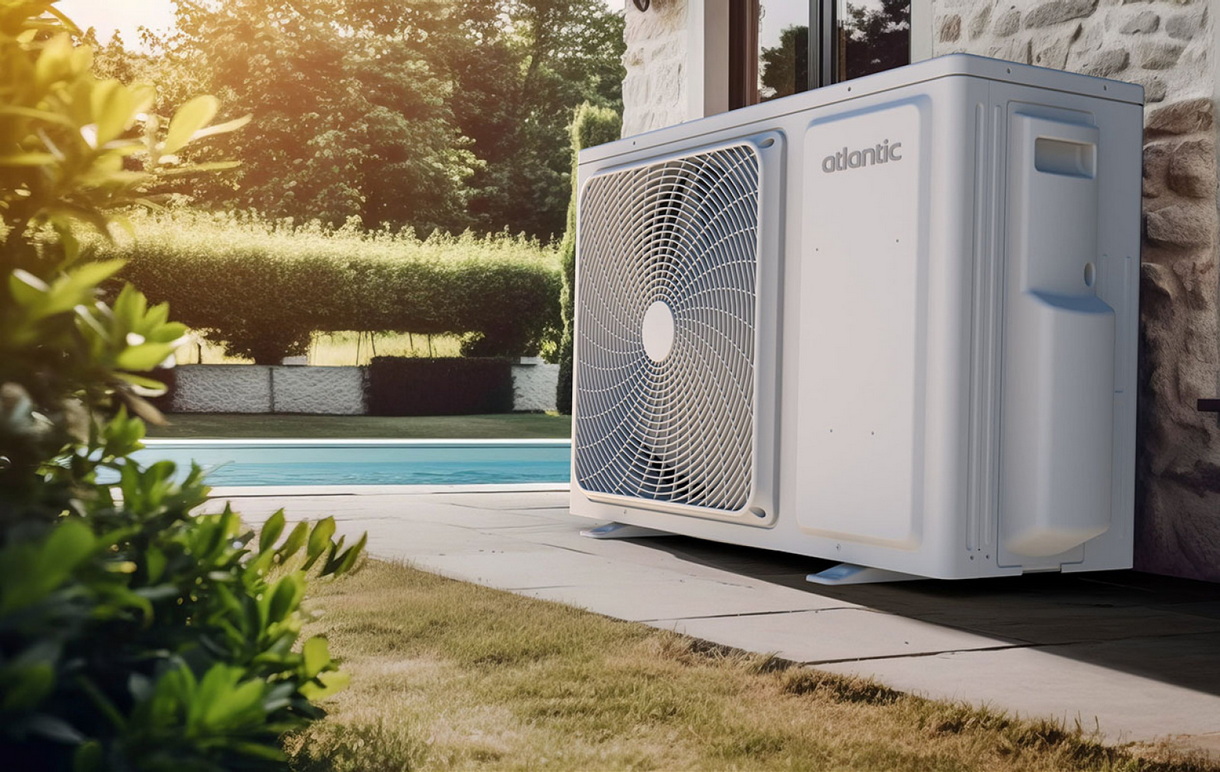
The official journal of July 17, 2026 contains the decree of July 13 which extends the reduced rate of VAT in renovation to air/air heat pumps. The text introduces absurd details which create inconsistencies.

The decree of July 13, 2026 is very short and only has two pages. Let us remember: in article 92, the Finance law for 2026 provided that air/air heat pumpswhich meet environmental performance and sustainability criteria assessed over their life cycle, fall under the reduced value added tax (VAT) rate of 5.5%. But the same article referred to a decree the task of specifying the characteristics and performance levels of the materials, equipment, devices and systems concerned.
After five months of waiting, this decree of July 13, 2026 appeared in the Official Journal of July 17, 2026. And it came into force the day after its publication: July 18, 2026. It contains two articles, but only article 1 is important and offers great inaccuracies and aspects that are both comical and improbable.
More or less than 12 kW
L’article 1 sets different conditions for air/air heat pumps whose nominal power is less than or equal to 12 kW and for those whose nominal power is greater than 12 kW.
THE heat pump ≤ 12 kW must achieve an energy efficiency class ≥ A+ for multisplits and ≥ A++ for monosplits, both for heating and for cooling. Regarding the air/air heat pumps with a nominal thermal power greater than 12 kWthe seasonal energy efficiency of the heat pump must be:
– ≥ 145% for heating and 250% for cooling in the case of roof air/air heat pump ;
– ≥ 130% for heating and 150% for cooling in the case of air/air roof heat pump integrating heating, cooling, ventilation, cooling by nighttime superventilation and filtration.
Which immediately calls for several thoughts. First of all, the decree only mentions the air/air heat pump installed on the roof. Does this mean that the VAT at 5.5% only applies if the air/air heat pump is installed on the roof ? Or that the air/air heat pump installed elsewhere than on the roof do not face any particular performance requirements? Installers should be wary and seek a local interpretation from the tax authorities before proceeding.
Then, the decree mentions the triple service heat pumps ensuring heating, cooling and ventilation, but seems to require that they also ensure cooling by nighttime superventilation and filtration, undoubtedly of the new air introduced, which is not specified. This type of device is most often an interior monobloc, ducted for access to fresh exterior air and the rejection of extracted air, with distribution by air duct for heating, cooling and ventilation. I don’t know of any that sit on the roof.
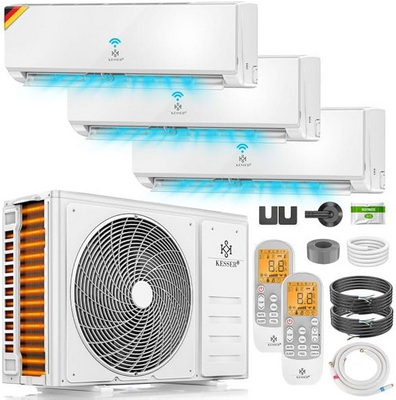
Connected air/air pacs must comply with the European Cyber Resilience Act. Which will not be an easy task for the many brands that are not well established in Europe. © Kesser
Refrigerant and connectivity
The decree requires that the refrigerant used must comply with the European F-Gas Regulation, which is the least, but condemns the machines to R32. R32 has a GWP or GWP in French of 650. The F-Gaz regulation indicates that air conditioners with a power greater than 12 kW, but ≤ 50 kW, will no longer be able to contain fluids with a GWP ≥ 150 from January 1, 2027. From January 1, 2030, all other autonomous air conditioning equipment and autonomous heat pumps containing effect gases fluorinated greenhouses whose GWP is equal to or greater than 150, are prohibited for sale, this is for those whose power is ≤ 12 kW, i.e. another 3.5 years of being on the market.
Finally, the decree specifies that “the heat pump can be connected to a digital network to communicate, transmit and receive temperature instructions over time periods, in heating mode and in cooling mode, and to control its operating mode“. Which is not a problem, all single- and multi-split air conditioners are connected or connectable. Which, on the other hand, requires them to comply with the CRA – the Cyber Resilience Act – European. If this is not the case, they will lose their CE marking, therefore the possibility of being sold in the European Union from January 1, 2027. N
We are currently studying the CRA more closely, a large number of equipment are affected and it does not seem that all manufacturers have understood the importance of this new European regulation.