
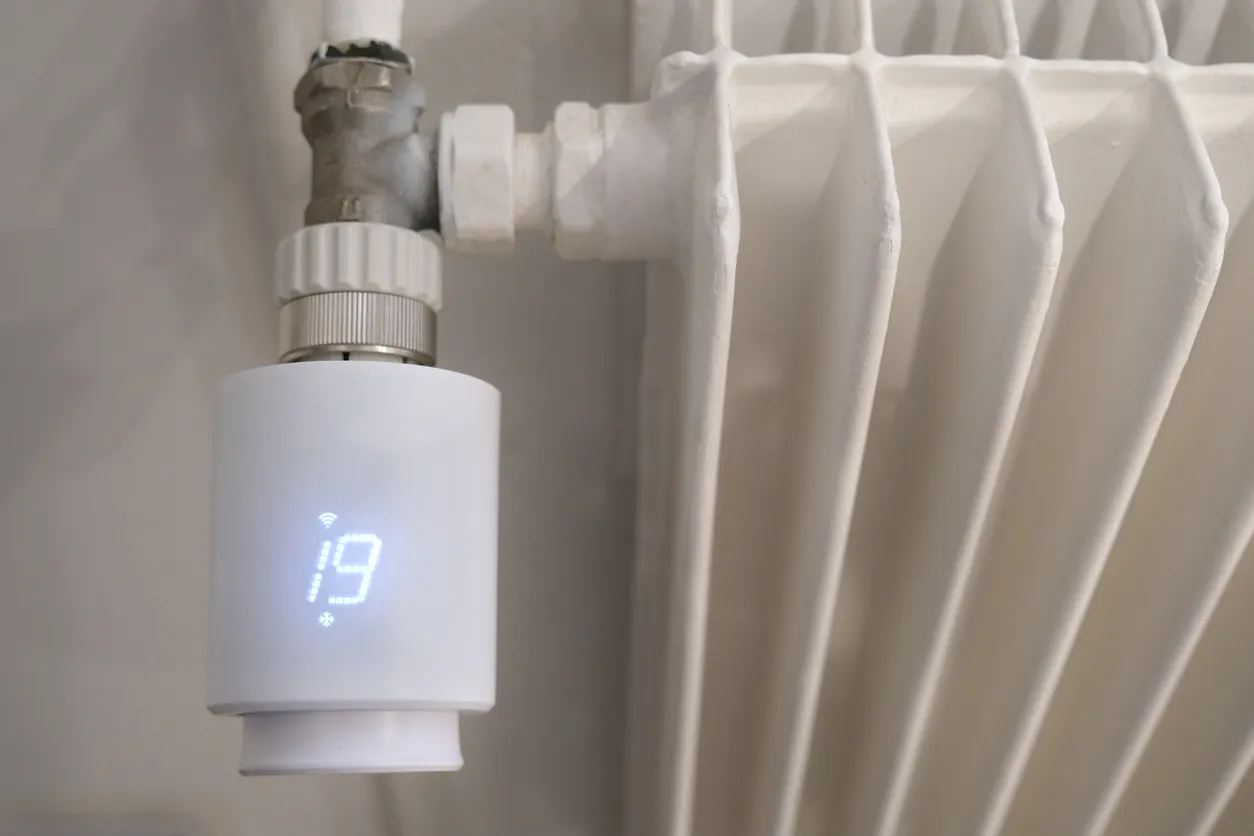
Watch out for the new requirements for heat pumps and the requirement for thermovalves from 3 August onwards. In all cases in which you wish to request tax bonuses or the Conto Termico 3 contribution, respecting the new standards imposed by the Red III Directive becomes mandatory.
Designers and heating technicians are in fact called upon to apply the new eco-design standards linked to the Ecodesign regulations. Without compliance with these system parameters, the technical certification lapses, and access to tax deductions and state support schemes is therefore precluded. Designers are therefore also obliged to certify cases of objective impossibility.
>> Are you interested in articles like this? Receive them directly
Electric and gas heat pumps: the new minimum SCOP and SPER limits
The text introduces the obligation to comply with the most recent minimum eco-design requirements. For heat pumps, access to incentives and subsequent certification are subject to the achievement of precise seasonal performance coefficients calculated in the “average” climate zone:
- Air-to-air electric heat pumps (up to 12 kW): the minimum SCOP is set at 3.8 (or 3.42 in the case of refrigerants with GWP < 150).
- Electric air-water heat pumps: the minimum seasonal eco-design efficiency must reach 110%, equal to a minimum SCOP of 2.825.
- Gas heat pumps (air-water and water-water): a minimum seasonal primary energy coefficient (SPER) of 1.13 is required.
The conformity of the performances must be explicitly declared by the manufacturer on the basis of tests carried out according to the standards UNI EN 14825 (for electric systems) and UNI EN 12309 / UNI EN 16905 (for gas systems).
Hybrid and bivalent systems, coupling requirements and constraints
The new requirements also apply to factory-made hybrid boilers or bivalent installations, and in addition to these it becomes mandatory to check the correct proportion between the two heating systems. The ratio between the useful thermal power of the heat pump and the thermal power of the supporting condensing boiler, in fact, must be less than or equal to 0.5.
Furthermore, the autonomous thermoregulation system must necessarily belong to classes V, VI, VII or VIII of the community communication 2014/C 207/02, guaranteeing the modulating and preferential management of the heat pump compared to the boiler.
Mandatory thermovalves if the boiler is changed
Another novelty is the system integration regulated by Annex IV, Section B of the Directive. For any installation or replacement with heat pump generators or factory-made hybrid systems, there is an obligation to install thermostatic valves with low thermal inertia (or other modulating devices acting on the flow rate) on all the heating elements in the building.
This obligation also concerns cases of installation or replacement of biomass boilers. Previously, however, the deduction of 50% or 36% was allowed as part of the Home Bonus even without thermovalves.
When the technician can certify the impossibility of adaptation
In cases where it is not possible to fully comply with the installation obligations of thermoregulation devices, the legislator assigns a specific responsibility to the designer. The technical impossibility or lack of economic convenience cannot simply be declared, but must be demonstrated analytically within the technical report pursuant to Law 10/91.
To secure the practice, the professional must include in the report a detailed examination that certifies the actual non-feasibility of all the different technological and plant options available on the market, and not just the one chosen by the customer. To exclude modulating devices on radiators (for example for reasons linked to the fluid dynamics of old condominium networks or due to structural incompatibility of old cast iron heating elements), the technical impossibility must be demonstrated unequivocally by comparing the system sheets with the calculation methodologies of the Minimum Requirements Decree.
Finally, in the rare cases in which the technical project report is not required by law, the designer still has the obligation to send the Municipality a specific written communication which indicates in detail the objective factors that make the adaptation impossible.
Comparison table: what changes for heat pumps and thermoregulation
Let’s now see a direct comparison between the previous regime and the innovations brought by the RED III Directive:
|
Parameter / Technology |
Previous Limitations and Obligations |
New mandatory standards (Legislative Decree 5/2026) |
|---|---|---|
|
Air-Air electric heat pumps (≤ 12 kW) |
Basic parameters of ordinary thermal performance. |
Minimum SCOP 3.8 (Ecodesign Reg. 206/2012). |
|
Electric air-water heat pumps |
Minimum limits differentiated by thermal regime. |
Minimum SCOP 2.825 (Seasonal efficiency ≥ 110%). |
|
Geothermal heat pumps (Brine-Water) |
Standard minimum requirements from data sheets. |
Minimum SCOP 2.825 (Reg. 813/2013). |
|
Gas heat pumps (Air-Water) |
Basic calculation on the lower calorific value. |
Minimum ecodesign SPER 1.13 (Seasonal efficiency ≥ 110%). |
|
Low inertia thermostatic valves |
Required only in specific global renovations. |
Mandatory on all heating elements in the house (except for fluids < 45°C). |
|
Hybrid Systems (HP/Boiler Power Ratio) |
Free configuration at the discretion of the thermotechnical calculation. |
Mandatory ratio ≤ 0.5 with condensing boiler ηs > 90%. |
|
Classes of Thermoregulation Systems |
No strict European classification required. |
Requirement of advanced Class V, VI, VII or VIII control units. |