
VAT numbers and micro-businesses with high energy costs
From the point of view of subjective requirements, the relief will be reserved exclusively for micro-enterprises, i.e. single VAT numbers and entities with less than 10 employees and an annual turnover or balance sheet total of less than two million euros in conditions of energy vulnerability. This refers to micro-businesses that are significantly affected by the impact on energy prices and do not have the means to renovate the building they occupy or to purchase zero- and low-emission vehicles or to switch to alternative sustainable modes of transport.
Out of a total of approximately 4.3 million micro-businesses, active in all sectors of the economy, estimates speak of a potential audience of 80,000 individuals who will be able to benefit from the direct contribution.
The buildings with the worst performance are affected
As regards the buildings, the choice of the audience responds to a rigid priority logic linked to the performance of the Energy Performance Certificate (APE): the intervention will focus on those in the lowest energy classes, specifically the F and G classes identified as the exclusive property of vulnerable micro-enterprises, as resulting from the cadastral registers and legally recognized property titles, ensuring that all interventions produce direct benefits to the owners.
According to ministerial estimates, the activation of the 1.25 billion euro endowment will make it possible to redevelop approximately 128,000 real estate units owned or in stable use by micro-enterprises, going towards remediating that segment of productive building stock which generates the greatest quantity of climate emissions and absorbs the highest share of non-renewable consumption.
The obligation to intervene on classes F and G introduces specific constraints, on the model of what has already been tested with the Thermal Account mechanism. The tender will finance all interventions which, when adopted overall, will lead to a minimum reduction of 30% in the global non-renewable energy performance index. This leap in performance must be certified by the qualified professional through the double filing of the APE before and after the works.
No to coats, yes to targeted interventions and photovoltaics
The Plan aims to reduce consumption, but with specific interventions from this point of view, expressly excluding interventions for the complete redevelopment of the building envelope “considering the very high costs per property unit”. Therefore the challenge will be to develop a list of integrated interventions that will allow the objective of cutting energy consumption by 30% to be achieved.
The Plan expressly lists among these:
- replacement of transparent closures including fixtures;
- installation of external screening and/or shading systems and/or solar filtration systems for transparent closures with exposure from East-south-east to West, fixed or mobile, non-transportable;
- building automation systems;
- installation of solar thermal systems for the production of domestic hot water also combined with solar cooling systems;
- replacement of winter air conditioning systems, also with connection to district heating or micro-CHP;
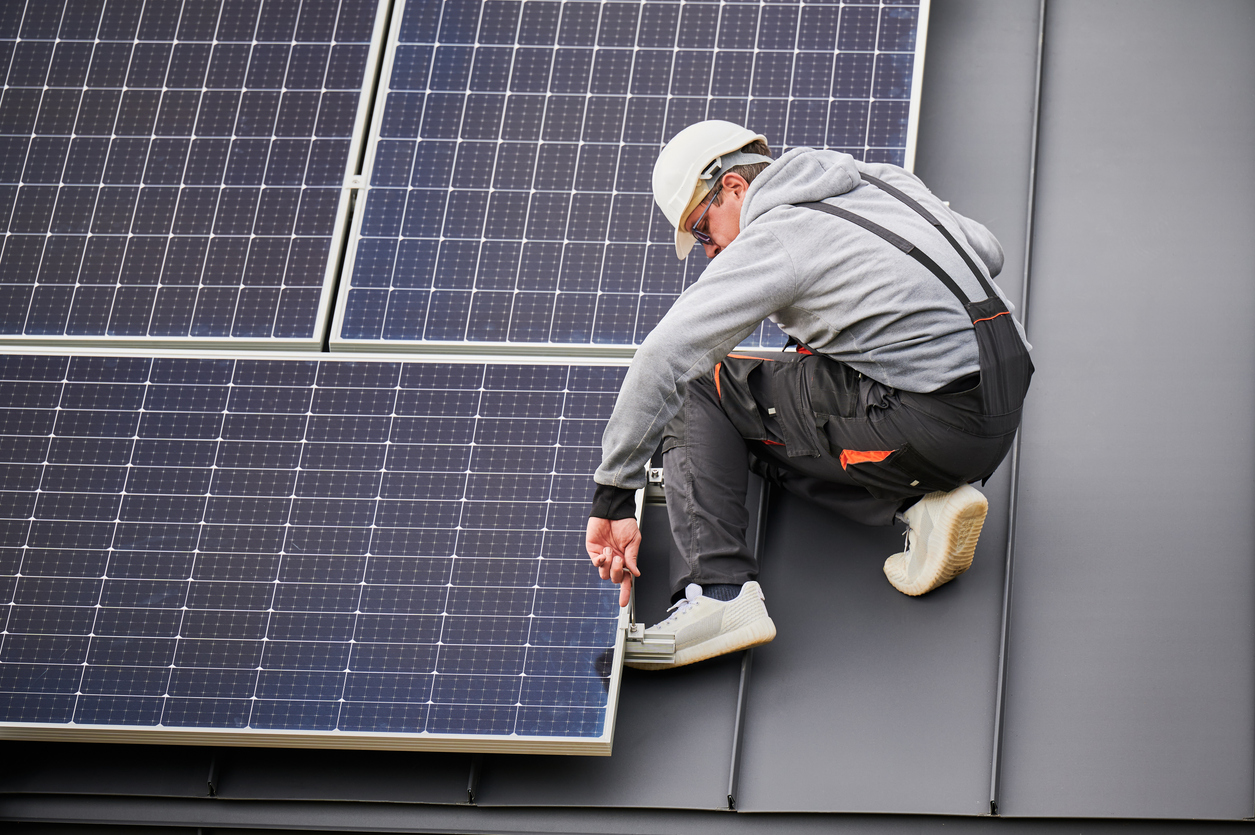
- installation of photovoltaic solar systems also equipped with storage systems and associated with a high efficiency class A+++ heat pump.
In the latter case, the incentive is limited to systems built with photovoltaic modules produced in Europe and certified with high efficiency standards (at least 21.5% for the modules and 23.5% for the cells).
The implementation measures are scheduled for the first quarter of 2027.
Summary framework
|
Redevelopment contribution |
Operational parameters and plan constraints |
Characteristics |
|---|---|---|
|
Overall financial endowment |
1.25 billion euros on a multi-year basis (FSC fund) |
Locked-in allocation at EU level; funds cannot be transferred to other items |
|
Target of eligible beneficiaries |
Only micro-enterprises (<10 employees, turnover ≤2 million €) in conditions of energy vulnerability |
Focus on properties 100% owned by companies |
|
Properties affected |
Buildings in energy class F and G |
30% improvement in energy consumption |
|
Objective |
Efficiency improvement of 128,000 buildings |
Interventions to be implemented by 2032 |
|
Interventions allowed |
Windows, curtains, photovoltaic and heat pumps, solar, micro-cogenerators, district heating |
Obligation to eliminate or drastically reduce the use of fossil fuels (methane/LPG gas) |
|
Timing of implementing decrees |
By the first half of 2027 |
Current phase of due diligence on supplier catalogues |
>> If you want to receive news like this directly on your smartphone, subscribe to our new Telegram channel!
Thank you for subscribing to the newsletter.