
Regulations and controls
The opening of the thermal season coincides with the restart of controls and the application of sanctions for the operation of non-compliant stoves, fireplaces and biomass boilers. The coordination between the air quality improvement policies of the regional basins and the state incentive mechanisms has undergone a profound structural transformation, defining a rigid operational framework.
Heavy fines for those who do not respect restrictions and prohibitions. On the sanctions front, the restart of emission controls at local level is based on the provisions of article 15, paragraph 5 of Legislative Decree no. 152/2006 (Environmental Code) and on the classification of generators introduced by Ministerial Decree no. 186/2017.
Fines from 500 to 5,000 euros for non-compliant systems
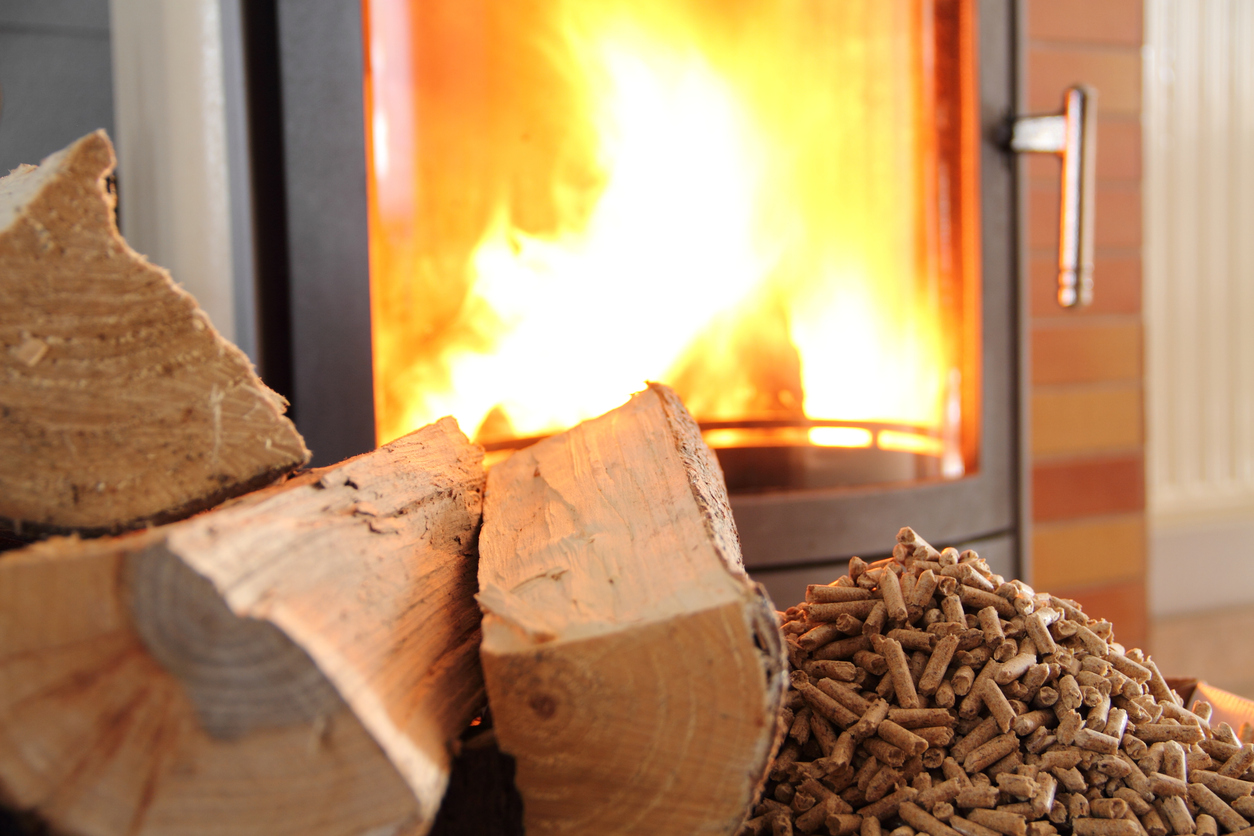
Based on the new updated provisions, in all cases the exclusive use of ENplus A1 certified pellets is mandatory. This classification is reserved for pellets produced exclusively with virgin wood or sawmill residues that are not chemically treated, with a very low ash content, a high thermal efficiency and a high calorific value.
As regards sanctions, the national law establishes administrative fines from a minimum of 500 euros up to a maximum of 5,000 euros for failure to comply with the technical requirements and emission limits of civil heating systems.
Supervision of compliance with the rules is at regional level and the rules are dictated in the respective air quality plans. The resolutions of the Padano Basin Regions (Lombardy, Piedmont, Veneto and Emilia-Romagna) apply the control system by prohibiting the operation of devices below 3 or 4 stars in the presence of alternative heating systems.
Controls in Lombardy
Specifically, in Lombardy, the new mandatory emission and plant requirements for biomass generators (wood, pellets, wood chips) with a power greater than 35 kW are introduced, typically used in showrooms, commercial appliances or centralized contexts. For domestic stoves and fireplaces under 35 kW, the adaptation to the new structural parameters is set for 15 October 2027, without prejudice to the ordinary checks on the environmental class.
Operationally, the competent authorities carry out random checks which are not limited to verifying the environmental plate (the “Stars”). The administrative sanction is triggered automatically in the event of failure to register the system in the electronic regional thermal register, absence of the updated system booklet or failure to carry out ordinary annual maintenance of the chimney.
The rules in Piedmont and Veneto
Even in Piedmont there is an obligation to register in the regional land registry and a ban on the use of generators below 3 stars.
When ARPA Piemonte detects that PM10 limits have been exceeded and declares an alert level, stricter stops are triggered, i.e. a ban on the use of wood biomass generators that do not reach at least 5 stars.
In Veneto, limitations on the use of biomass heat generators (wood, pellet or wood chip stoves and fireplaces) are in force until April 30th of each year. Throughout the entire regional territory of Veneto, excluding the “Prealps and Alps” area, there is a ban on the combustion of biomass for stoves below the “3 star” environmental category.
The blockade in Emilia-Romagna
The rules are similar in the Emilia-Romagna Region. In all lowland municipalities until March 31st, in the presence of an alternative heating system, the use of woody biomass domestic heating systems up to and including 3 stars is prohibited. In the event of activation of emergency measures for air quality, systems up to and including 4 stars are also limited.
Furthermore, throughout the regional territory, including the Apennines area, in the case of new systems it is prohibited to install biomass heat generators with performances lower than those of the 5-star class.
No incentives for the switch from gas to biomass
Finally, at a national level, the RED III Directive has modified the criteria for access to tax deductions and to the Thermal Account managed by the GSE. The most significant innovation concerns the total exclusion from any form of public incentive for interventions that involve the transition from a generator powered by natural gas or LPG to biomass systems.
However, they are permitted in the event of a move to the five-star class in the case of less efficient generators. In all cases, compliance with the particulate limit of 1 mg/Nm³ must be guaranteed. Exemption valid only if it is intended to replace an LPG or natural gas system in specific non-methane areas (e.g. for agricultural or forestry companies).
Regional tenders
The replacement of the stoves is finalized with the 50% Home Bonus or with the Thermal Account. Those who have requested the Thermal Account can also access regional tenders which provide additional incentives, so that the expense can be covered 100%. The requirement of switching from the Thermal Account is crucial because it allows the Regions to avoid checking the compatibility of the products, given that this has already been done by the GSE.
At the moment, tenders are open for private individuals in Abruzzo and Umbria, but it is advisable to monitor the website of your region because normally the tenders are published at the very beginning of the heating season, and the resources run out quickly.
For businesses, however, there is currently an active tender in Valle d’Aosta, which recognizes contributions for projects to improve the efficiency of production sites which can also be used for the installation of renewable source systems (including high-efficiency biomass for industrial or corporate purposes) with an aid intensity that varies from 30% to 60%.
>> If you want to receive news like this directly on your smartphone, subscribe to our new Telegram channel!
Thank you for subscribing to the newsletter.