
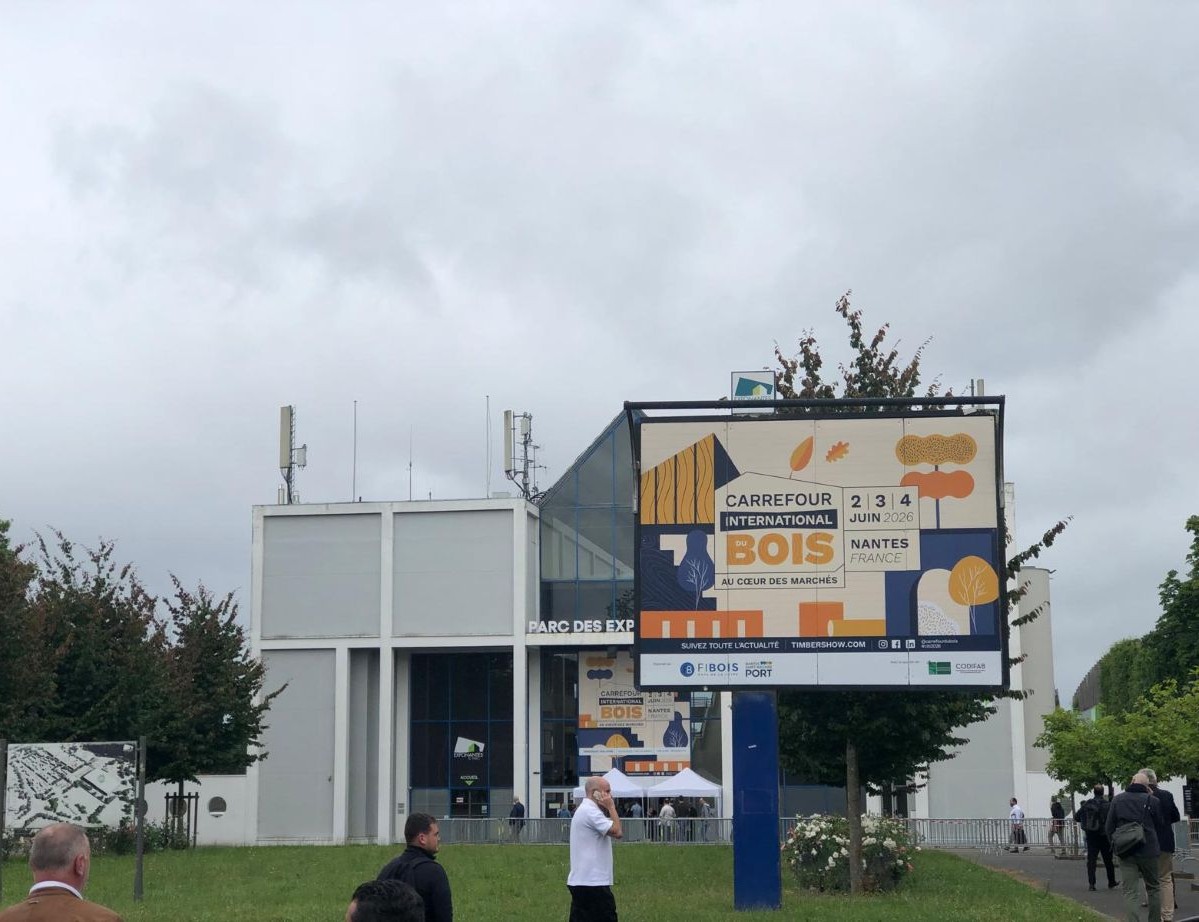
At the Carrefour International du Bois, in Nantes, the commissioning of the XXL hall finally made it possible to give an order to the 650 exhibitors at the leading European trade fair for its specialty, wood.

France is not used to having living rooms leader Europeannot in the Building and not in the wood industry. And as the CIB had grown organically, traditions should not be shaken up. We tried to bring order to the three halls adjoining the Grand Palais and its mezzanine, but it did not work perfectly. Especially since the regional stands of Fibois gathered together various exhibitors. Now here it is, THE Grand Palais is reserved for construction, the mezzanine for (construction) services, hall 1 more or less for panels and hall 2 for parquet flooring, and the large XXL hall for the forestry, sawmilling and timber trade. Well, a corner of the Grand Palais is reserved for the immense Basque center and the regional FiBois remain scattered in different places but this contributes to the breathing of the whole because the thematically cropped halls offer a clear view.
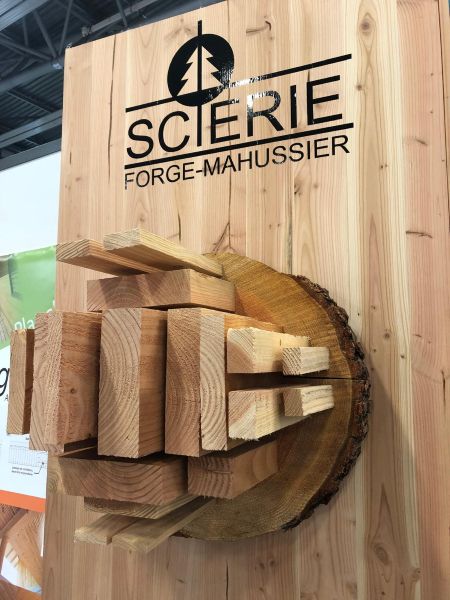
Magnificent work from a sawmill which also pushes its pawns on robotic round wood. © Jonas Tophoven
Is the world of wood turning?
When we are on the floor, we are on the floor. It remains to be seen where we are. And this is where the CIB still has room for improvement. We go around saying to ourselves, it’s really like two years ago, often more chic, or bigger for the stands, and we say to ourselves that in the end the market is not doing so bad. But we have the greatest difficulty in immediately discerning an adaptation to the market which seems immutable, when the least we can say is that in 2026, with this Israeli war, everything is turned upside down. This is undoubtedly a “salon effect” because on the Fordaq side, in direct contact with buyers and sellers of wood from around the worldthe concern of the interlocutors is palpable in contract renewals.
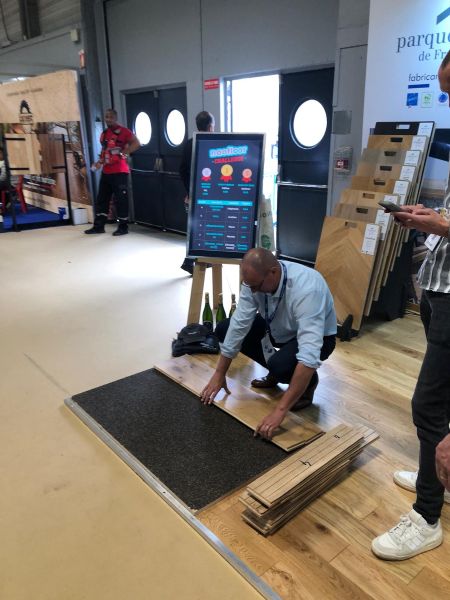
At Naofloor, parquet removal competition, the fastest come from the GSB. © Jonas Tophoven
Design or carbon?
Parquet is declining and struggling, even though it should be boosted by environmental issues and vernacular choices. Not only do the stands make no effort to highlight an innovation, but the environmental benefit is completely ignored, with the exception of Naofloor by Deschaumes, also awarded at the CIB by a Jean Paul Lanly Trophy.
At the February Forum, Naofloor proposed the use of pitted oaks. In the process, the brand knows how to reuse oak parquet with a standard thickness of 23 mm to produce reuse 14 mm Naofloor. Problem: reclaimed parquet floors are often glued and no longer nailed. But who will go against it to offer demountable and recoverable layouts (if not Naofloor)?
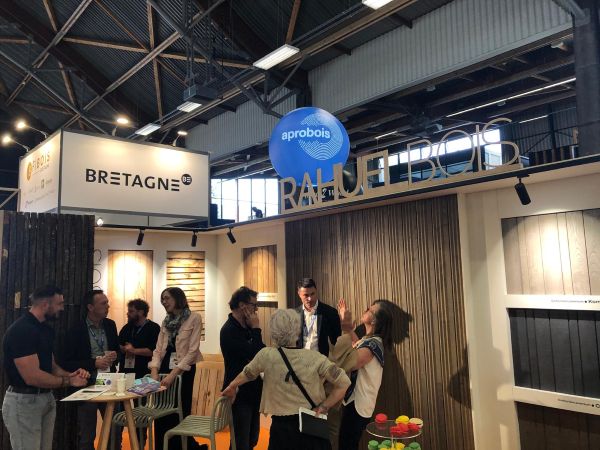
The regional FiBois are particularly friendly exhibitor magnets. © Jonas Tophoven
Traceability?
On the panel side, the situation is somewhat the same. Evertree shows its ability to decarbonize the binders of MDF, particle boards, OSB and even plywood. The plywood contract has not yet been signed. That leaves HDF, 3-ply, CLT, glulam and LDF. For its part, the European panel organization has launched an alternative to Evertree, with a “carbon footprint”, therefore, as in the case of Evertree binders, not completely free of fossil products. All the same, in the midst of the oil crisis, these subjects should hit the headlines but it seems that they are secondary.
Same in Hall XXL with traceability which, during the previous edition, brought American hardwood producers to the forefront. As for the increased wood, THE superwoodannouncements in the networks do not translate into a presence in Nantes. THE burned wood is no longer really visible, the heat treated is not on display. Alternatives to birch or Asian larchessential during the last edition because of the Ukrainian war, are not the subject of marked communications. In short, what exactly is happening?
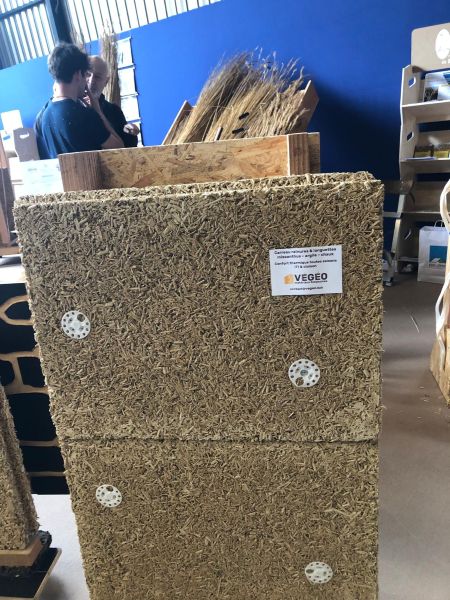
After the sustainable development congress in Lille in September 2025, miscanthus is also showing itself at the CIB, in another form. To be continued! © Jonas Tophoven
Barometer after heatwave
It is about this edition of the CIB like the previous ones: you have to be in the know, otherwise you don’t understand anything. And in this context, we are waiting for this show to leader European level broadens the market for everyone, because it is impossible to be at all levels. This is why theorganizer FiBois Pays de la Loire opted for a barometer, a questionnaire among its exhibitors intended to bring out feelings. A laudable initiative but for the moment still not very meaningful when it comes to understanding the market and flows. It is true that French Timber takes care of this in conferences with great brilliance and flair. This helps to understand to a certain extent. Because June 2026 is the moment when almost the entire French ERP market finally switches to RE2025 when we know full well that fossil and mineral habits do not allow us to continue. In Nantes, this is undoubtedly seen in the opulence of the stands linked to construction and renovation. No more.
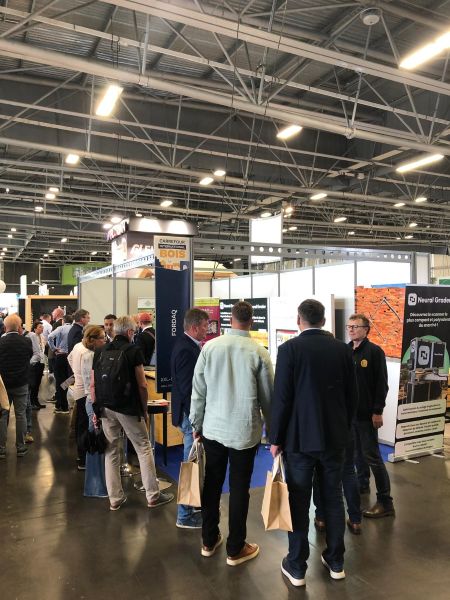
Large crowds on Thursday, particularly in the XXL hall at the heart of the global timber trade. © Jonas Tophoven
Hide crisis wood
Behind an immutable facade of international wood market which is constantly adaptinghowever, we discern acute signs of crisis in matter. Thus, the Germanic world clearly places fewer softwoods on the market because L’spruce is starting to fail because of health attacks and adaptation to climate change. In France, the spruce is not celebrated either, not to mention the maritime pine with nematode, chalarose ash, inky chestnut etc. Less spruce in Europe (but still at a high level), this means that prices are holding up and the French softwood sawn market is less exposed to load shedding raids. There are also direct implications for products like CLT, which has a production capacity in Europe of around 2 million m3even though it is only three-quarters used. We are not going to push capacity to the maximum and then buy new lines if spruce becomes less accessible with, in addition, a phase of transformation into strips and cross-gluing, then heavy road transport over long distances, which becomes anachronistic. The fact that the entire construction branch of Stora Enso has been open to a sale for several months is not insignificant. Productive models cough. The CIB does not display it, but reveals it through the corridors.
Jonas Tophoven / © Jonas Tophoven