
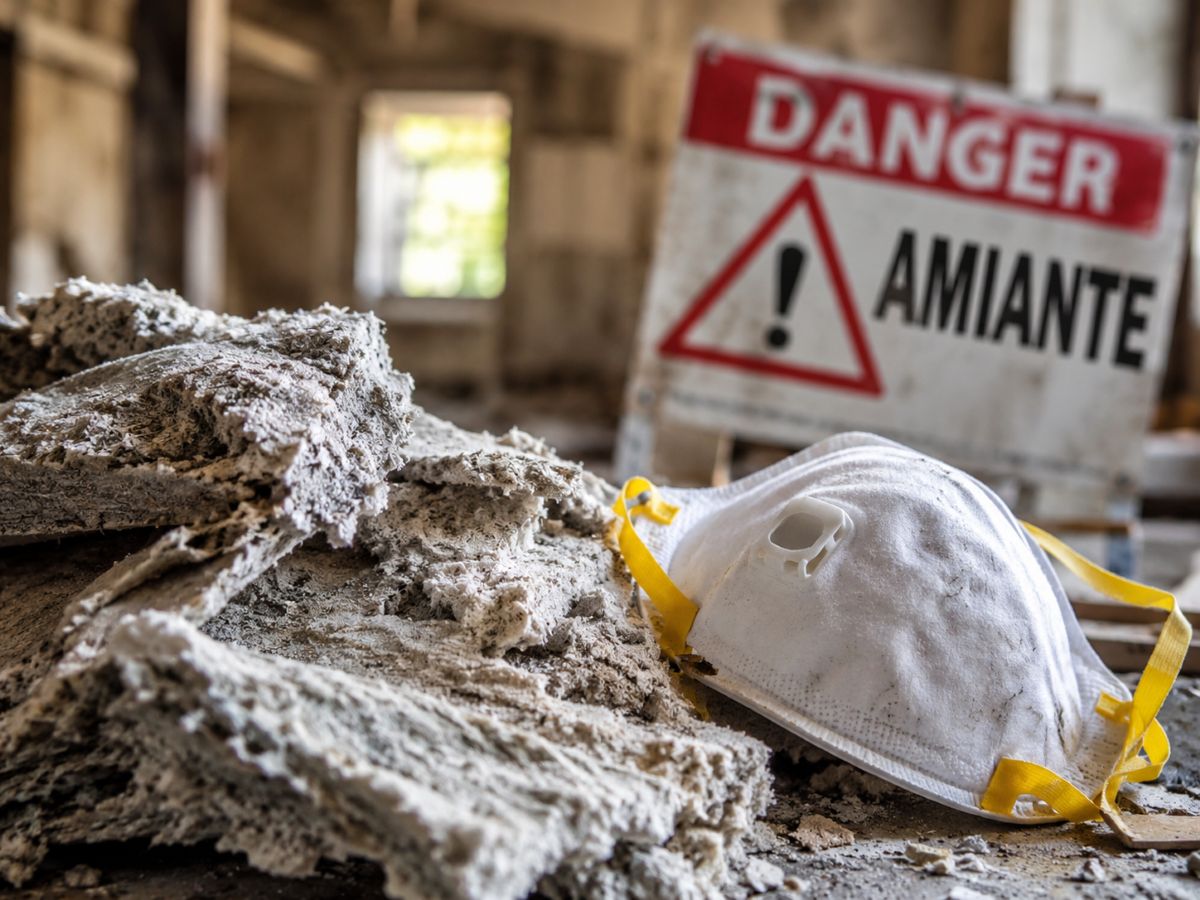
Banned in France since 1997, asbestos continues to kill (diseases can appear several decades later), and many victims are still unaware that they can claim compensation.
Publi-Information 

In construction as in industry, Hundreds of thousands of workers were exposed to asbestosThis fibrous mineral, long appreciated for its fire resistance and insulating properties. Even today, the diseases it causes continue to appear, sometimes forty years or more after the first exposures, although theasbestos has been banned in France for almost thirty years. And for some of the victims, the fight does not stop at the diagnosis; You still need to know your rights and take steps to obtain compensation.
It is precisely this problem that the Asbestos Victims Compensation Fund (FIVA) attempts to resolve. Since its creation in 2001, this public body, financed by the work accidents and occupational diseases branch (AT-MP) of Social Security, has been contacted by more than 117,000 victims and their families. Nearly 8 billion euros in compensation were awarded to them. In 2025, 2,745 new people applied to the fund, which accepts around 85% of applications.
In construction, nearly 900,000 workers exposed to asbestos
Classified as carcinogenic in 1977 by the International Agency for Research on Cancer (IARC),asbestos was massively used in construction and industry before it was banned in France in 1997, because its fire resistance, insulating qualities and low cost made it an essential material.
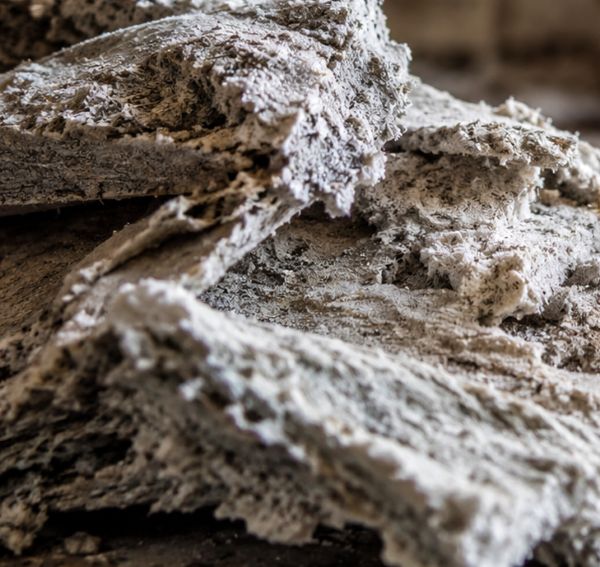
A long time presented as A “ore miracle”, asbestos had All For seduce : resistant, insulating, non-flammable And little expensive, he is imposed In there construction And industry, At point to be massively used In THE years 1970. HAS Paris, between 30 And 40 % of the roadways would have Thus summer covered of materials containing of asbestos. THE mineral is also found In THE HLM, THE universities And THE buildings, integrated to pipes, At cement Or has of many objects of daily. But behind his qualities techniques se hid a true bomb sanitary has delay. After inhalation, THE fibers can to provoke of the pathologies serious, notably of the cancers of there pleura, Sometimes several decades After the exhibition. This long latency explain Why the ban of asbestos in France, in 1997, n / A alas not put END to the epidemic. © IA / Laure Pophillat
The consequences of this exposure are now well documented. “Prolonged inhalation of asbestos exposes you to serious non-curable respiratory and pleural cancers and pathologies.“, recalls the High Authority for Health (HAS): lung cancer, pleural mesothelioma, pleural plaques or asbestosis are among the main diseases associated with fiber inhalation. More rarely, Laryngeal and ovarian cancers may also be linked to asbestos.
The difficulty lies in particular in the particularly long latency time of these pathologies. In fact, between exposure and the appearance of the first symptoms, it can take 20 to 40 years, or even more. In other words, employees who handled or came into contact with asbestos in the 1970s, 1980s or 1990s can still develop an occupational disease today. And the scale of past exposure is considerable. According to an estimate from the National Institute for Research and Security (INRS) published in 2007, between one and two million workers could have been exposed to asbestos during servicing or maintenance activities, of which approximately 900,000 in the construction sector. So much so that the diseases linked to this material now constitute the leading cause of work-related deaths – excluding work accidents.
Victims who do not always apply for the fund
If the FIVA has already supported more than 117,000 victims and their loved ones, not everyone concerned necessarily calls on him. Some are unaware of the existence of the system, others do not know the steps to take or simply do not have the time to take them; a a situation that is all the more worrying as the diseases caused by asbestos are often particularly serious. “We are talking about bronchopulmonary cancers that are not always operable, and mesothelioma with extremely low life expectancies once the diagnosis is made, of 12 to 18 months.“, explains Anne Thauvin, director of FIVA, to AFP.
The organization also observes a regular aging of the people who enter it, with an average age of 71 years for men. “We cannot exclude the hypothesis that a certain number of them died without having contacted us“, she underlines; a reality which raises the question of effective access to compensation, even though victims sometimes have little time to have their damage recognized.
FIVA has been contacting victims directly since September
Therefore, and in order to prevent sick people from missing out on their rights, a new system was put in place following the Social Security financing law for 2024. Called “go-to decree”he authorizes FIVA to directly contact people suffering from occupational diseases linked to asbestosto inform them of the possibility of submitting a compensation file and to support them in their procedures.
However, its implementation was delayed, in particular due to the opinion procedure of the National Commission for Information Technology and Liberties (Cnil). The system has finally been operational since September. The contact details of the people concerned are transmitted to the fund by Health Insurance and the Mutualité sociale agricole (MSA) funds.
The first results are still modest, but FIVA intends to continue this proactive approach. “321 people were contacted, nearly 80 returned the forms: some may be compensated before the end of the year“, indicates Anne Thauvin.