
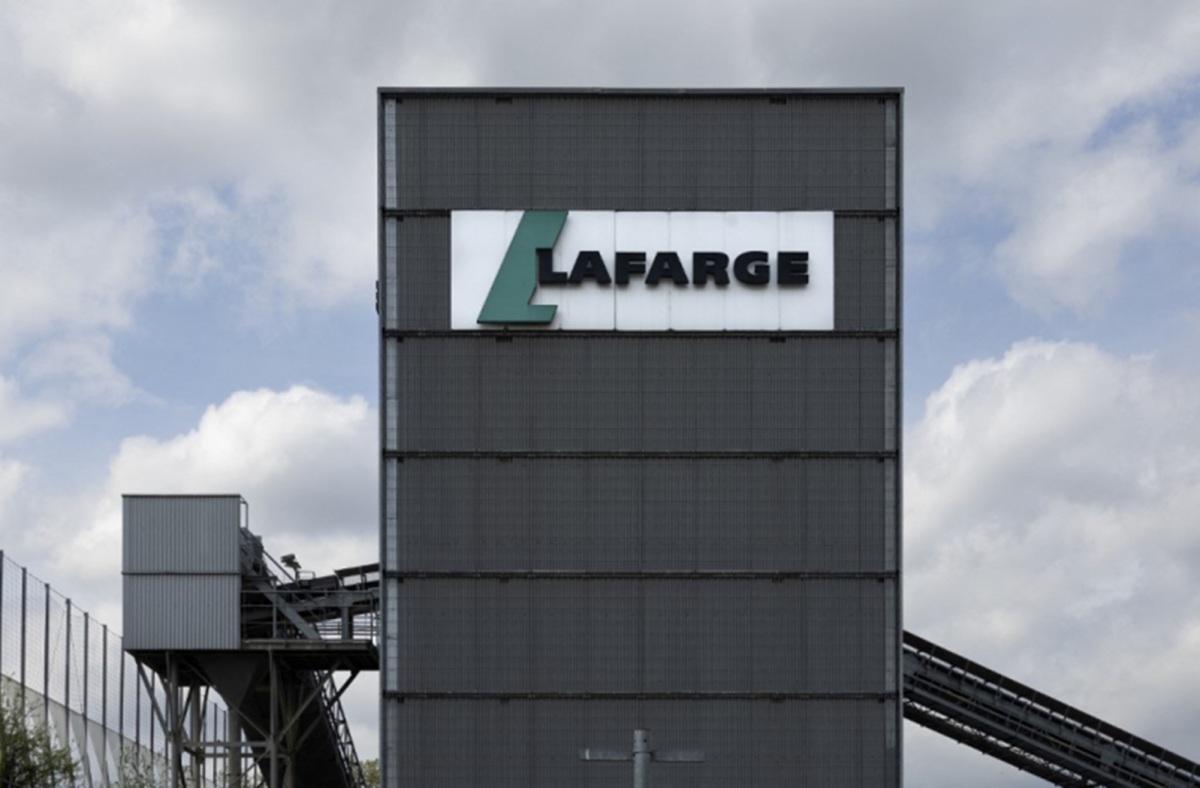
The cement manufacturer Lafarge, as well as all eight other defendants including its former manager Bruno Lafont, have appealed their convictions for financing terrorism in Syria.
Publi-Information 


The cement manufacturer Lafarge decided to appeal after its conviction on April 13 by the Paris criminal court, for financing of jihadist groups in Syria. The case, which dates back to the years 2013-2014, concerns the maintaining the activity of a cement plant located in Jalabiyain the north of the country, in the middle of a conflict zone.
During the first instance judgment, the company was found guilty of having paid nearly 5.6 million euros to several armed groups, including jihadist organizationsin order to continue operating the site. The judges then described a company “ready for all compromises with terrorist organizations“.
Accordingly, Lafarge was sentenced to the maximum fine provided foror 1.125 million euros, as well as joint payment, with four former executives, of a customs fine of 4.57 million euros for non-compliance with international financial sanctions.
Responsibility extended to former leaders
Beyond the legal entity, the criminal court also handed down heavy sentences against several former managers of the group, now part of the Swiss Holcim:
– among them, theformer CEO of Lafarge between 2007 and 2015, Bruno Lafontwas sentenced to six years’ imprisonment with a warrant of committal: the magistrates pointed out his “bad faith“and his”cowardice“, rejecting his defense according to which he was not informed of the payments made – imprisoned in the Santé prison following the judgment, he has since filed a request for release;
– His former deputy general manager, Christian Herrault, considered by the court to be involved in negotiations with the Islamic State organization for maintaining an agreement deemed profitable for the factory, was sentenced to five years’ imprisonment, also accompanied by a committal warrant;
– Bruno Pescheux, who headed the Syrian subsidiary between 2008 and July 2014, received the same sentence, without immediate incarceration due to his state of health;
– Finally, other protagonists were also sanctioned: the sentences handed down ranged from 18 months of imprisonment for a Norwegian security manager to seven years for a Syrian intermediary on the run, responsible for organizing relations and payments to armed groups.
A judgment now contested
Formed as civil parties, the NGOs Sherpa and ECCHR had described this decision as “major victory for the fight against impunity of multinationals involved in serious human rights violations“.
L’appeal filed by Lafarge now opens a new legal phase in this emblematic case, which questions both the practices of large companies in conflict zones and the criminal liability of their directors.