
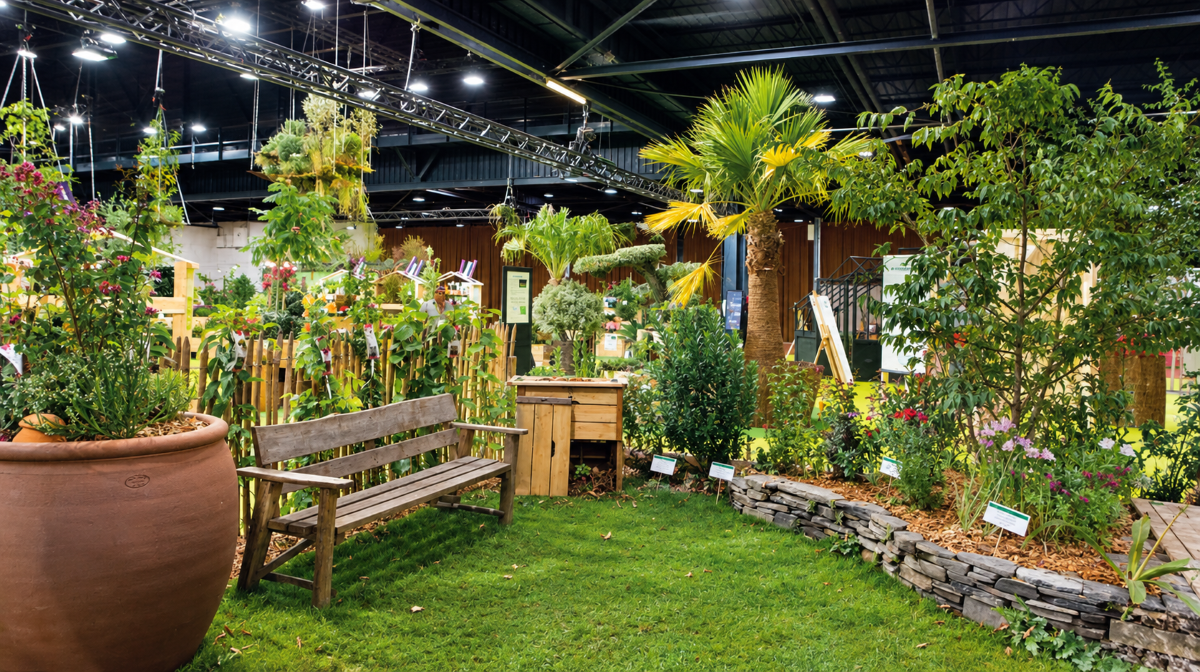
How can we sustainably integrate plants into cities facing densification, extreme heat, lack of water and soil degradation?

The Salon du Végétal returns to Angers from September 15 to 17, 2026 with a particularly interesting focus for building and planning professionals: how sustainably integrate plants into cities facing densification, high heat, lack of water and soil degradation ?
THE Plant Show 2026 anticipates nearly 300 exhibitors and more than 8,000 professional visitors. More than 60 conferences, round tables and forums are announced. Among the highlights are the Great Landscape Matinée, dedicated to contemporary urban planting practicesas well as a conference organized by Plante & Cité for its 20th anniversary around the evolution of nature in the city.
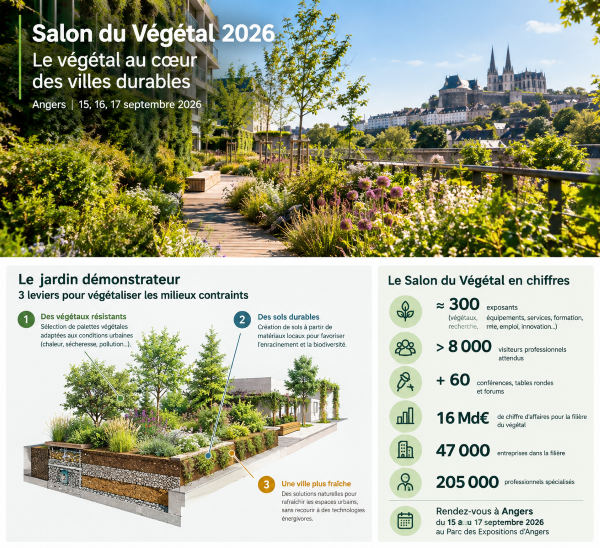
Organized every two years at the Angers Exhibition Centre, the Salon du Végétal 2026 intends to go beyond the sole horticultural question to focus on the uses of plants in regional planning. The meeting will bring together producers, distributors, landscapers, communities, architects, design offices, town planners and construction professionals around the issues of revegetation and climate adaptation. © IA / Laure Pophillat
Plants become a subject of urban planning
L’Landscaping is one of the main focuses of the show this yearwith a particular attention paid to “constrained environments“. The subject covers in particular the urban spaces subject to densification, heatwaves, drought, degraded soils or even the presence of buried networks. This development accompanies the progression of the landscape sector: in fact, activity increased by 10% between 2022 and 2024 and by 60% in ten years. In 2024, the sector had some 33,550 companies with a turnover of 8.5 billion euros and 140,300 assets.
One of the main features of the show will therefore be the demonstrator garden dedicated to constrained environments. Designed by landscaper Anna Lena Hahn and the Collectif Vent d’Ouest, with the Institut Agro Rennes-Angers and the CFPPA Le Fresne Angers-Segré high school, it must present three concrete responses to the difficulties encountered in urban projects:
– select resistant plant pallets;
– Design floors using locally available materials;
– And, finally, cool the city without resorting to energy-intensive technologies.
The interest of the device will not stop at the living room. The solutions presented must then be transposed into real conditions in Angers, in partnership with the city’s Parks, Gardens and Landscapes department and Angers Loire Métropole.
The show also highlights a Guide to planting in constrained environments. Led by Anna Lena Hahn and developed with professionals in horticultural production, landscape design and planning, this document must bring together methods, scientific resources, feedback and practical advice to support planting projects.
Soils, water, trees: technical constraints in the foreground
This approach reflects an evolution of the profession: revegetation no longer simply consists of planting, but of taking into account the physical and biological conditions of the site. The file emphasizes in particular the difficulties linked to urban soilsunderground networks, unfavorable exposures and management constraints. The Tree(s) Center will thus address the choice of species, the management of tree heritage, planting techniques and the adaptation of trees to climate change.
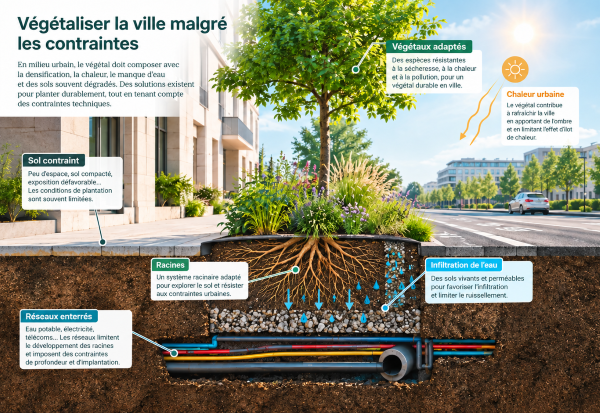
Greening the city no longer consists only of planting, but of adapting plant choices to the physical and biological constraints of the site. © IA / Laure Pophillat
The subject of trees will also be discussed from the angle of road works. Olivier Konneradt, responsible for the tree heritage of the City of Versailles, will notably present a protocol developed since 2023 aimed at redirecting or re-burying the roots during work rather than sectioning them. The stated objective is to preserve the anchoring and stability of the trees and to limit health risks.
Another problem: water management. The program includes an intervention dedicated to the evolution of practices in horticulture and landscaping in the face of tensions on the resource.
16 billion euros for a rapidly changing sector
Beyond the layout, the Plant Fair intends to show the economic weight of a sector which represents 47,000 companies, 205,000 specialized professionals and 16 billion euros in turnover. Production, distribution and landscape constitute the three main pillars of this economy, with respectively 1.8 billion, 5.4 billion and 8.9 billion euros in turnover.
The question of relocation is also an important issue. The file shows imports twelve times higher than exports for ornamental plants and highlights the progression of short circuits: 57% of landscape entrepreneurs have increased their local purchases and 90% of florists offer French plants. This data is attributed in particular to FranceAgriMer, VALHOR, Unep, Xerfi Specific and Customs statistics.
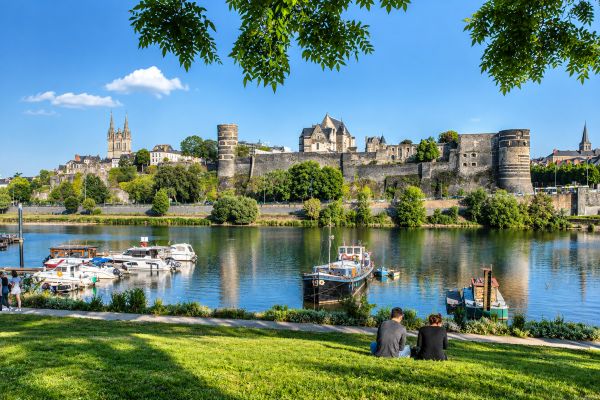
Angers wants to be a “supernatural” destination, where plants have been a true local specialty for centuries, and therefore the ideal place for a Fair dedicated to the subject. With its training courses, researchers and businesses, the region brings together a particularly rich ecosystem, driven by know-how and innovations that meet the challenges of today and tomorrow. A territory where we also come to discover, exchange and enjoy an exceptional landscape heritage, between green city and Loire Valley classified by UNESCO. ©