The iconic zinc roofs are part of the Parisian landscape for almost two centuries. But when the covers are renovated, the materials deposited can also become a resource for new developments, a (beautiful) idea on which the activity of Toit de Paris, a French company which recovers materials from roof renovation projects in the capital in order to transform them into design objects and signage elements.
Orientation signs, tailor-made cladding, installations in public spaces… Zinc thus leaves its initial function as a covering to find a second life in buildings and urban spaces. A way of extending the history of these materials while introducing reuse in contemporary development projects. © Roof of Paris
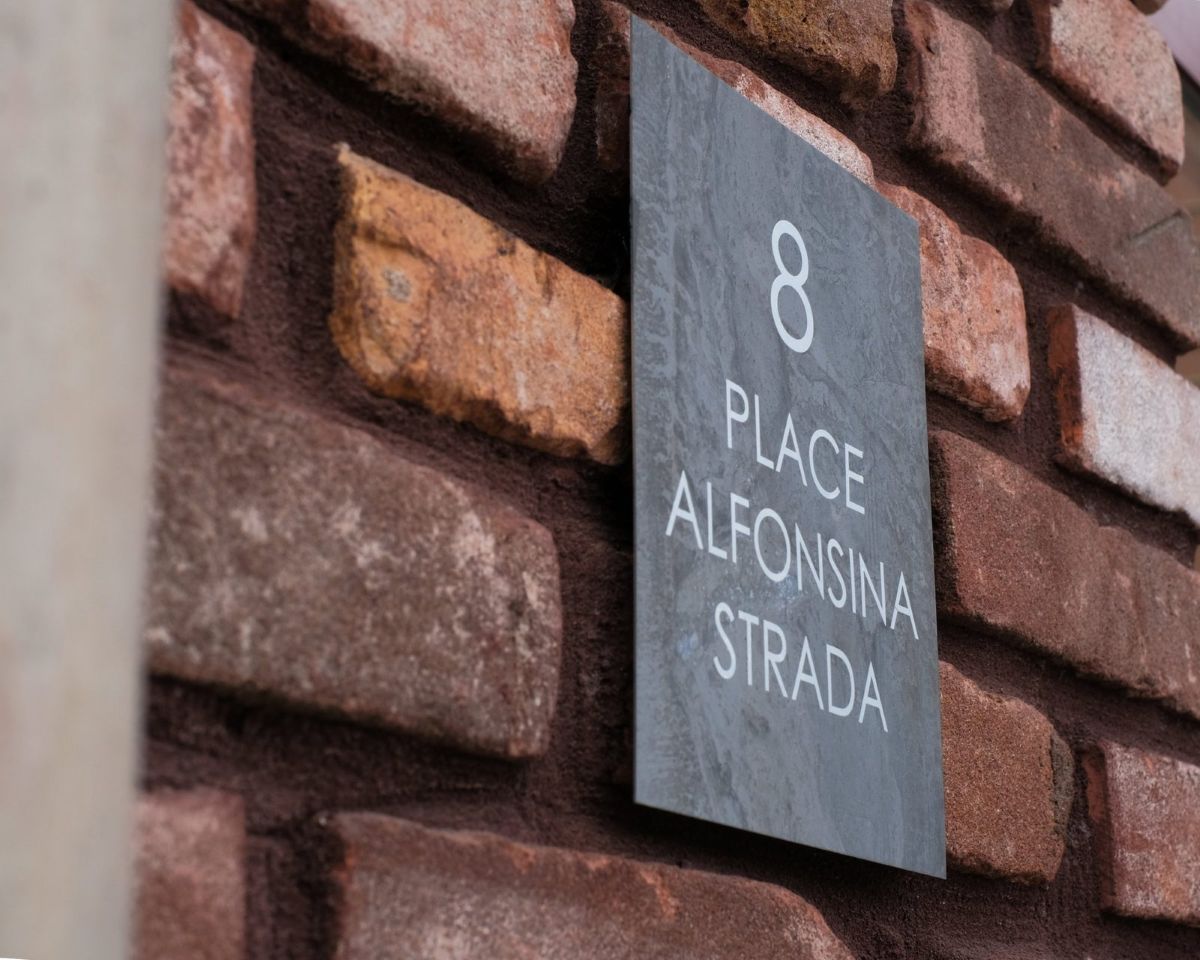
From architectural heritage to signage
Used since the 19th century, particularly on Haussmannian buildingsTHE zinc is inseparable from the architectural identity of Paris. THE roof renovation operations constitute a source of materials that Toit de Paris intends to promote rather than allowing to disappear from the built landscape. The company transforms them into information and communication media, retaining their appearance and their link with the buildings from which they come. THE roofing material thus becomes a design element in its own right, capable of being integrated into a professional environment as well as into public facilities or an urban space.
This approach is not limited to substituting a reused material for a new material. It also seeks to give a heritage dimension to the signage, by making old covers a medium which tells, through its provenance, part of thearchitectural history of the capital.
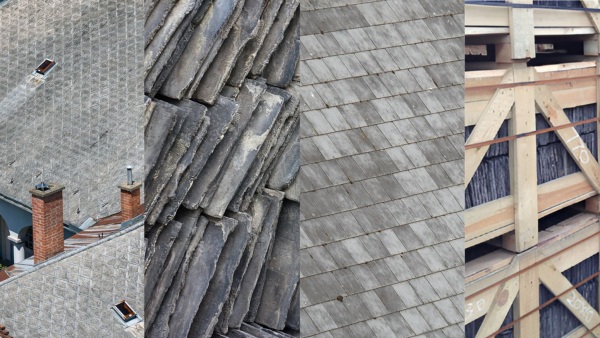
Toit de Paris is developing a low-carbon sector dedicated to the reuse of materials from old roofs, in particular zinc, slate, tiles and copper, in order to preserve the value of these heritage materials and offer them a second life through innovative, sustainable creations with a real architectural dimension. At the crossroads of eco-design, signage and urban design, the company intends to contribute to the decarbonization of the building sector by transforming materials steeped in history into tailor-made development solutions, which make it possible to extend the architectural identity of cities while responding to contemporary uses. © Roof of Paris
Achievements already deployed in companies and public facilities
ENGIE: a 95,000 m office campus2
At ENGIE, Toit de Paris participated in the creation of signage for a 95,000 m office campus2including in particular a custom cladding in reused zincTHE materials from old Parisian roofs having thus been integrated into a contemporary professional environment. According to the company, this operation made it possible to avoid between 2 and 3 tonnes of CO emissions.2 thanks to the reuse of zinc.
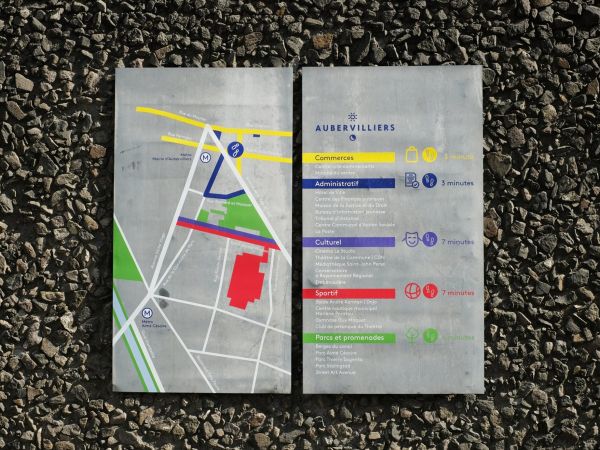
In Aubervilliers, the approach takes another form with the creation of exterior public signage in zinc, and the material finds its place here in urban planning, serving information and orientation for users. © Roof of Paris
At Paris Cité University, zinc becomes an artistic medium
Paris Cité University also has calls on Toit de Paris for a project within its STAPS UFR. In fact, the company has designed a fresco engraved in zinc in homage to Alice Milliata pioneering figure in women’s sport, a production was carried out in collaboration with the artist C215.
These different applications show that the zinc recovered from roofs can be used for various uses, without being limited to directional signage. It also becomes a medium of expression and creation, capable of being part of the identity of a place.
From one-off projects to large-scale operations
Roof of Paris also announces the deployment of its approach on larger programs. There signage from reuse thus concerns an operation of 2,300 housing units for Bouygues Construction, as well as 70 buildings in the 14th arrondissement of Paris.
The Babcock project, carried out by Emerige in La Courneuve, also demonstrates this change in scale: more than 1,200 panels were produced for this operation, spread over four buildings; volumes demonstrating that reuse can go beyond one-off projects to be integrated into large-scale real estate and urban programs.
For project owners, this approach opens up an additional possibility of integrating materials from deconstruction or renovation into their development projects. It combines a practical function – to guide and inform – with an aesthetic and heritage dimension.
With Roof of Paris, zinc therefore no longer constitutes only a material to be recovered at the end of the construction site. It becomes a visible component of the developed spaces, the provenance of which contributes to the identity of the place, with an approach in line with the building sector’s reflections on the reduction of waste and the preservation of resources.