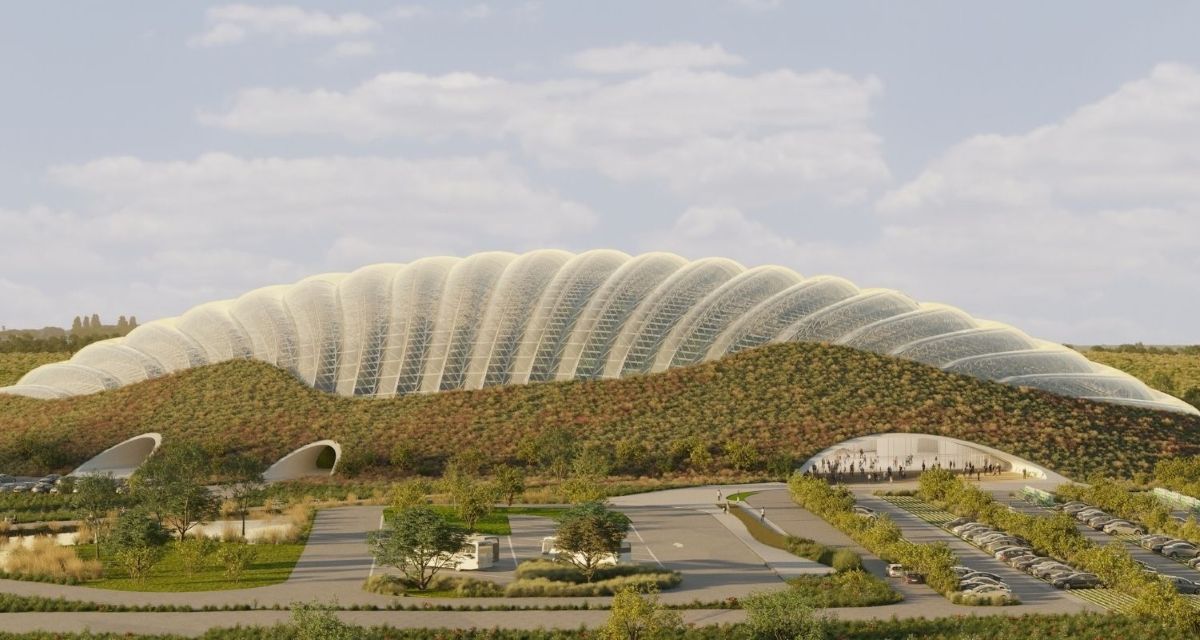
100 million euros of investment, 20,000 m2 of greenhouse and up to 500,000 visitors expected each year: Tropicalia was to become an extraordinary tourist attraction on the Opal Coast…

THE tropical dome which was to transform a wasteland in Pas-de-Calais into a major tourist attraction will ultimately never come out of the ground. Tropicalia, presented as the largest tropical greenhouse project in the worldwas officially abandoned by its carrier company, confirming information from Wake of Berck.
Imagined about ten years ago by Cédric Guérin, veterinarian and entrepreneurTHE project was to take place between Verton and Rang-du-Fliers, on the Côte d’Opale. The ambition was considerable: to create an immense greenhouse capable of welcoming visitors in the middle of tropical vegetation and numerous animal species, while becoming a new tourist locomotive for the region. But after years of procedures, appeals and searches for financing, the economic conditions necessary for its realization are ultimately no longer met.
A giant greenhouse of 20,000 m2 heated to 28°C
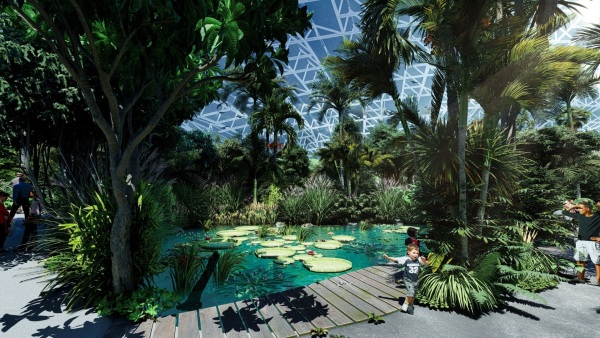
On paper, Tropicalia had something to impress. The project provided for the construction of a transparent dome of 20,000 m230 meters high, on a plot of 9.3 hectares. Inside, visitors could have discovered a real artificial tropical forest, including butterflies, hummingbirds, fish and reptiles, as well as significant exotic vegetation.
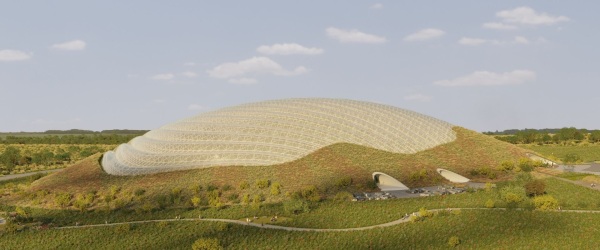
A 20,000 m dome2 and 30 meters high was to transform this 9.3 hectare plot into a spectacular tropical greenhouse. © Tropicalia
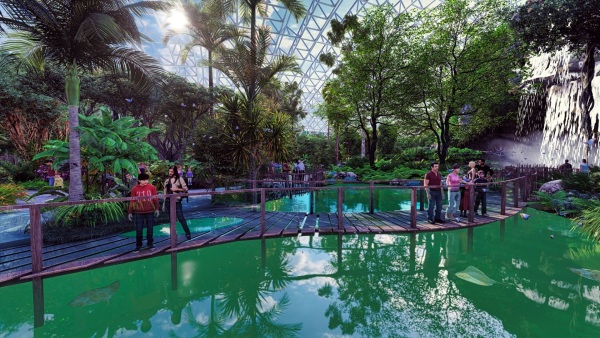
The temperature had to be maintained between 26 and 28°C all year round in the greenhouse. © Tropicalia
In the greenhouse, the temperature had to be maintained between 26 and 28°C all year round, un choice which immediately placed the question of energy consumption at the heart of criticism. However, the promoter assured that the greenhouse had to be self-sufficient in heatingthanks to a technology presented as innovative and based in particular on geothermal energy. A geothermal drilling was also carried out on the ground, constituting, according to Tropicaliathe main investment already committed beforeabandonment of the project.
100 million euros and 500,000 visitors expected
The project represented a total investment estimated at 100 million euros. According to its founder, around 7 million euros were secured, to which was added the support of the urban community. But the overall financing was never completed.
This is precisely one of the elements that ultimately turned the project upside down. Tropicalia explains that the conditions allowing the greenhouse to be built on the land are no longer metin particular due to aid that the company was unable to obtain. Cédric Guérin mentions in particular funding commitments from a foreign country which were unsuccessful, as well as the lack of support from the Hauts-de-France Region.
However, Tropicalia was counting on around 500,000 visitors per year and the creation of around fifty direct jobs. A potential that should allow the project to become a major tourist facility on the Côte d’Opale.
A project contested for several years
Added to these financial difficulties were strong local opposition. The project was opposed by the collective “No to Tropicalia”bringing together around forty associations – as well as GDEAM 62, scientists, environmental associations and even several elected officials. For his opponents, build a huge heated tropical greenhouse in Pas-de-Calais constituted a contradiction with the stated environmental objectives. The associations denounced in particular:
– land artificialization;
– The energy consumption necessary for the operation of the greenhouse
– And the transport of animals from distant regions.
The choice of land also fueled criticism because the plot intended to accommodate Tropicalia is close to several protected natural areas, including the Balançon marsh, located about a kilometer away, but also bocages and wet meadows. © Tropicalia
For the collective opposed to the project, their action contributed to slowing down its progress. In a press release, the elected environmentalists of the Hauts-de-France Regional Council describe the decision as “historic victory of environmentalists for the climate, biodiversity and Hauts-de-France“They salute.”the remarkable commitment of associations (GDEAM 62 and the Non à Tropicalia Collective), citizens, scientists, whistleblowers and all elected officials who, with determination and consistency, refused to give in to a project presented as ecological, but which in reality embodied a profoundly artificial vision of nature“. According to them, Tropicalia constituted “a project in total contradiction with the climatic and environmental demands of our time“.
But Catherine Zambon, member of “No to Tropicalia”, also recognizes that financial difficulties as well as external factors played a determining role in the abandonment of the said project.
The end of a project… but not necessarily of Tropicalia
L’abandonment of the project in Pas-de-Calais does not, however, necessarily mean the disappearance of the concept. Tropicalia is now looking for buyers abroad likely to develop the project in another territory. According to Cedric Guerinthe concept is particularly attracting interest in Asia, where opportunities have been identified with players in the tourist park sector looking for new attractions. The Arabian Peninsula would also be one of the markets where Tropicalia would have received a favorable reception.
The objective is clear: not to let ten years of work devoted to designing the project disappear.