
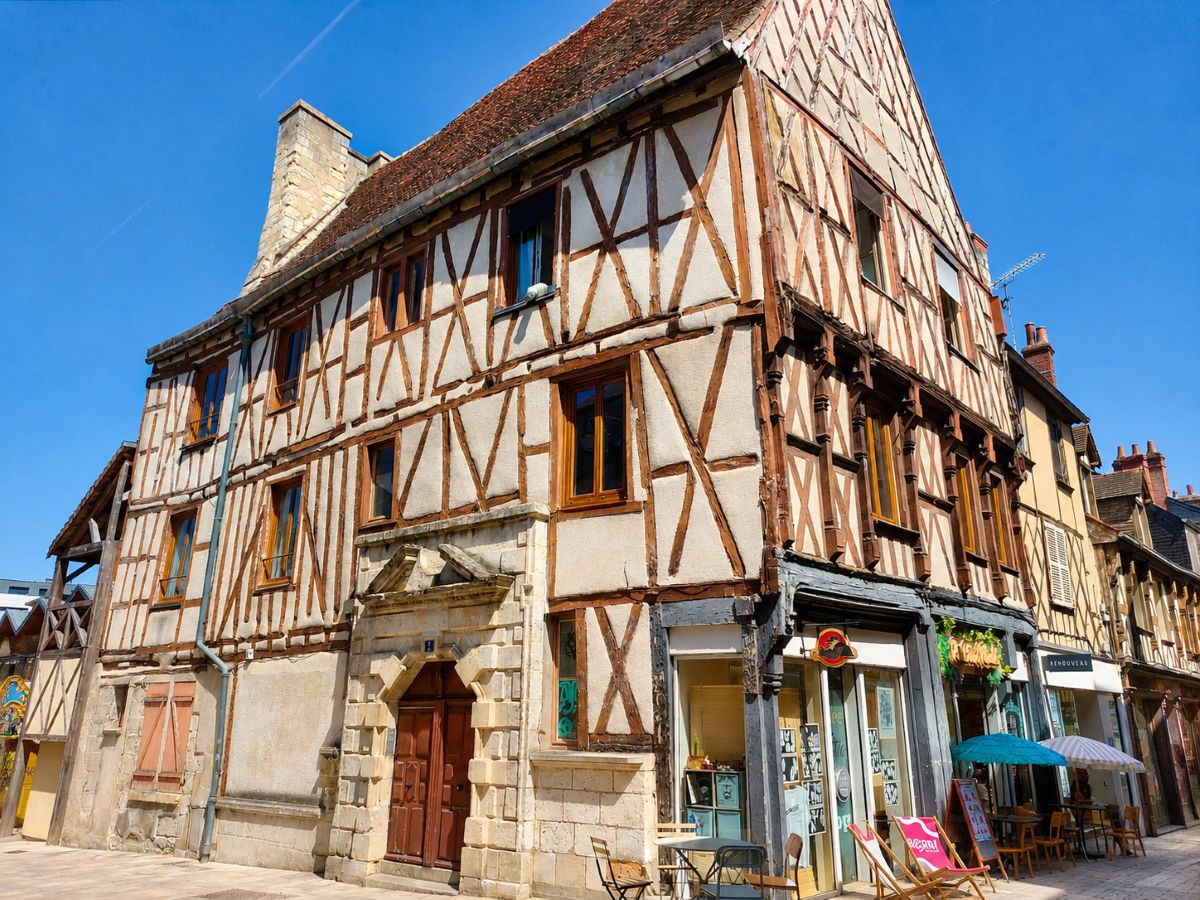
Shutters, solar protection, heat pump, air conditioning and even ITE: the Architects of Buildings of France (ABF) intend to demonstrate that climate adaptation and heritage preservation can move forward together.

Shutters, heat pumps, air conditioning, exterior insulation… A interministerial guide published this summer specifies the solutions to be favored to improve the energy performance of buildings of heritage interest while preserving their architecture. It is also a way of responding to recurring criticism aimed at the ABF (Architectes des Bâtiments de France).
Published on July 31, 2026 by the Ministries of the City and of Housing and Culture, with the coordination of Cerema, the Energy Rehabilitation Guide for buildings of heritage interest is aimed at owners, project owners, architects, craftsmen, design offices but also instructing services, including the ABF. In particular, it must provide a common framework for design and examine energy renovation projects in protected sectors.
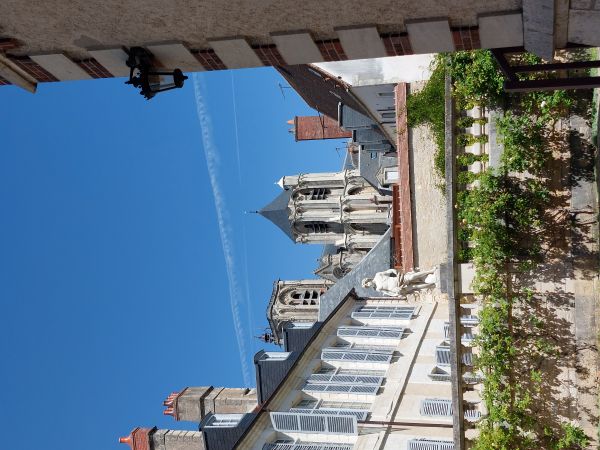
The competence of the ABF concerns almost a third of French housing, while protected areas only represent around 8% of the national territory. © Laure Pophillat
Shutters are not prohibited, but the roller shutter poses a problem
With the repeated heatwaves, installing shutters or exterior blinds becomes a question of comfort, but also of prevention of overheating. The principle adopted by the ABF is simple: the solar protection must fit into local architectural characteristics. Solid shutters, shutters, canvas blinds or other devices can be considered depending on the type of building, regional uses and the immediate environment.
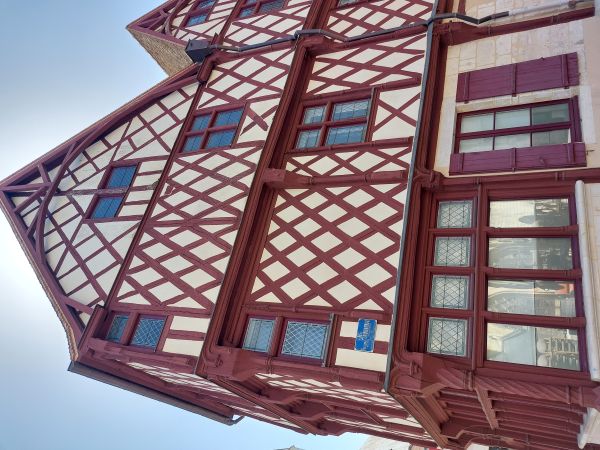
The Ministry of Culture thus intends to put an end to a widely spread idea: that of ABF which would prohibit shutters in principle. © Laurer Pophillat
Important nuance: these are mainly the roller shutters attached to traditional facades which pose a problem, because of their visual impact as well as their coffers. However, the ministry considers that there is “always an acceptable solution“, and does not recognize “proven blockage” on sun protection.
Heat pump and air conditioning: hide rather than prohibit
The logic for cooling equipment is identical since the guide recommends looking for the best possible concealment of outdoor units of heat pumps and air conditioners. Interior courtyard or roof are preferred when the configuration of the building allows it. On a balcony, boxes or grilles can reduce the visual impact of the installation.
However, the guide leaves a concrete difficulty remaining: all heritage buildings have neither an interior courtyard, nor a roof to discreetly accommodate an outdoor unit, nor a balcony that can be equipped with a box. This is precisely where the general requirements meet the reality of construction sites. A street facade, without available technical space, then requires finding a solution on a case-by-case basis.
Exterior insulation: the hard point remains the facade
External thermal insulation (ITE) is the other sensitive subject. On a heritage buildingwrapping the facade with an insulating complex can modify its proportions, its moldings, its window frames or even the perception of old materials. The guide therefore favors a architectural approach to preserve as much as possible the original appearance and characteristics of the building.
The Ministry of Culture also reminds us that systematic solutions must be avoided: replacing all the windows, systematically insulating from the outside or increasing the number of technical equipment can, in certain cases, degrade the building instead of improving it. Each construction must be analyzed according to its history, its materials, its thermal operation and its context.
This approach is particularly important for old buildings, whose performance cannot be evaluated solely through the standards applied to contemporary constructions.
Only 7% refusal
One question remains: Are ABF really a major obstacle to renovation? ? In 2023, the ABF services processed approximately 489,000 authorization requests. Unfavorable opinions or refusal of agreement represented 7% of files, a stable proportion since 2010.
In the details communicated by the Ministry of Culture, 22% of the opinions are favorable subject to requirements, requiring the project leader to change its proposal, while around two thirds of the opinions are favorable without major modification.
The figure is important to understand the philosophy of the new guide: the objective is not to remove the intervention of the ABFbut to reduce misunderstandings upstream as well as favor projects designed from the start with heritage constraints in mind.
The guide thus includes a project methodology and fact sheets devoted to the roof, floors, walls, windows and solar protection, as well as the integration of energy systems – heating, cooling and solar panels. The ministry recommends studying the intrinsic qualities of the building – inertia, ventilation, materials, thermal bridges – and favoring interventions that are as minimally invasive and reversible as possible. The choice of professionals must also take into account their experience in the field. building of heritage interest.
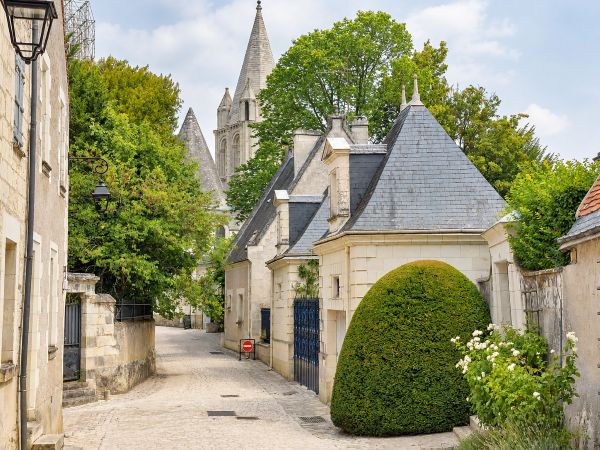
In protected sectors, it is now better to think simultaneously about solar protection, summer comfort, energy performance and architectural integration, rather than arriving at the ABF with an already fixed technical solution. © Laure Pophillat